TL;DR:
- Proactive roof maintenance can extend a commercial roof’s lifespan by up to 50% and costs significantly less than full replacement. Regular inspections, drainage management, and trades coordination prevent costly failures and preserve warranty coverage. Ignoring maintenance increases the risk of early roof failure and higher repair costs over time.
Preventing commercial roof issues is the single most cost-effective decision a property manager or business owner can make for a commercial building. A proactive maintenance program can extend a commercial roof’s lifespan by 25–50%, while annual maintenance costs run just $0.10–$0.21 per square foot compared to $5–$16 per square foot for full replacement. The math is clear. Spending a small amount each year protects an asset worth tens or hundreds of thousands of dollars. The National Roofing Contractors Association (NRCA) and industry standards both point to systematic inspection and maintenance as the foundation of commercial roof care.
What does a commercial roof maintenance program include?
A commercial roof maintenance program is a scheduled system of inspections, minor repairs, and documentation designed to catch problems before they become expensive failures. The NRCA recommends biannual inspections in spring and fall, with additional checks after major storms or any rooftop work by non-roofing trades. Spring inspections assess winter damage. Fall inspections prepare the roof for cold weather and heavy rain.
A complete program covers several core tasks:
- Visual inspections of the full membrane surface, flashings, and penetrations
- Sealant renewal at all transition points and penetrations
- Drain and scupper clearing to prevent water buildup
- Minor membrane repairs to seal small punctures or cracks before they spread
- Documentation of every inspection, repair, and material used
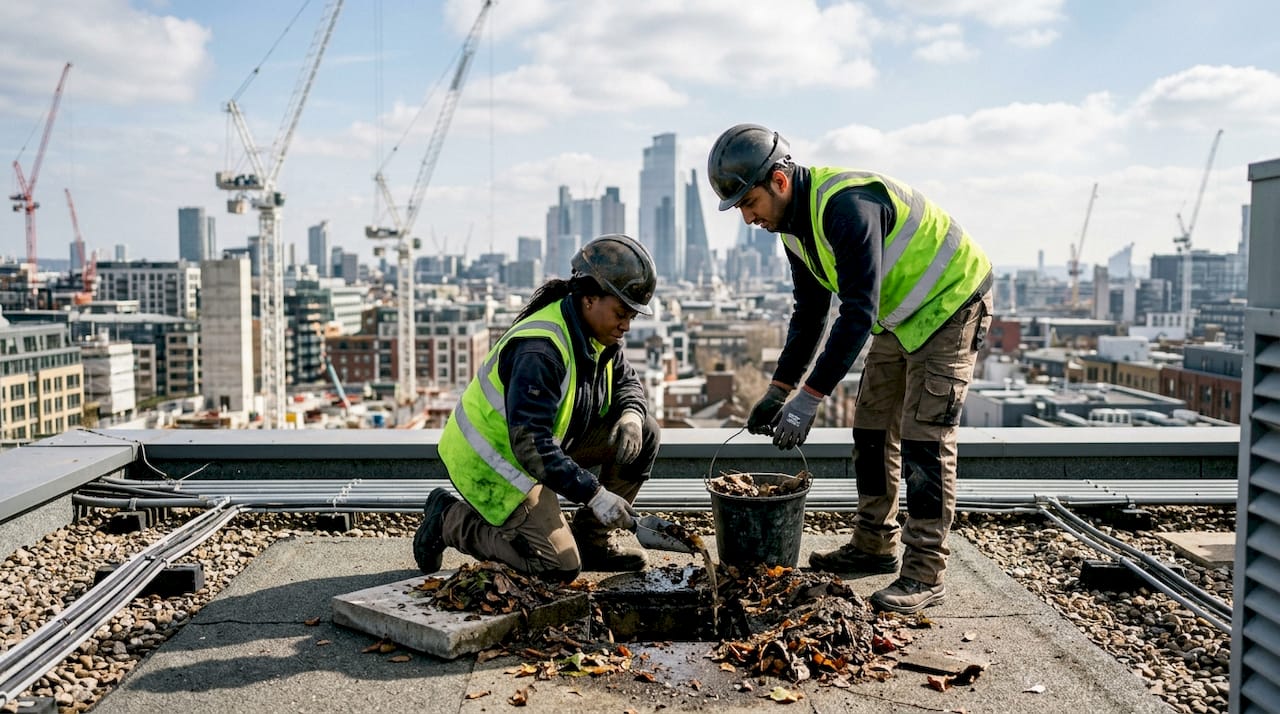
Not every task requires a licensed contractor. Building staff can handle quarterly drain clearing and basic visual walkthroughs. Licensed roofing professionals should handle sealant work, membrane repairs, and any task that involves penetrating or modifying the roof surface.
Pro Tip: Allocate 1–2% of your roof’s replacement cost annually for maintenance. On a $100,000 roof, that is $1,000–$2,000 per year. A single emergency repair can easily cost $5,000 or more.
Budgeting for maintenance also protects your warranty. Most commercial roofing warranties require documented inspections and professional maintenance to remain valid. Skipping inspections does not just risk the roof. It risks the warranty coverage that backs it.
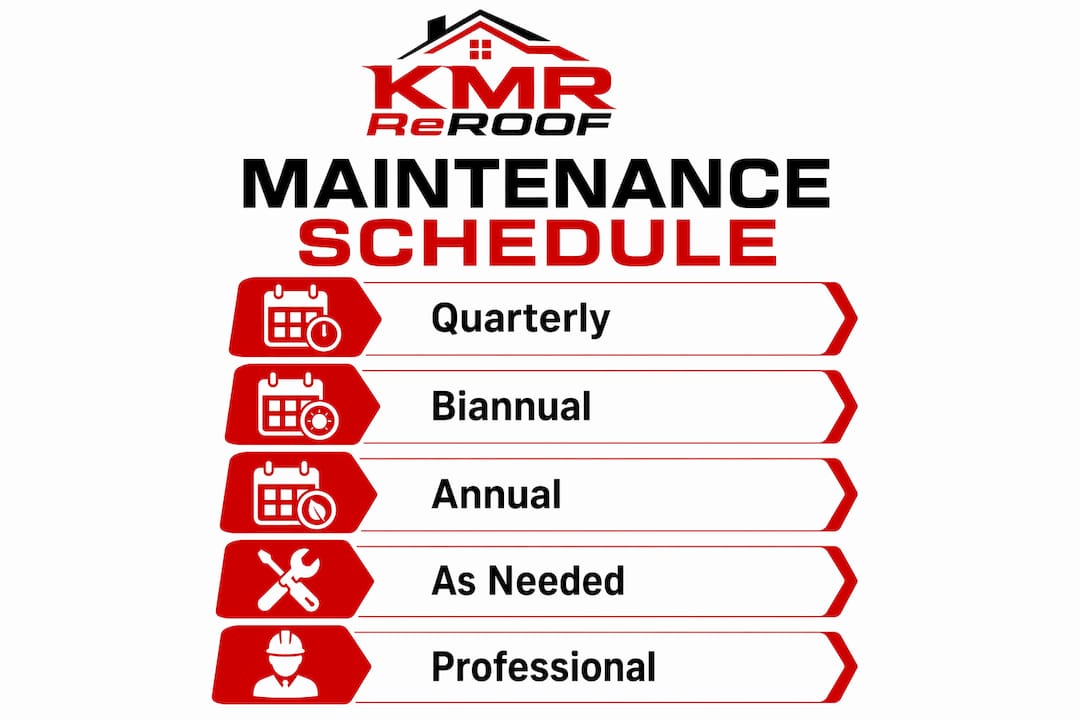
| Maintenance task | Frequency | Who performs it |
|---|---|---|
| Full professional inspection | Twice per year (spring and fall) | Licensed roofing contractor |
| Post-storm or post-work check | After each event | Licensed roofing contractor |
| Drain and scupper clearing | Quarterly | Building maintenance staff |
| Sealant and flashing inspection | Biannually | Licensed roofing contractor |
| Documentation and photo records | Every inspection | Contractor or property manager |
How to identify the most vulnerable areas on a commercial roof
Transition points are where most commercial roof failures begin. HVAC curbs, roof drains, vents, and parapet walls are the highest-risk zones because they interrupt the continuous membrane surface. Sealants at these points expand and contract with temperature changes, which causes them to crack and separate over time. Water intrusion almost always starts here before spreading to the broader membrane.
During every inspection, focus on these specific warning signs:
- Failed or cracked sealant around any penetration or curb
- Loose or lifted flashing at parapet walls and roof edges
- Membrane punctures or tears near equipment pads and foot traffic zones
- Blistering or bubbling on the membrane surface, which signals trapped moisture
- Rust staining near metal components, indicating long-term water contact
Prompt repair of any of these signs prevents moisture from reaching the roof deck. Once water penetrates the deck, repair costs multiply quickly and structural damage becomes a real risk.
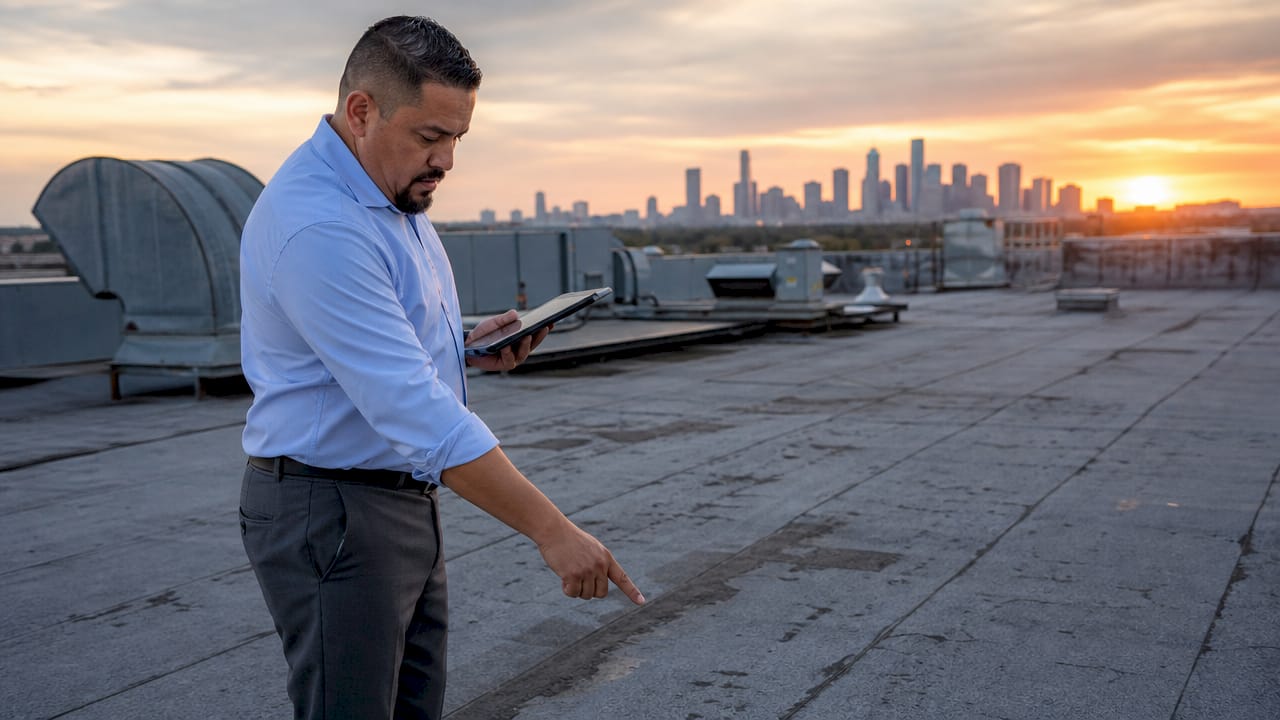
Modern inspection methods go beyond what the eye can see. Drone scans and infrared thermal imaging detect trapped moisture under membranes before any visible damage appears. Infrared imaging works by identifying temperature differences between wet and dry insulation. Wet insulation retains heat longer, which shows up clearly on a thermal scan. This technology allows targeted repairs instead of broad membrane replacement, saving significant money.
Pro Tip: Schedule your infrared inspection in the late afternoon or early evening. The roof surface needs to have absorbed solar heat during the day for the thermal contrast to be visible in the scan.
What drainage practices prevent ponding water on commercial roofs?
Ponding water is one of the most destructive forces a commercial roof faces. Standing water remaining for more than 48 hours after rain signals a drainage failure that requires professional correction. That threshold matters because membrane materials degrade significantly faster under sustained water exposure. Prolonged ponding also adds structural load that flat roofs are not always designed to carry indefinitely.
The numbers behind clogged drains are striking. A single blocked drain on a 10,000 square foot roof can add 6,200 pounds of water per inch of depth. That weight stresses the roof deck, accelerates membrane fatigue, and can cause structural sagging that makes future drainage even worse.
Follow these steps to keep drainage systems working:
- Clear all drains, scuppers, and gutters of leaves, debris, and sediment at least once per quarter.
- Inspect drain bowls and strainers for cracks, corrosion, or missing components during every professional visit.
- Check for low spots or structural sagging that redirect water away from drains.
- Test drainage flow by running water from a hose during dry weather to confirm drains are fully clear.
- Document any areas of recurring ponding and report them to your roofing contractor for a slope correction assessment.
Building maintenance staff can handle quarterly drain clearing between professional visits. That simple task prevents the most common cause of ponding water and costs almost nothing compared to the repairs it avoids. Knowing why regular maintenance pays off becomes obvious once you see what a single blocked drain can do to a roof structure.
| Drainage component | Risk if neglected | Maintenance action |
|---|---|---|
| Roof drains | Ponding, membrane damage | Clear debris quarterly |
| Scuppers | Overflow, wall damage | Inspect and clear quarterly |
| Gutters | Overflow, fascia rot | Clear after storms and seasonally |
| Drain bowls and strainers | Blockage, slow drainage | Inspect biannually for cracks |
How can property managers prevent damage from rooftop trades work?
Non-roofing trades are a leading cause of membrane damage that has nothing to do with weather. HVAC technicians, electricians, and other contractors working on rooftop equipment regularly puncture membranes with dropped tools, sharp equipment edges, and improper foot placement. These punctures often go unreported and undetected until a leak appears inside the building.
The best protection is a formal roof access policy. Every person who steps onto the roof should be logged, and any work near roofing materials should involve coordination with a licensed roofing professional. That coordination does not require the roofer to be present for every HVAC service call. It means establishing clear rules and inspecting the roof area promptly after any installation or removal work.
Practical steps to protect your roof from trades damage include:
- Maintain a roof access log recording the date, contractor name, purpose, and area accessed for every visit
- Install designated walkway pads along common access routes to protect the membrane from foot traffic
- Require protective equipment such as tool bags and soft-soled shoes for all rooftop workers
- Inspect the affected roof area within 48 hours after any rooftop equipment work
- Brief contractors on membrane locations and restricted zones before they begin work
Pro Tip: Attach a laminated roof plan to the rooftop access hatch showing drain locations, membrane zones, and restricted areas. Contractors who can see the layout are far less likely to cause accidental damage.
Documented access logs also serve a second purpose. If damage is discovered later, the log identifies which contractor was on the roof and when. That record supports warranty claims and liability discussions with the responsible trade.
What are the most common commercial roof maintenance mistakes?
The most expensive mistake a property manager can make is waiting for a leak before scheduling an inspection. Emergency repairs cost 3–5 times more than planned preventive maintenance. By the time water appears inside the building, the damage has already spread well beyond the visible entry point.
- Skipping inspections until a problem is visible. Roof failures develop slowly and silently. A cracked sealant or small puncture causes no visible leak for months while moisture saturates insulation and degrades the deck below.
- Attempting DIY repairs. Improper patching with incompatible materials voids warranties and often makes the underlying problem worse. Licensed roofing professionals use materials and methods that match the existing system.
- Ignoring sealant failures. Sealant is the first line of defense at every transition point. Cracked or missing sealant at an HVAC curb is a direct path for water into the building.
- Neglecting documentation. Without inspection records, warranty claims become difficult to support. Insurers and manufacturers both require proof of maintenance history.
“Deferred maintenance is not a cost savings. It is a cost transfer. Every dollar you avoid spending on scheduled maintenance becomes three to five dollars in emergency repairs.”
Reviewing common commercial roof problems in Texas shows that most failures trace back to one of these four mistakes. The pattern is consistent across building types and roof systems.
Key takeaways
Proactive commercial roof maintenance costs a fraction of emergency repairs and extends roof lifespan by 25–50% when inspections, drainage management, and trades coordination are applied consistently.
| Point | Details |
|---|---|
| Maintenance vs. replacement cost | Annual maintenance runs $0.10–$0.21 per sq ft versus $5–$16 per sq ft for full replacement. |
| Inspection schedule | NRCA recommends biannual inspections in spring and fall plus checks after storms or trades work. |
| Drainage threshold | Standing water lasting more than 48 hours signals drainage failure requiring professional correction. |
| Highest-risk zones | Transition points like HVAC curbs, drains, vents, and parapet walls cause most water intrusion. |
| Documentation protects warranties | Maintained inspection records are required to support roofing warranty claims. |
What 15 years of watching roofs fail taught me
Property managers consistently underestimate how much control they actually have over a roof’s lifespan. The roofs I have seen fail earliest almost always had one thing in common: the building owner treated the roof as a fixed asset rather than a maintained system. A roof is not a wall. It takes weather, UV exposure, thermal cycling, and foot traffic every single day. Treating it like something that only needs attention when it leaks is the fastest way to an early replacement.
The maintenance ROI argument is not complicated. Spending $2,000 per year on a $100,000 roof to get 25 extra years of service is a straightforward financial win. What surprises most property managers is how little of that $2,000 actually goes toward repairs. Most of it goes toward inspections and documentation. The inspections catch problems when they are still cheap. The documentation protects the warranty that covers the expensive ones.
Infrared imaging has changed the inspection game more than any other technology in the past decade. I have seen roofs that looked perfectly fine from the surface turn out to have significant moisture saturation under the membrane. Without infrared, those roofs would have been patched cosmetically and failed within two years. With it, the wet insulation was removed and replaced at a fraction of replacement cost. That technology is no longer expensive or exotic. Any reputable commercial roofing contractor should offer it.
The one thing I would tell every property manager reading this: set your maintenance budget before the fiscal year starts, not after the first leak. Reactive spending always costs more. A written maintenance protocol, a biannual inspection schedule, and a roof access log are not bureaucratic overhead. They are the three things that keep a commercial roof performing for its full design life.
— Misterreroof
Misterreroof: professional roof care for Texas property owners
Texas weather tests commercial roofs harder than most climates. Extreme heat, sudden hailstorms, and heavy Gulf Coast rain create conditions where deferred maintenance becomes a serious liability.
Mister Reroof provides professional roof inspections, maintenance programs, and full replacements for commercial and residential properties in El Campo and Houston, TX. Whether your roof needs a targeted repair or a complete system replacement, the team at Misterreroof uses durable materials and proven installation methods built for Texas conditions. If your current roof is approaching the end of its service life, the Texas roof replacement guide covers everything you need to know before making that decision. For flat roof systems specifically, Misterreroof’s flat roof replacement services deliver long-lasting performance across commercial building types. Contact Misterreroof today for a free estimate.
FAQ
How often should a commercial roof be inspected?
The NRCA recommends two professional inspections per year, ideally in spring and fall, with additional checks after major storms or any rooftop trades work.
What is the 48-hour rule for commercial roof drainage?
Standing water that remains on a commercial roof for more than 48 hours after rain indicates a drainage failure. That water adds structural load and accelerates membrane deterioration, requiring professional correction.
Can building staff perform commercial roof maintenance?
Building staff can handle quarterly drain clearing and basic visual walkthroughs. Sealant work, membrane repairs, and any task involving roof penetrations require a licensed roofing contractor.
Why do commercial roofs fail at transition points?
Transition points like HVAC curbs, drains, and parapet walls interrupt the continuous membrane surface. Sealants at these points crack with thermal cycling, creating direct paths for water intrusion that spread quickly if not repaired.
Does delaying roof maintenance void the warranty?
Most commercial roofing warranties require documented biannual inspections and professional maintenance. Skipping inspections or failing to maintain records gives manufacturers grounds to deny warranty claims.
