TL;DR:
- Hidden roof storm damage often shows no visible signs from the ground but can cause structural problems within months. Professional inspections using specific techniques uncover damage such as broken seal strips and internal bruising from hail. Ignoring such damage leads to higher repair costs, mold, and potential claim denials, so early detection is crucial.
Hidden roof storm damage is defined as storm-related roof impairment that is not visible from the ground or during a casual walk-around inspection. A roof can look completely intact after a severe storm while concealing broken seal strips, bruised shingles, and compromised flashing that will cause serious structural problems within months. Insurance policies commonly set claim filing deadlines of 6–12 months from the storm date, meaning homeowners who wait too long lose coverage entirely. Knowing what is hidden roof storm damage, and acting on that knowledge quickly, is the difference between a manageable repair and a full structural overhaul.
What is hidden roof storm damage and what causes it?
Hidden roof storm damage is structural or material harm caused by wind, hail, or debris that leaves no obvious exterior sign. The roof surface appears normal, but internal components are already failing. This is the most dangerous category of storm damage because homeowners assume they are safe when they are not.
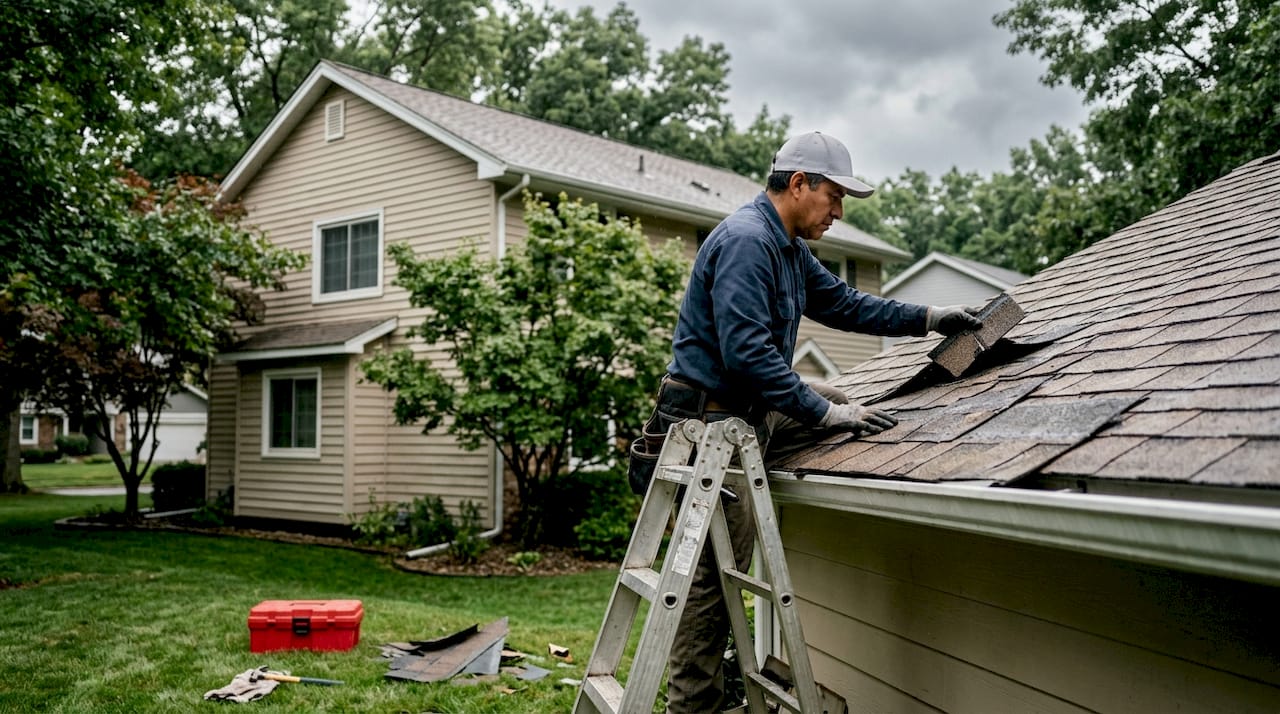
Wind is the most common cause. High-speed gusts lift shingle edges and break the adhesive seal strips underneath without tearing the shingles off entirely. Broken seal strips cannot be seen or tested from the ground. They require a professional to manually lift shingles and check adhesive integrity. Once those seals fail, the next storm can peel entire shingle sections away.
Hail causes a different kind of invisible damage. It bruises shingles internally without creating visible exterior cracks. The impact fractures the granule mat and the fiberglass mat beneath it. These soft spots are only detectable by touch. Left alone, bruised shingles fail and leak within 1–2 years.
Other common hidden damage causes include:
- Flashing displacement: Storm winds shift metal flashing around chimneys, skylights, and vents. Water enters through the gap, but the flashing still looks seated from below.
- Underlayment tears: The waterproof layer beneath shingles can tear from debris impact without disturbing the shingles above it.
- Pipe boot cracking: Rubber boots around plumbing vents crack from hail or UV exposure accelerated by storm debris, creating a direct water entry point.
- Moisture intrusion: Water enters through micro-breaches and travels along roof decking before showing up as a ceiling stain far from the actual entry point.
Pro Tip: After any storm that drops hail larger than a quarter, schedule a professional inspection within 30 days. Waiting longer makes it harder to prove storm causation to your insurance adjuster.
How do professionals find hidden roof storm damage?
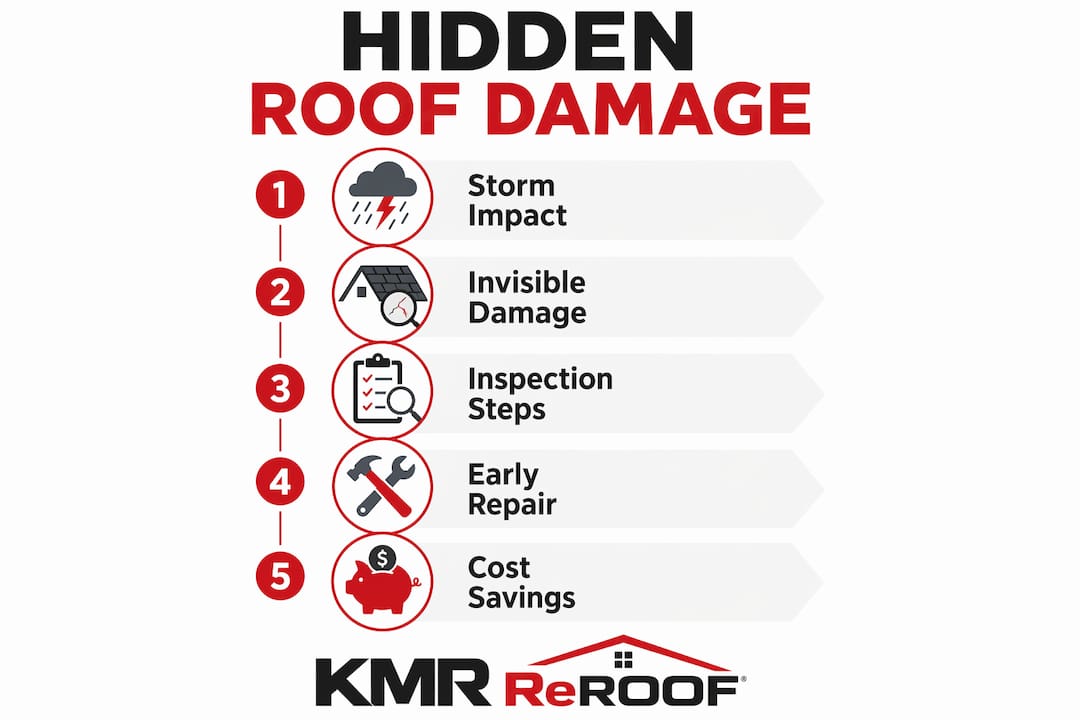
Professional inspectors use a combination of physical techniques and diagnostic tools that go far beyond what a homeowner can safely do from the ground. The inspection process is methodical and covers every component of the roofing system.
A standard professional inspection follows this sequence:
- Manual shingle lifting: The inspector lifts shingle edges to check seal strip adhesion. Intact strips resist lifting firmly. Broken strips release with little resistance, confirming wind damage.
- Tactile bruise detection: The inspector presses on shingle surfaces to feel for soft spots caused by hail impact. Healthy shingles feel firm. Bruised areas compress slightly under pressure.
- Flashing and pipe boot check: Every penetration point gets a close visual and physical inspection for gaps, cracks, and displacement.
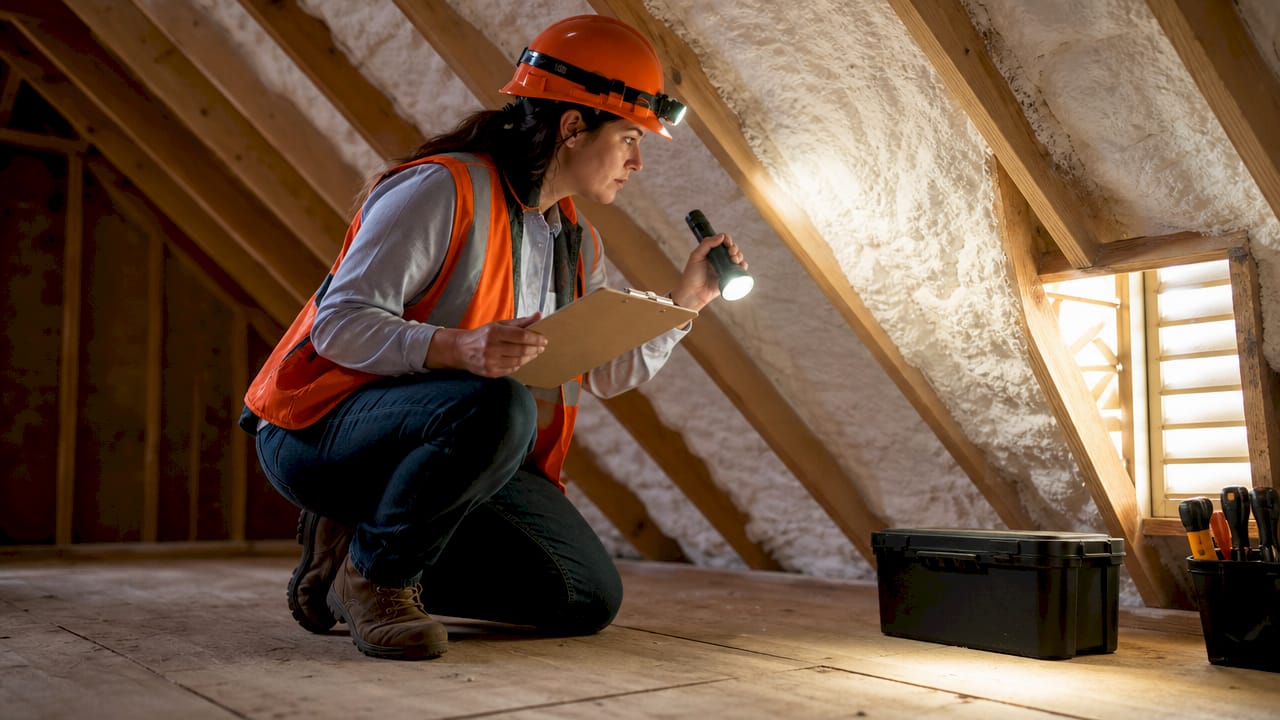
- Attic inspection: The inspector enters the attic during daylight to check for pinpoints of light, damp insulation, water stains on rafters, and musty odors indicating active moisture intrusion.
- Thermal imaging: Professionals use thermal cameras to locate hidden leak sources behind surfaces. Water migration can travel several feet from the actual breach before appearing as a stain, and thermal imaging pinpoints the true entry point.
- Moisture meter readings: A moisture meter measures water content in decking and insulation, confirming active leaks that thermal imaging flags.
- Photo documentation: Every damaged area gets photographed with close-up and wide-angle shots. Photo documentation is the primary evidence an insurance adjuster uses to approve or deny a claim.
The attic inspection step surprises many homeowners. Most people never go up there after a storm. But the attic reveals damage weeks before a ceiling stain appears downstairs. Damp or matted insulation, dark streaks on rafters, and the smell of mildew are all early warnings that water has already entered the roofing system.
Pro Tip: Ask your inspector to walk you through the attic findings in person. Seeing damp insulation or a light gap firsthand makes the insurance claim conversation much easier.
Professionals also check gutters as part of the inspection. Excessive shingle granules in gutters confirm surface erosion from hail or wind, even when the shingles look intact from below. For a detailed walkthrough of the storm damage inspection process, Misterreroof has published a Texas-specific guide covering each step.
What signs can homeowners safely look for after a storm?
Homeowners should never climb onto a wet or storm-damaged roof. The inspection steps below are safe and can be done from the ground or from inside the attic.
From the ground, use binoculars and check for these eight storm damage signs:
- Lifted or buckled shingles along ridge lines and edges
- Missing shingles or exposed dark underlayment patches
- Dented or bent gutters and downspouts from hail impact
- Damaged or displaced ridge cap shingles
- Loose or separated flashing around chimneys and vents
- Cracked or missing vent covers
- Debris lodged against flashing or in valleys
- Shingle granules collecting in gutters or on the ground below downspouts
Inside the attic, do a daylight inspection with the lights off. Look for:
- Pinpoints of light coming through the decking
- Dark staining or streaks on rafters and sheathing
- Insulation that feels wet or looks compressed and matted
- A musty or moldy smell that was not present before the storm
Pro Tip: Take photos of everything you observe from the ground and in the attic immediately after the storm. Date-stamped photos establish a clear timeline for your insurance claim and support the professional inspection findings.
For a full breakdown of safe inspection steps specific to Texas weather conditions, Misterreroof has published expert guidance for homeowners who want to document their findings before a professional arrives.
Call a professional if you observe any of the above signs, if the storm included hail larger than a dime, or if wind speeds exceeded 60 mph. Do not wait for a visible ceiling leak. By the time water appears on your ceiling, the damage inside the roofing system is already significant.
What happens if you ignore hidden roof storm damage?
Ignoring invisible roof damage is one of the most expensive mistakes a homeowner can make. The consequences compound over time and affect multiple systems inside the home.
- Progressive shingle failure: Bruised or seal-broken shingles deteriorate faster than undamaged ones. What starts as a soft spot becomes a crack, then a leak, within one to two storm seasons.
- Water intrusion and rafter rot: Water travels along rafters and decking far from the original breach. By the time a ceiling stain appears, the structural wood beneath the roof may already be rotting.
- Mold growth: Moisture trapped in insulation and between decking layers creates ideal conditions for mold. Mold spreads quickly and creates indoor air quality problems that require remediation beyond roofing repair.
- Insurance claim denial: Most policies require claims to be filed within 6–12 months of the storm. Miss that window and the insurer denies coverage, leaving the homeowner to pay the full repair cost out of pocket.
- Higher energy bills: Compromised insulation from moisture intrusion reduces thermal resistance. Homeowners often notice elevated HVAC costs before they notice any visible roof damage. This is one of the earliest warning signs that something is wrong.
- Escalating repair costs: A professional inspection and targeted repair shortly after a storm costs a fraction of what full deck replacement, rafter repair, and mold remediation cost after months of neglect.
The financial case for early action is straightforward. A professional inspection is low cost. Replacing rotted decking, treating mold, and repairing water-damaged ceilings is not.
Key Takeaways
Hidden roof storm damage is the leading cause of delayed, costly repairs because it produces no visible symptoms until structural failure is already underway.
| Point | Details |
|---|---|
| Invisible damage is common | Wind and hail regularly damage seal strips and shingles without leaving visible exterior signs. |
| Insurance deadlines are firm | Most policies require storm damage claims within 6–12 months; missing this window means no coverage. |
| Professional tools find what eyes miss | Thermal cameras and moisture meters locate hidden leaks that visual inspections cannot detect. |
| Attic checks reveal early damage | Damp insulation, light gaps, and musty odors in the attic signal active moisture intrusion before ceiling stains appear. |
| Delayed action multiplies costs | Ignored hidden damage leads to rafter rot, mold, and full deck replacement at far greater expense. |
What I’ve learned from years of watching homeowners miss the obvious
The most common mistake I see is the “no leak, no problem” assumption. A homeowner walks outside after a storm, sees all their shingles still on the roof, and concludes everything is fine. That assumption costs people thousands of dollars every year.
The roof that looks intact after a storm is often the most dangerous one. Broken seal strips and bruised shingles do their worst damage slowly and silently. The homeowner who calls for an inspection within two weeks of a storm almost always pays less than the one who calls six months later with a ceiling stain and a mold problem.
The other thing I consistently observe is that homeowners underestimate the attic. That space is the clearest early-warning system a home has. A 10-minute attic check with the lights off, looking for pinpoints of light and smelling for mildew, tells you more than an hour of staring at the roof from the driveway. Most homeowners never do it.
My practical advice: after any significant storm, do the ground-level binocular check, do the attic check, take photos of anything that looks off, and call a professional within 30 days. Do not wait for the ceiling to tell you what the attic already knew.
— Misterreroof
Misterreroof can help you find and fix storm damage fast
Storm damage inspections require trained eyes, the right tools, and knowledge of what Texas weather does to roofing systems. Misterreroof serves homeowners and property managers in El Campo and Houston, TX, with professional inspections that cover every component of the roofing system, from seal strips and flashing to attic insulation and decking.

Mister Reroof documents all findings with photos formatted for insurance adjuster review, helping homeowners file complete and timely claims. Whether the storm revealed a need for targeted repairs or a full replacement, the team handles shingle, metal, flat, and TPO roofing systems. Start with the Texas roof replacement guide to understand your options, or review the Houston homeowner tips for replacement decisions specific to the Texas Gulf Coast climate. Contact Misterreroof today for a free estimate.
FAQ
What is hidden roof storm damage exactly?
Hidden roof storm damage is storm-related harm to shingles, seal strips, flashing, or underlayment that produces no visible exterior signs. It is only detectable through professional inspection techniques such as manual shingle lifting, tactile bruise testing, and thermal imaging.
Can storms damage a roof without any missing shingles?
Yes. Wind can break adhesive seal strips under shingles without removing them, and hail can bruise shingles internally without cracking the surface. Both types of damage cause leaks and structural problems within months.
How long do I have to file a storm damage insurance claim?
Most homeowners’ insurance policies set claim filing deadlines of 6–12 months from the storm date. Filing after that window typically results in a denied claim, even when the damage is clearly storm-related.
What is the safest way to check for hidden roof damage at home?
Use binoculars from the ground to look for lifted shingles, dented gutters, and loose flashing. Then inspect the attic during daylight with the lights off, checking for light gaps, damp insulation, and musty odors.
Why are energy bills rising after a storm a warning sign?
Elevated HVAC costs after a storm can indicate that moisture has compromised roof insulation, reducing its thermal resistance. This energy bill increase often appears before any visible ceiling stain or interior water damage.
