Texas homeowners face sweltering summers that drive up cooling costs and strain roofs under intense heat. Cool roofing systems offer a proven solution by reducing roof surface temperatures by 8-34°C, cutting energy bills, and extending roof lifespan. This guide explains what cool roofing is, how it works in Texas climates, the material options available, installation considerations, and how cool roofs compare to traditional roofing. You’ll discover practical insights to make informed decisions about upgrading to energy-efficient roofing that saves money while keeping your home comfortable.
Table of Contents
- Understanding Cool Roofing And Its Energy Benefits
- Types Of Cool Roofing Materials Suitable For Texas Homes
- Installation And Cost Considerations For Cool Roofing In Texas
- Comparing Cool Roofing With Other Roofing Options In Texas
- Upgrade To Energy-Efficient Cool Roofing With Mister Reroof
- Frequently Asked Questions About Cool Roofing In Texas
Key takeaways
| Point | Details |
|---|---|
| Temperature reduction | Cool roofs lower surface temperatures by 8-34°C, reducing heat transfer into homes. |
| Energy savings | Texas homeowners save 10-30% on cooling costs despite higher upfront investment. |
| Material variety | Metal, TPO, cool shingles, and coatings suit different budgets and home styles. |
| Extended lifespan | Reduced thermal stress helps cool roofs last longer than traditional options. |
| Professional installation | Expert installation maximizes performance and ensures warranty protection. |
Understanding cool roofing and its energy benefits
Cool roofing refers to roofing systems designed to reflect more sunlight and absorb less heat than standard roofing materials. Traditional dark roofs absorb solar radiation, heating up to 65°C on summer days and transferring that heat into your home. Cool roofs use reflective surfaces and specialized coatings to bounce sunlight away, keeping roof temperatures significantly lower.
The science behind cool roofing centers on two properties: solar reflectance and thermal emittance. Solar reflectance measures how much sunlight bounces off the roof surface rather than being absorbed. Thermal emittance indicates how efficiently the roof releases absorbed heat. High-performance cool roofs combine both properties to minimize heat buildup.
Texas homeowners see dramatic results from this technology. Research confirms that cool roofing systems reduce roof surface temperature by 8-34°C, leading to measurable indoor temperature drops. When your roof stays cooler, your air conditioning works less to maintain comfortable temperatures. This reduced cooling load translates directly to lower energy bills.
Despite higher initial costs compared to standard roofing, cool roofs deliver 10-30% energy savings annually. Over a typical 20-year lifespan, these savings offset the upfront investment and generate net positive returns. The exact savings depend on your home’s size, insulation quality, HVAC efficiency, and local electricity rates.
Beyond financial benefits, cool roofing improves home comfort and equipment longevity:
- Lower indoor temperatures create more consistent comfort throughout your home
- Reduced HVAC runtime extends air conditioning system lifespan
- Decreased peak demand helps stabilize the electrical grid during heat waves
- Less thermal stress on roofing materials extends roof durability
- Improved attic ventilation reduces moisture buildup and structural damage
Cool roofs can reduce air conditioning energy use by 10-30% in hot climates, with the greatest savings occurring in buildings with poor insulation or inefficient cooling systems.
The energy efficiency roofing benefits compound over time as energy costs rise. Installing cool roofing now protects you against future utility rate increases while contributing to environmental sustainability by reducing power plant emissions.
Types of cool roofing materials suitable for Texas homes
Texas homeowners can choose from several cool roofing materials, each offering distinct advantages for different home styles and budgets. Understanding these options helps you select the best solution for your property.
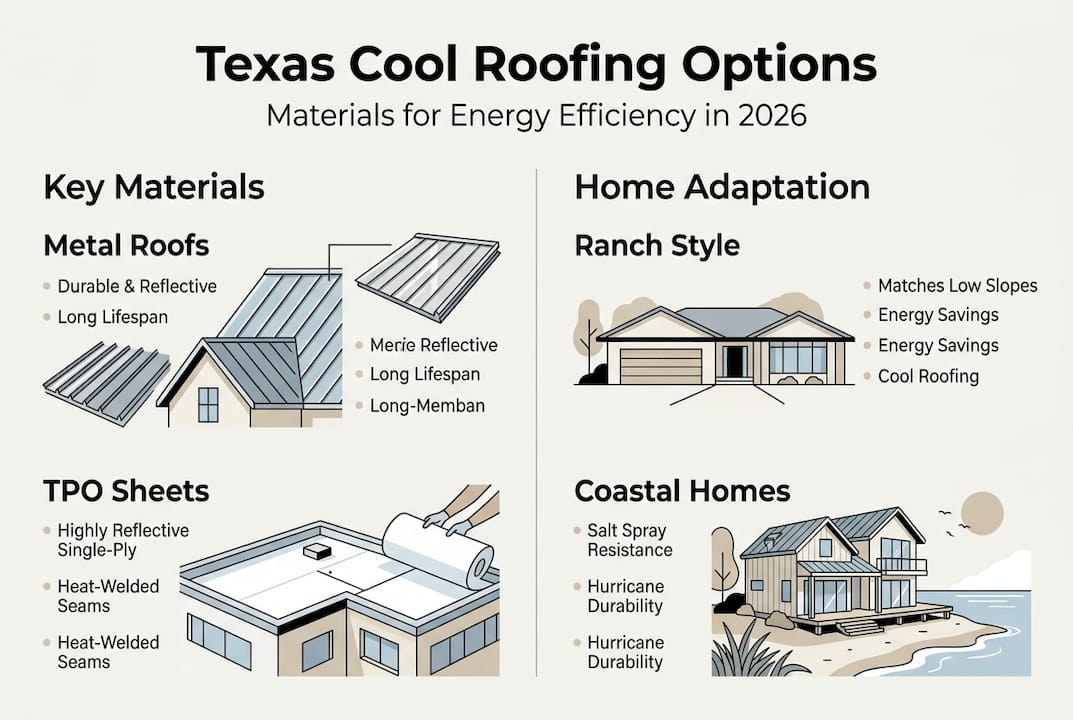
Metal cool roofs use reflective coatings or naturally reflective finishes to achieve excellent solar reflectance. Standing seam metal roofs particularly excel in Texas climates, combining durability with superior heat reflection. These systems resist wind damage, shed water efficiently, and maintain their reflective properties for decades.
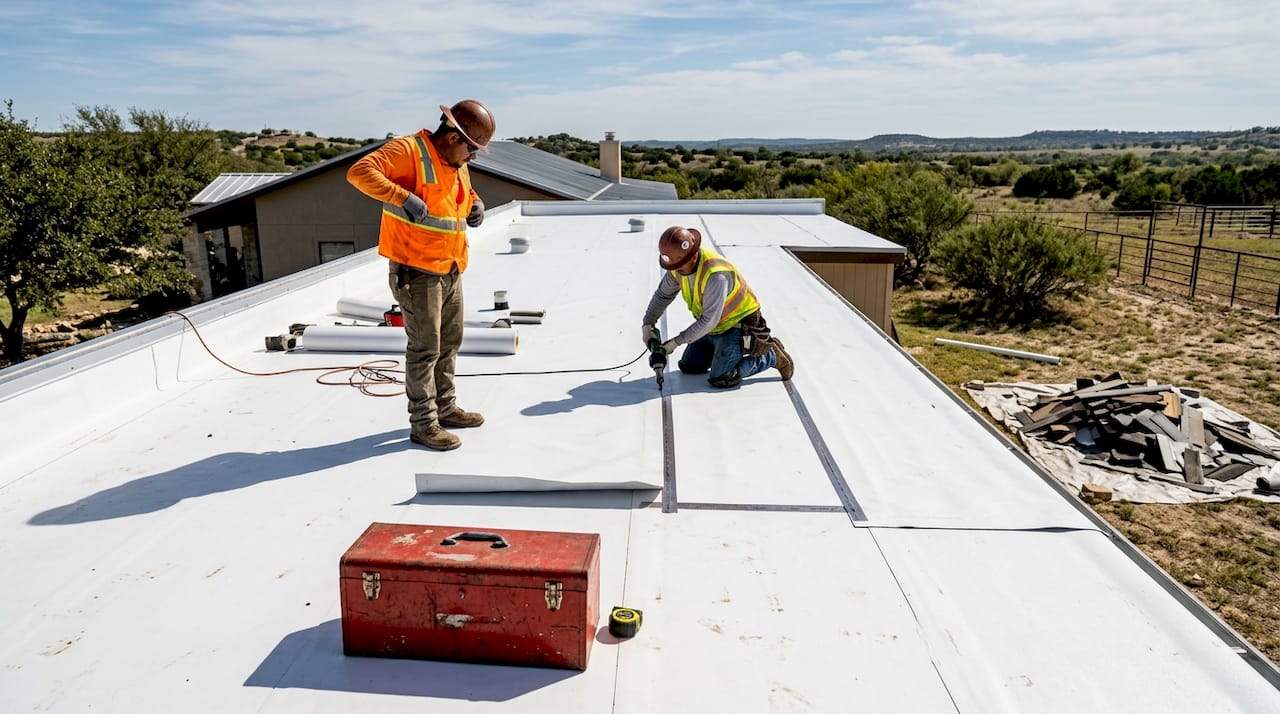
Thermoplastic polyolefin (TPO) roofing provides outstanding performance for flat or low-slope roofs common on Texas ranch-style homes and commercial buildings. TPO membranes feature bright white surfaces that reflect up to 85% of solar radiation. The single-ply construction installs quickly and resists punctures, tears, and UV degradation.
Cool asphalt shingles incorporate special granules that reflect more sunlight than standard shingles while maintaining traditional aesthetics. These products suit homeowners who prefer conventional shingle appearance but want improved energy efficiency. Cool shingles cost slightly more than standard versions but significantly less than metal or TPO systems.
Reflective roof coatings offer a budget-friendly option for existing roofs in good condition. These liquid-applied products create a seamless reflective barrier over asphalt shingles, metal, or other substrates. Coatings extend roof life while adding cool roofing benefits without complete replacement.
| Material | Durability | Cost Range | Energy Efficiency | Lifespan | Best For |
|---|---|---|---|---|---|
| Metal | Excellent | High | Very High | 40-70 years | Long-term investment, wind resistance |
| TPO | Very Good | Medium-High | Excellent | 20-30 years | Flat/low-slope roofs, commercial |
| Cool Shingles | Good | Medium | Good | 20-30 years | Traditional aesthetics, budget-conscious |
| Reflective Coatings | Fair-Good | Low-Medium | Good | 10-20 years | Roof restoration, temporary solution |
Each material type offers specific advantages:
- Metal roofs provide maximum longevity and wind resistance for hurricane-prone coastal areas
- TPO systems deliver best-in-class reflectivity for flat roofs on modern homes
- Cool shingles maintain neighborhood aesthetic standards while improving efficiency
- Reflective coatings extend existing roof life at minimal cost
Pro Tip: Match your material choice to your home’s architectural style and long-term ownership plans. Metal roofs justify their higher cost if you plan to stay in your home for 20+ years, while cool shingles work better for shorter timeframes or resale considerations.
Popular Texas home styles pair naturally with specific materials. Traditional ranch homes with low-slope sections benefit from TPO installation. Colonial and craftsman styles with steep pitches suit metal roofing installation or cool shingles. Modern designs often incorporate metal for clean lines and maximum efficiency.
Consider your local climate zone when selecting materials. Coastal areas require superior wind and salt resistance, favoring metal systems. Inland regions prioritize heat reflection, making TPO and cool shingles excellent choices. Texas roofing material options vary by region to address these specific environmental challenges.
Installation and cost considerations for cool roofing in Texas
Installing cool roofing requires professional expertise to ensure maximum performance and warranty protection. Understanding the process and costs helps you budget appropriately and make informed decisions.
Professional installation follows a systematic approach:
- Initial roof assessment evaluates existing conditions, structural integrity, and ventilation adequacy
- Material selection consultation matches your home’s needs with appropriate cool roofing products
- Removal of old roofing materials exposes the deck for inspection and repairs
- Deck repair addresses any damaged sheathing, rot, or structural issues
- Underlayment installation creates a waterproof barrier beneath the cool roofing material
- Cool roofing material installation follows manufacturer specifications for optimal performance
- Flashing and trim work ensures watertight seals around penetrations and edges
- Final inspection verifies proper installation and activates warranty coverage
Cost factors vary significantly based on multiple variables. Material type represents the largest expense, with metal systems costing $8-15 per square foot installed, TPO ranging $6-10 per square foot, and cool shingles running $4-7 per square foot. Reflective coatings typically cost $1-3 per square foot for application over existing roofs in good condition.
Roof size directly impacts total project cost, with larger homes requiring more materials and labor. Complex roof designs with multiple valleys, dormers, or steep pitches increase installation difficulty and labor hours. Accessibility challenges like multi-story homes or limited site access add costs for equipment and safety measures.
Permit fees and inspection requirements vary by municipality but typically add $200-500 to project costs. Some jurisdictions offer expedited permitting for energy-efficient upgrades, reducing timeline and administrative expenses.
Return on investment calculations reveal compelling financial benefits. Texas homeowners see 10-30% energy cost savings on cool roofs despite higher upfront prices. A typical 2,000 square foot home spending $3,000 annually on cooling saves $300-900 per year with cool roofing. Over a 25-year lifespan, cumulative savings reach $7,500-22,500, far exceeding the initial premium.
Pro Tip: Schedule metal roofing installation or other cool roofing projects when your existing roof needs replacement anyway. This timing maximizes cost-effectiveness by avoiding duplicate labor and disposal expenses.
Local incentives and rebates can offset initial costs. Some Texas utility companies offer rebates for cool roofing installation as part of energy conservation programs. Federal tax credits for energy-efficient home improvements may apply to qualifying cool roofing products. Check with your utility provider and tax advisor about available incentives before scheduling installation.
Financing options make cool roofing accessible even with higher upfront costs. Many roofing contractors offer payment plans or work with specialized lenders for home improvement financing. Home equity lines of credit provide another funding source with potential tax-deductible interest. The energy savings advice you implement through cool roofing often covers monthly financing payments through reduced utility bills.
Maintenance costs remain minimal for most cool roofing systems. Annual inspections identify potential issues early, preventing costly repairs. Occasional cleaning maintains reflectivity on metal and TPO roofs, though most systems self-clean through rainfall. Budget $100-300 annually for professional maintenance to protect your investment.
Comparing cool roofing with other roofing options in Texas
Evaluating cool roofing against traditional alternatives helps clarify which option best serves your home’s specific needs and your long-term goals.
| Feature | Cool Roofing | Traditional Asphalt | Standard Metal |
|---|---|---|---|
| Energy Savings | 10-30% reduction | Baseline | 5-15% reduction |
| Lifespan | 25-50 years | 15-25 years | 30-50 years |
| Initial Cost | Medium-High | Low-Medium | High |
| Maintenance | Low | Medium | Low |
| Heat Reflection | Excellent | Poor | Good |
| Storm Resistance | Excellent | Fair-Good | Excellent |
Key advantages and drawbacks by roofing type reveal important trade-offs:
- Cool roofing delivers maximum energy savings and extended lifespan but requires higher upfront investment
- Traditional asphalt shingles offer lowest initial cost but generate highest cooling expenses and shorter durability
- Standard metal roofing provides good longevity and moderate efficiency without specialized cool coatings
- Cool metal combines best attributes of durability and energy performance at premium pricing
- TPO cool roofing excels on flat roofs where traditional shingles cannot perform
In Texas heat, cool roofs maintain surface temperatures 20-30°C lower than dark conventional roofs, translating to 15-25% less heat transfer into conditioned spaces and measurable reductions in peak cooling demand.
Climate considerations strongly influence optimal roofing choices. South Texas regions with year-round heat benefit most from cool roofing’s continuous energy savings. North Texas areas with distinct seasons still gain significant summer savings but see less annual impact. Coastal zones require materials that resist salt corrosion and hurricane-force winds, favoring metal cool roofs over shingles.
Home style compatibility affects both aesthetics and performance. Modern architectural designs incorporate cool roofing naturally through metal panels or flat TPO systems. Traditional homes maintain curb appeal with cool shingles that mimic conventional appearance while delivering efficiency gains. Historic districts may restrict material choices, requiring reflective coatings on approved traditional materials.
The metal vs shingle roofs decision often centers on budget versus longevity trade-offs. Metal cool roofing costs 2-3 times more initially but lasts twice as long and saves more energy annually. Cool shingles split the difference, offering moderate efficiency gains at accessible prices.
Resale value considerations favor cool roofing in energy-conscious markets. Buyers increasingly prioritize energy efficiency and low operating costs when evaluating homes. Cool roofing provides tangible value through documented utility savings and remaining warranty coverage. Appraisers recognize durable roof types as value-adding features that justify higher asking prices.
Environmental impact extends beyond personal energy savings. Cool roofing reduces urban heat island effects by lowering ambient temperatures in developed areas. This collective cooling benefit improves air quality and reduces regional power plant emissions. Homeowners concerned about sustainability find cool roofing aligns with broader environmental values.
Warranty coverage differs significantly between roofing types. Cool metal roofing typically includes 30-50 year material warranties with transferable coverage that adds resale value. TPO systems offer 15-25 year warranties depending on membrane thickness. Cool shingles carry standard 20-30 year warranties similar to conventional products. Always verify warranty terms and registration requirements during installation.
Upgrade to energy-efficient cool roofing with Mister ReRoof
Texas homeowners ready to reduce energy costs and improve home comfort can trust Mister ReRoof’s expertise in cool roofing installation. With extensive experience across El Campo, Houston, and surrounding communities, Mister ReRoof delivers professional roofing solutions built to withstand Texas heat and weather extremes.
Mister ReRoof specializes in multiple cool roofing options tailored to your home’s specific needs:
- Shingle roof replacement Sugar Land featuring energy-efficient cool shingle technology
- Metal roof replacement Victoria with reflective coatings for maximum heat rejection
- TPO roof replacement El Campo providing superior performance for flat and low-slope applications
Pro Tip: Schedule a professional roof assessment before summer arrives to evaluate your current roof’s condition and explore cool roofing options that maximize energy savings during peak cooling season.
Homeowners who switch to cool roofing with Mister ReRoof report immediate comfort improvements and noticeable utility bill reductions. The combination of quality materials, expert installation, and dependable service ensures your cool roofing investment delivers lasting value. Contact Mister ReRoof today for a free estimate and discover how energy-efficient roofing protects your home while reducing operating costs.
Frequently asked questions about cool roofing in Texas
What is the lifespan of a cool roof compared to traditional roofing?
Cool roofs typically last 25-50 years depending on material type, compared to 15-25 years for traditional asphalt shingles. Metal cool roofs often exceed 40 years, while TPO systems provide 20-30 years of service. The reduced thermal stress from lower surface temperatures helps cool roofing materials maintain their integrity longer than conventional alternatives.
Are cool roofing materials eligible for Texas rebates or incentives?
Some Texas utility companies offer rebates for energy-efficient roofing upgrades, though programs vary by provider and location. Federal tax credits may apply to qualifying cool roofing products that meet specific energy efficiency standards. Contact your local utility company and consult a tax professional to identify available incentives before scheduling installation.
How much can I expect to save annually on energy bills with a cool roof?
Texas homeowners typically save 10-30% on cooling costs after installing cool roofing, translating to $300-900 annually for average-sized homes. Actual savings depend on your home’s size, insulation quality, HVAC efficiency, electricity rates, and roof material selection. Homes with poor insulation or older air conditioning systems often see the highest percentage savings from energy efficient roofing upgrades.
Is cool roofing suitable for all home styles in Texas?
Cool roofing adapts to virtually any home style through material selection. Traditional homes use cool shingles that maintain conventional aesthetics, modern designs incorporate metal panels or TPO systems, and historic properties apply reflective coatings to approved materials. Your roofing contractor can recommend options that balance energy efficiency with architectural compatibility and neighborhood standards.
Can I install a cool roof myself, or do I need a professional?
Professional installation is strongly recommended for cool roofing to ensure proper performance, warranty coverage, and safety. Roofing work involves significant fall hazards, requires specialized tools and techniques, and demands expertise in waterproofing details. DIY installation typically voids manufacturer warranties and may violate local building codes. Licensed contractors guarantee quality workmanship and provide warranty protection for both materials and labor.
