
Durability in flat roofing: best options for Texas 2026
Durability in flat roofing: best options for Texas 2026
Choosing a flat roof for your Texas property isn’t as simple as picking the cheapest option. Many homeowners believe all flat roofing materials deliver the same performance, but that’s far from true. Texas weather throws intense sun, sudden storms, and temperature swings at your roof year-round. The right membrane can last decades and save you thousands in repairs, while the wrong choice leads to frequent fixes and energy waste. This guide breaks down the most durable flat roofing options, helping you make a smart decision that protects your investment and withstands Texas conditions.
Table of Contents
- Why Durability Matters For Flat Roofs In Texas
- Comparing Popular Flat Roofing Membranes: Pvc, Epdm, And Tpo
- Maintenance Strategies To Maximize Flat Roof Durability In Texas
- Choosing The Right Flat Roofing Solution For Your Texas Property
- Explore Durable Flat Roof Replacement Options With Mister Reroof
Key takeaways
| Point | Details |
|---|---|
| Durability varies widely | PVC, EPDM, and TPO membranes offer different lifespans and performance under Texas sun and storms. |
| PVC excels in harsh conditions | PVC membranes deliver 20-25 years of service with superior chemical resistance and UV tolerance. |
| EPDM offers longest lifespan | EPDM rubber roofs last 25-30 years but absorb heat, potentially raising cooling costs in summer. |
| TPO balances cost and performance | TPO provides good reflectivity and affordability with a 15-20 year lifespan for budget-conscious projects. |
Why durability matters for flat roofs in Texas
Texas weather doesn’t play nice with roofing materials. Your flat roof faces relentless UV radiation during summer months, sudden temperature drops in winter, and intense storms that dump rain and hail without warning. Unlike sloped roofs that shed water quickly, flat roofs must handle standing water and constant sun exposure that accelerates material breakdown.
Durability directly impacts your wallet and peace of mind. A roof that fails prematurely means emergency repairs, water damage to your property, and potentially thousands in unexpected costs. Choosing the right membrane for your commercial roof can save thousands in repairs and energy costs. Energy efficiency also depends on durability since degraded membranes lose their reflective properties, forcing your HVAC system to work harder.
Consider these specific challenges Texas flat roofs endure:
- UV radiation that breaks down inferior materials within years
- Temperature swings from freezing to over 100°F stressing seams and fasteners
- Heavy rainfall creating standing water that penetrates weak points
- Hail storms that puncture thin or brittle membranes
“The difference between a 15-year roof and a 30-year roof often comes down to material selection and proper installation, not luck.”
Investing in a durable roofing membrane isn’t just about avoiding problems. It’s about protecting your property value and maintaining comfortable indoor temperatures year-round. The right choice means fewer inspections, lower maintenance costs, and better energy performance. Understanding how Texas weather impacts roofing durability helps you make decisions that pay off for decades.
Property managers and homeowners who prioritize durability upfront save significantly over the roof’s lifetime. Short-term savings on cheap materials evaporate when you’re replacing the entire roof in half the expected timespan.
Comparing popular flat roofing membranes: PVC, EPDM, and TPO
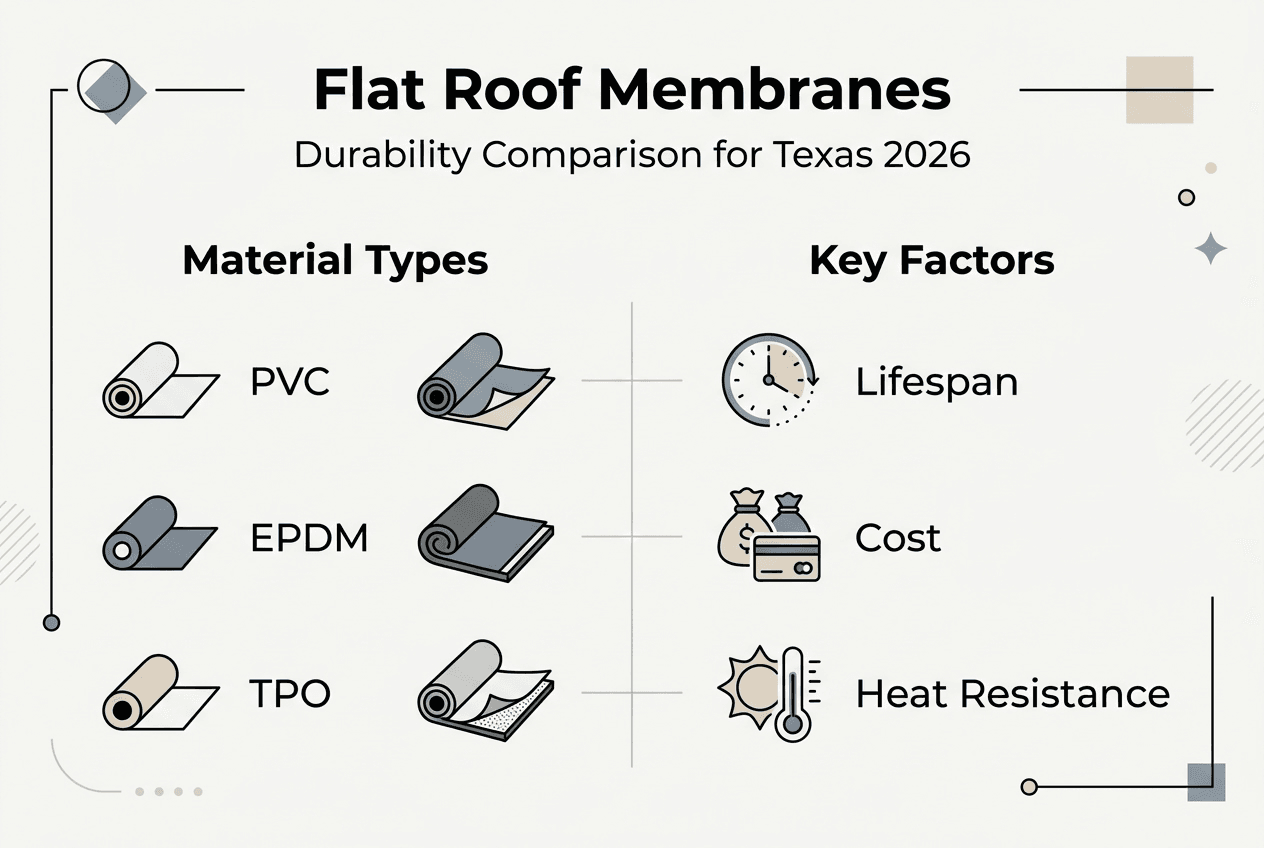
Three membrane types dominate the flat roofing market, each with distinct durability profiles suited to different Texas applications. Understanding their strengths and limitations helps you match materials to your specific needs and budget.
PVC roofing generally performs best under intense Texas sun, offering long-term durability, superior chemical resistance, and energy efficiency. PVC membranes typically last 20-25 years and excel in environments with chemical exposure or extreme UV conditions. The heat-welded seams create watertight bonds stronger than the membrane itself. PVC’s white or light-colored surface reflects solar radiation effectively, reducing cooling loads during brutal Texas summers.
PVC does come with higher upfront costs compared to alternatives. Installation requires skilled technicians experienced with heat-welding techniques. However, the extended lifespan and minimal maintenance requirements often justify the premium for commercial properties and homeowners planning long-term ownership.
EPDM rubber roofs offer flexibility and a long lifespan, making them suitable for small to medium commercial buildings. EPDM delivers 25-30 years of service when properly maintained, the longest lifespan among common flat roofing options. The rubber material remains flexible across temperature extremes, resisting cracking that plagues rigid materials.
The tradeoff with EPDM is heat absorption. Black EPDM membranes soak up solar energy, potentially increasing cooling costs unless you add reflective coatings. White EPDM versions address this concern but cost more. EPDM installation uses adhesives or mechanical fasteners rather than heat welding, which can create more potential leak points if not executed perfectly.
TPO roofing is ideal for large warehouses and office buildings and works well for moderate budgets. TPO membranes balance affordability with decent performance, typically lasting 15-20 years. The white surface provides excellent solar reflectivity, helping control energy costs in Texas heat. TPO uses heat-welded seams like PVC but at a lower material cost.
TPO’s shorter lifespan compared to PVC and EPDM means you’ll replace it sooner. Quality varies significantly between manufacturers, making brand selection critical. Some TPO formulations have shown premature degradation in intense sun, so choosing products with proven Texas performance matters.
| Membrane Type | Lifespan | Cost Level | Heat Resistance | Installation Complexity |
|---|---|---|---|---|
| PVC | 20-25 years | High | Excellent | Moderate to High |
| EPDM | 25-30 years | Moderate | Good (with coating) | Moderate |
| TPO | 15-20 years | Low to Moderate | Very Good | Moderate |
Pro Tip: Always verify your roofing contractor has specific experience with heat-welded membranes if choosing PVC or TPO. Poor seam welding is the leading cause of premature failure in these systems.
Exploring different types of roofing membranes in depth helps you understand how each material responds to your property’s specific conditions. For detailed technical comparisons, check this comprehensive membrane analysis that breaks down performance characteristics.
Maintenance strategies to maximize flat roof durability in Texas
Even the most durable membrane fails prematurely without proper maintenance. Texas conditions demand proactive care to prevent small issues from becoming expensive disasters.
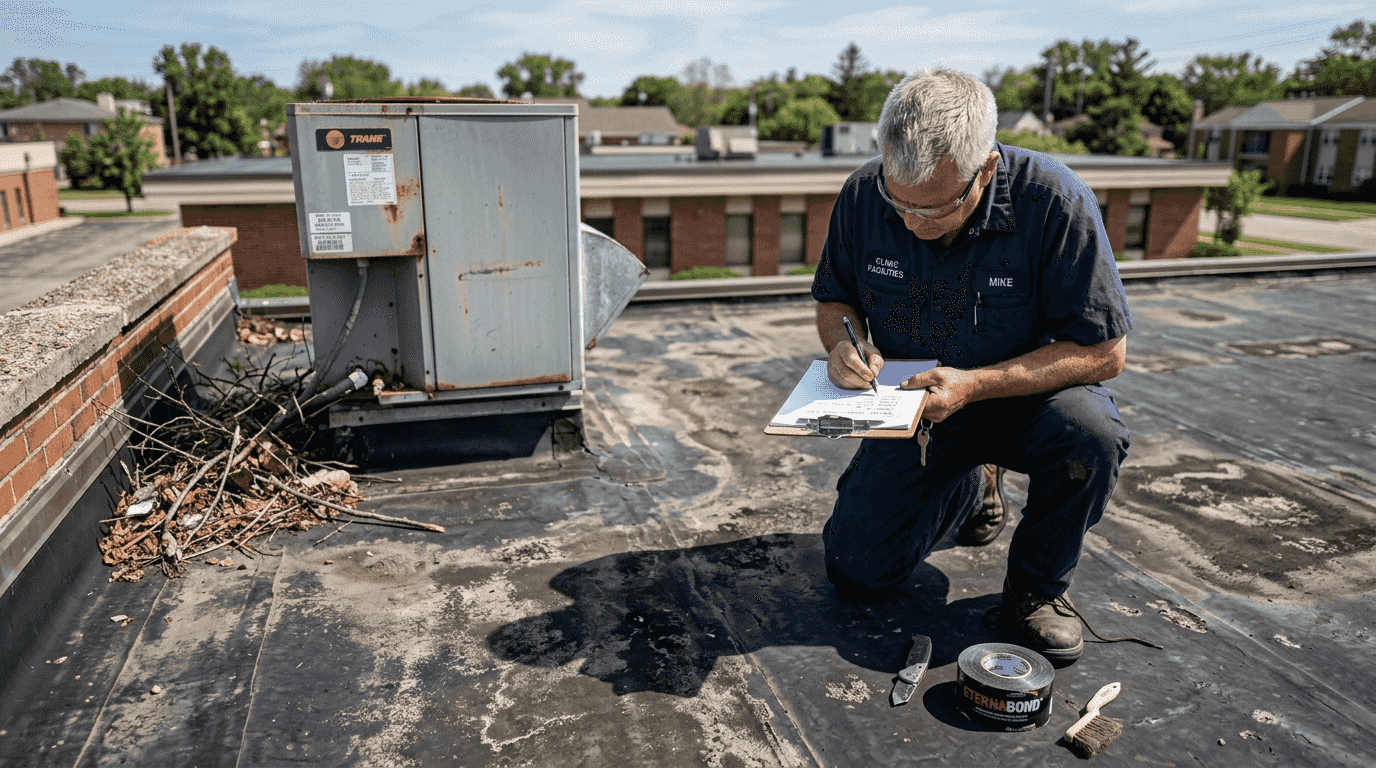
Schedule professional inspections at least twice yearly, ideally in spring and fall. Inspectors should examine seams, flashings, and penetrations where leaks typically start. Look for punctures from debris, UV damage causing surface cracking, and any areas where water pools longer than 48 hours after rain. EPDM rubber roofing has a lifespan of 20-30 years with proper maintenance, but neglect cuts that dramatically.
Follow this maintenance checklist to protect your investment:
- Clear all debris from the roof surface monthly, especially after storms
- Inspect and clean drains and scuppers to ensure proper water flow
- Check seams and flashings for separation or damage every season
- Address any punctures or tears immediately before water infiltrates
- Reapply reflective coatings as recommended by your membrane manufacturer
- Document all inspections and repairs to track roof condition over time
Prompt repairs prevent minor damage from escalating into structural problems. A small puncture costs under $100 to fix professionally, but ignoring it can lead to thousands in water damage and membrane replacement. Texas storms can turn tiny vulnerabilities into major leaks overnight.
Pro Tip: Schedule your seasonal inspections right after major storm seasons in spring and fall. This timing catches damage before it worsens and ensures your roof enters extreme weather periods in optimal condition.
Maintaining protective coatings preserves energy efficiency and extends membrane life. Reflective coatings degrade over time from UV exposure, reducing their ability to deflect heat. Recoating every 5-7 years keeps your roof working efficiently and prevents premature aging of the underlying membrane.
Debris accumulation seems harmless but creates multiple problems. Leaves and branches trap moisture against the membrane, accelerating deterioration. Sharp objects puncture the surface during high winds. Organic matter supports algae and mold growth that degrades certain membrane types.
Regular maintenance also helps you budget for eventual replacement. Tracking your roof’s condition lets you plan replacement on your timeline rather than scrambling during an emergency. Learn more about flat roof maintenance best practices specific to Houston-area conditions. For detailed guidance on rubber roofing care, review this longevity and maintenance guide.
Choosing the right flat roofing solution for your Texas property
Selecting the optimal membrane requires evaluating your specific situation rather than simply picking the cheapest or most expensive option. Several factors determine which material delivers the best long-term value for your property.
Start by assessing your building type and usage intensity. Commercial properties with heavy foot traffic need more puncture-resistant membranes like PVC. Residential applications with minimal roof access can use less robust but cost-effective options like TPO. Consider how long you plan to own the property since longer ownership timelines favor more durable, higher-cost materials.
Budget considerations extend beyond initial installation costs. Calculate total cost of ownership by factoring in expected lifespan, maintenance requirements, and energy savings. A $15,000 PVC roof lasting 25 years costs less annually than a $10,000 TPO roof needing replacement after 15 years. Energy savings from reflective membranes can offset higher upfront costs within years.
| Material | Cost per Sq Ft | Expected Lifespan | Energy Efficiency Rating | Maintenance Level |
|---|---|---|---|---|
| PVC | $5.50-$7.50 | 20-25 years | Excellent | Low |
| EPDM | $4.50-$6.50 | 25-30 years | Good | Moderate |
| TPO | $3.50-$5.50 | 15-20 years | Very Good | Moderate |
Climate-related factors heavily influence material performance in Texas. Properties with maximum sun exposure benefit most from highly reflective PVC or TPO membranes. Buildings with significant shade from trees might prioritize puncture resistance over reflectivity. Coastal properties need membranes resistant to salt air and high humidity.
Consider these decision factors based on your role:
- Homeowners should prioritize lifespan and energy efficiency for long-term savings
- Property managers need to balance upfront costs with maintenance requirements across multiple buildings
- Commercial owners must evaluate foot traffic, equipment loads, and warranty coverage
- Budget-conscious buyers can choose TPO for good performance at lower cost
- Quality-focused investors should consider PVC for maximum durability and lowest maintenance
Choosing the right roofing membrane depends on your climate, building use, and long-term maintenance goals. Texas conditions favor membranes that resist UV damage and handle temperature extremes without cracking or shrinking.
Warranty coverage varies significantly between materials and manufacturers. PVC typically offers longer warranty periods reflecting its durability. Read warranty terms carefully since many exclude damage from poor maintenance or improper installation. Manufacturer warranties mean nothing if your installer lacks proper certification.
Understanding why upgrading your roofing system delivers durability and savings helps justify investment in premium materials. For comprehensive technical comparisons, consult this detailed membrane selection guide covering performance across different climates.
Explore durable flat roof replacement options with Mister ReRoof
Protecting your Texas property starts with choosing the right roofing partner who understands local weather challenges and material performance. Mister ReRoof specializes in durable flat roof replacements designed to withstand everything Texas throws at them.
Our licensed installers bring years of experience working with PVC, EPDM, and TPO membranes across El Campo and Houston areas. We help you select the optimal material based on your building type, budget, and long-term goals. Whether you need professional flat roof replacement in El Campo or expert TPO installation, we deliver quality workmanship that maximizes your roof’s lifespan.
Every project includes a thorough property assessment to identify the best membrane for your specific conditions. We also offer reliable shingle roof replacement in Sugar Land for properties needing sloped roofing solutions. Contact Mister ReRoof today for a free inspection and estimate on your flat roof replacement project.
FAQ
Is PVC roofing worth the higher upfront cost for Texas homes?
PVC roofing typically justifies its premium price through superior durability and chemical resistance that reduce long-term repair costs. The 20-25 year lifespan combined with excellent energy efficiency often delivers better total value than cheaper alternatives. For properties with long ownership timelines or harsh sun exposure, PVC’s performance advantages outweigh the initial investment.
How often should I schedule maintenance for a flat EPDM roof in Texas?
Schedule professional inspections at least twice yearly, ideally before and after storm seasons in spring and fall. Texas weather demands proactive monitoring to catch small issues before they escalate. Prompt repairs following inspections prevent minor damage from becoming expensive structural problems. Additional inspections after major storms help identify new damage quickly.
Can TPO roofing help reduce cooling costs in Texas summer?
Yes, TPO membranes are highly reflective and significantly reduce cooling expenses during brutal Texas summers when properly installed. The white surface deflects solar radiation rather than absorbing it, keeping your building cooler. Energy savings vary by building size and insulation but can offset installation costs within several years. Maintaining the membrane’s reflective coating preserves these efficiency benefits long-term.
What are common reasons flat roofs fail in Texas?
Poor installation techniques, intense UV damage, standing water accumulation, and neglected maintenance cause most Texas flat roof failures. Improperly welded seams allow water infiltration that degrades the membrane from underneath. UV radiation breaks down inferior materials within years rather than decades. Understanding why roofs fail and how to prevent it helps you avoid these costly problems through proper material selection and regular care.
