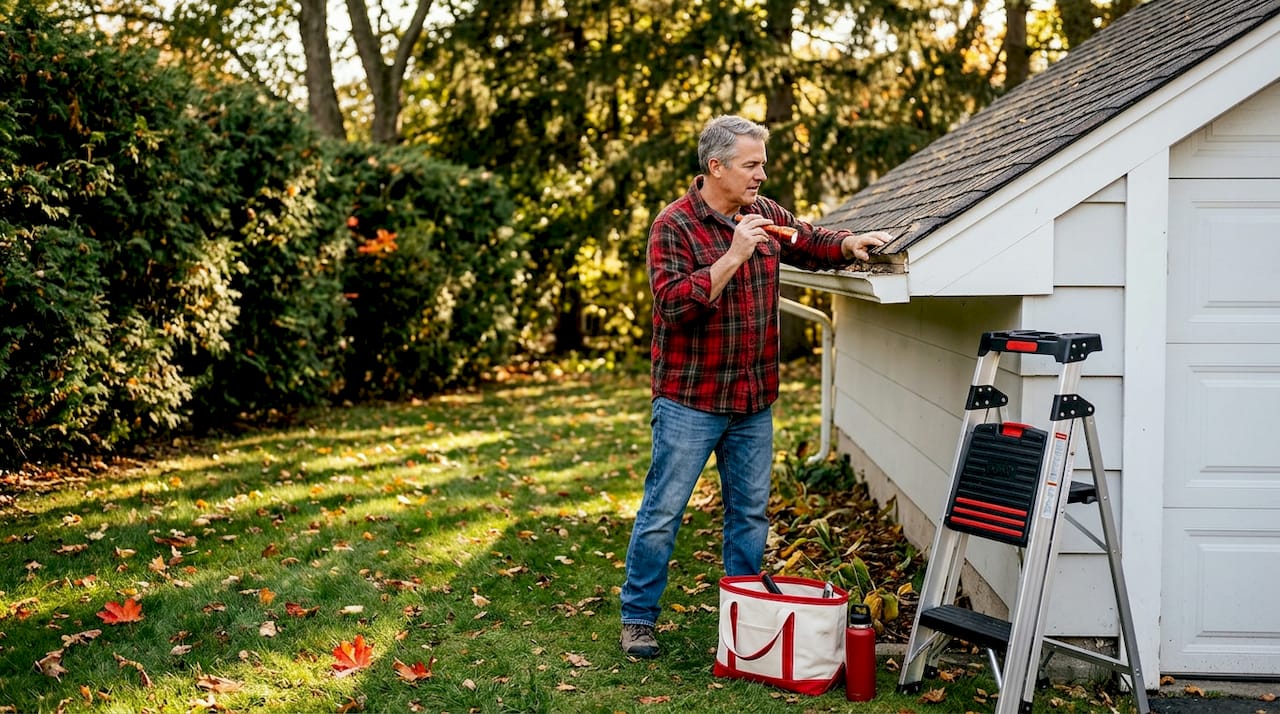
Why Schedule Roof Maintenance: Save Money and Time
Why Schedule Roof Maintenance: Save Money and Time
TL;DR:
- Many homeowners neglect regular roof maintenance until a leak appears, risking costly repairs and interior damage. Regular inspections twice a year, especially after storms, can prevent minor issues from escalating into extensive, expensive problems. Proper documentation, timely professional assessments, and addressing minor repairs early significantly extend roof lifespan and protect insurance claims.
Most homeowners treat their roof the way they treat their smoke detector batteries. They know it needs attention, they just keep pushing it off until something goes wrong. That’s exactly why schedule roof maintenance conversations tend to happen after a leak shows up on the ceiling rather than before. A roof is not maintenance-free, and the cost of ignoring it isn’t just a bigger repair bill. It can be mold in your walls, rot in your rafters, and a replacement you weren’t budgeting for this year.
Table of Contents
- Key takeaways
- Why schedule roof maintenance before problems appear
- What roof maintenance actually involves
- How often to maintain your roof the right way
- The real cost of skipping your maintenance schedule
- Practical steps to build your maintenance schedule
- What I’ve learned working with Texas roofs
- Protect your home with professional roofing services
- FAQ
Key takeaways
| Point | Details |
|---|---|
| Maintenance beats replacement | Minor repairs cost hundreds; a full replacement can cost tens of thousands if neglect compounds. |
| Twice a year is the standard | Schedule inspections every spring and fall to catch seasonal damage before it spreads. |
| Your roof is a system | Gutters, flashing, ventilation, and shingles all connect. One failure puts the others at risk. |
| Documentation protects you | Maintenance records support insurance claims and keep manufacturer warranties valid. |
| Professional eyes catch more | Inspectors assess hidden components like underlayment and fasteners that DIY checks miss entirely. |
Why schedule roof maintenance before problems appear
The most expensive roof repairs almost always start as cheap ones. A loose flashing seal, a clogged gutter, a handful of curled shingles. Left alone, each of those small issues creates an entry point for water, and water is patient. It works its way into the underlayment, the decking, and eventually the interior of your home.
Proactive roof maintenance stops that chain reaction before it starts. Minor fixes typically run a few hundred dollars. But once moisture reaches the interior, you’re looking at mold remediation that averages $3,500 and can climb much higher depending on how far the damage has spread.
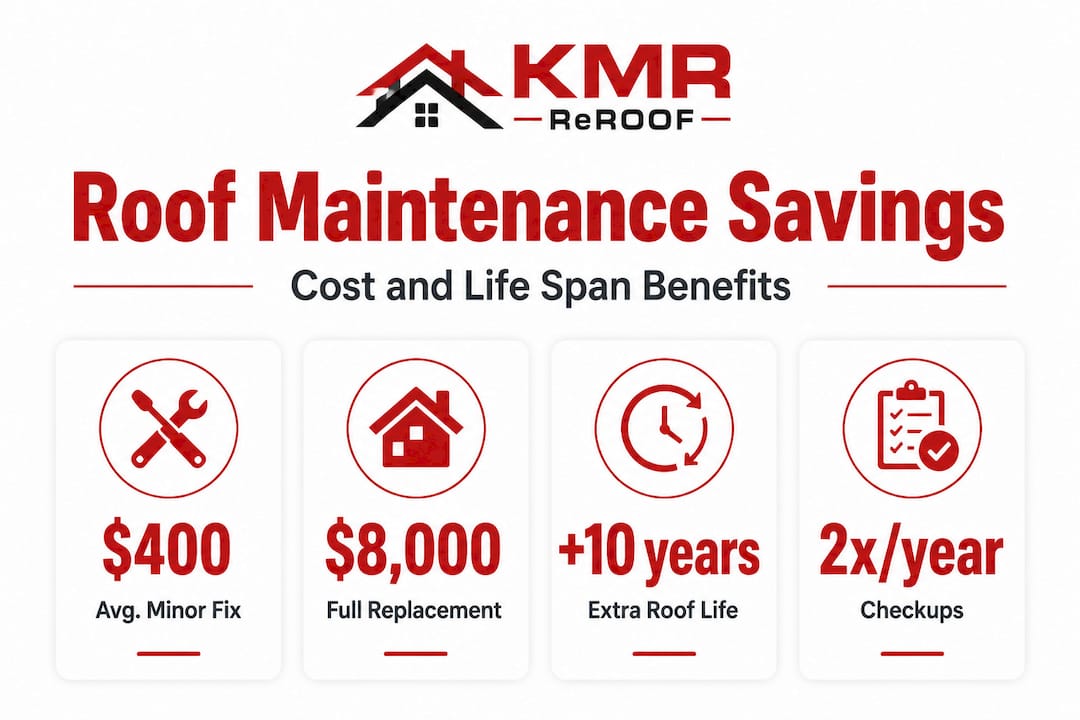
There’s also the lifespan factor. A well-maintained roof performs close to its rated 28-year lifespan. One that gets ignored typically fails around 18 years. That’s a decade of useful life you’re giving up, which translates directly into the cost of an earlier replacement.
What roof maintenance actually involves
Ask most homeowners what roof maintenance means and they’ll say “check for missing shingles.” That’s one task on a much longer list. A roof is a system with multiple interconnected layers and components, and each one needs specific attention to prevent the others from failing.
Here’s what a proper roof care schedule actually covers:
- Shingle inspection: Look for curling, cracking, granule loss in gutters, or bare patches that signal UV damage or age.
- Flashing sealant check: Metal flashing around chimneys, vents, and skylights develops gaps and cracks over time. This is one of the most common leak entry points.
- Gutter cleaning and attachment: Clogged gutters force water back under the roofline. Sagging gutters pull fascia boards away from the structure, which compounds damage fast.
- Attic ventilation check: Poor ventilation traps heat and moisture that accelerates shingle failure from below and causes wood rot in the decking.
- Moss and algae treatment: Organic growth holds moisture against shingles and degrades them faster than weather alone.
- Fascia and soffit inspection: Deferred maintenance accelerates gutter and fascia system failure together, compounding the total repair cost.
Pro Tip: Check your gutters for shingle granules after every heavy rain. Significant granule loss is one of the earliest warning signs that your shingles are reaching the end of their rated life.
Each of these tasks targets a specific failure mode. Skipping even one of them doesn’t just leave that one issue unaddressed. It creates a vulnerability that puts the surrounding components at risk.
How often to maintain your roof the right way
Knowing what to check is only half the answer. Knowing when to check it is just as important. The twice-annual inspection model, once in spring and once in fall, exists for a reason. Each season creates specific stresses on your roof, and each inspection window is timed to catch those stresses before they become damage.
Here’s the logic behind a smart roof care schedule:
- Fall inspection (September or October): This is your most critical window. You want to clear debris, check flashing, reseal any gaps, and clean gutters before the first freeze. Water that gets into small cracks and then freezes expands those cracks dramatically.
- Spring inspection (March or April): Winter is hard on roofs, even in Texas. Spring inspections assess whether freezing temperatures, wind, or heavy rain caused any new damage that needs repair before summer heat sets in.
- Post-storm inspection: After any significant hail, wind, or storm event, schedule an additional check. Hail damage in particular is often invisible to untrained eyes but accelerates shingle degradation significantly.
- Age-based increase: Roofs over 15 years old should be inspected more frequently. Older roofing materials are less resilient, and small issues move faster toward major failures.
Understanding your roof’s lifecycle also matters here. A 10-year-old roof and a 22-year-old roof don’t need the same frequency or depth of inspection. The older the roof, the more you benefit from professional eyes rather than a ladder and a flashlight.
Pro Tip: Set a recurring calendar reminder for early September and early April. Treat it the same way you treat changing your HVAC filters. It takes less than an hour to schedule and could save you thousands.

The real cost of skipping your maintenance schedule
Numbers make this concrete. Here’s a straightforward look at what deferred maintenance costs compared to a consistent upkeep routine.
| Maintenance scenario | Typical cost range | Notes |
|---|---|---|
| Routine professional inspection | $150 to $400 per visit | Twice-annual schedule, most issues caught early |
| Minor shingle or flashing repair | $200 to $800 | Addressed during or shortly after inspection |
| Gutter cleaning and reattachment | $150 to $350 | Prevents fascia damage and water intrusion |
| Water damage repair (interior) | $1,000 to $5,000+ | Triggered by unaddressed leak |
| Mold remediation | $1,500 to $9,000 | Often not covered if damage is gradual |
| Full roof replacement | $8,000 to $25,000+ | Years earlier than necessary without maintenance |
“The math on roof maintenance is almost always the same story: a few hundred dollars a year in prevention versus thousands — or tens of thousands — in consequences.”
The insurance angle adds another layer. Documented maintenance records are often required to uphold claims and keep warranties valid. If you file a claim for roof damage and you can’t show that the roof was being properly maintained, the insurer has grounds to deny it or reduce the payout. That’s a financial risk that has nothing to do with how bad the storm was.
Different roofing materials also influence maintenance needs and failure risks. Asphalt shingles, metal roofs, and flat roofing systems each have different inspection intervals, wear patterns, and vulnerabilities. A maintenance schedule that works for one material won’t necessarily protect another.
Practical steps to build your maintenance schedule
Knowing the theory is useful. Having a system you’ll actually use is better. Here’s how to put a real roof care schedule in place without overcomplicating it.
- Hire a professional at least once a year. Professional inspectors assess flashing, fasteners, ventilation condition, and underlayment. These are components you genuinely cannot evaluate from the ground or from a casual ladder check.
- Do a visual check yourself between professional visits. Walk your property after storms. Look for visible granule loss, lifted or missing shingles, and anything in the gutters that signals wear. You’re not diagnosing, you’re flagging.
- Keep a simple maintenance log. Date each inspection, note what was found, and save receipts for any repairs. This file becomes your documentation for insurance claims and warranty coverage.
- Schedule extra inspections after significant weather events. In Texas, that means hail seasons and any storm that produces sustained high winds. Don’t wait for visible interior damage to prompt a call.
- Prioritize high-consequence items when budget is tight. If you have to triage, flashing and gutter integrity should come first. Those two components, when they fail, create the fastest path to interior water damage. Review a maintenance checklist for Texas homes to know exactly what to prioritize by season.
When you’re building out this process, recognize that a post-replacement inspection is also worth scheduling. New roof installations sometimes have installation-related issues that only show up after the first weather cycle. Catching those early keeps your warranty intact and the contractor accountable.
What I’ve learned working with Texas roofs
I’ve worked with enough Texas homeowners to recognize a pattern. The ones who treat roof maintenance as optional almost always regret it within five to seven years. The ones who schedule it consistently never have to make an emergency call after a spring storm.
What surprises people most is how fast secondary damage compounds. A slow leak in September can become a mold problem by January if no one catches it. By that point, you’re not repairing a roof issue. You’re funding a remediation project that the insurance company may not cover because the damage was gradual.
The other thing I’ve seen firsthand is the inspection documentation gap. People who have maintained their roofs diligently for years sometimes can’t prove it because they never kept records. They paid for the work but skipped the paperwork, and that gap cost them on an insurance claim. The record is as valuable as the repair itself.
My honest take: the top reasons for roof upkeep aren’t the dramatic ones. It’s not about surviving a category-five storm. It’s about the slow drip you never notice, the flashing that lifts a little more each winter, the gutters that haven’t been cleared in two years. Those quiet, boring failures account for most of the expensive roof damage I’ve seen, and every one of them was preventable.
— Misterreroof
Protect your home with professional roofing services
If your maintenance inspections reveal damage that goes beyond routine upkeep, or if your roof is pushing 20 years old, it may be time to look at replacement options before the next Texas storm season arrives.

Misterreroof specializes in roof replacement across El Campo, Houston, and the surrounding areas. Whether your home needs a durable metal roof replacement that stands up to decades of Texas heat and hail, or you’re looking at TPO roofing for a flat or low-slope structure, the team at Misterreroof handles every job with the kind of workmanship that holds up inspection after inspection. They also offer shingle and flat roof replacement options for homeowners with different needs and budgets. Contact Misterreroof today to schedule a free estimate and find out exactly where your roof stands before the next season puts it to the test.
FAQ
Why schedule roof maintenance instead of waiting for visible damage?
By the time damage is visible inside your home, the underlying issue has often been developing for months. Scheduled maintenance catches problems like failed flashing and granule loss before they cause water intrusion.
How often should a homeowner maintain their roof?
The standard recommendation is twice per year, with inspections in spring and fall, plus an additional check after any major storm. Roofs over 15 years old benefit from more frequent professional assessments.
What do roof inspections actually check?
Professional inspectors evaluate shingles, flashing, gutters, attic ventilation, underlayment condition, and fastener integrity. These are components that a DIY visual check cannot fully assess from ground level.
Does skipping maintenance affect my homeowner’s insurance?
Yes. Insurers may deny or reduce claims when there is no documentation showing the roof was being maintained. Keeping a maintenance log with dated receipts protects your coverage when you need it most.
What are the top signs I need to schedule an extra inspection?
Granule accumulation in gutters, lifted or missing shingles after a storm, visible staining on ceiling boards, or a roof that’s more than 15 years old are all strong indicators that you should schedule an inspection outside your regular cycle.
