

TL;DR:
- A roofing cost analysis details all expenses involved in roof repair or replacement, helping property owners budget accurately. It includes costs for materials, labor, permits, disposal, and hidden fees, emphasizing the importance of comparing itemized estimates. Long-term decision-making benefits from lifecycle cost analysis, which accounts for durability, maintenance, and environmental conditions.
A roofing cost analysis is a detailed breakdown of every expense involved in repairing or replacing a roof, from materials and labor to permits and disposal fees. Property owners in El Campo, Texas use this process to build accurate budgets, compare contractor estimates fairly, and avoid the financial surprises that derail roofing projects. The industry term for the most thorough version of this process is a Lifecycle Cost Analysis (LCCA), which accounts for long-term ownership costs, not just the initial installation price. Whether you manage a single-family home or a commercial property, understanding what drives roofing costs puts you in control of the decision.
What is a roofing cost analysis and what does it include?
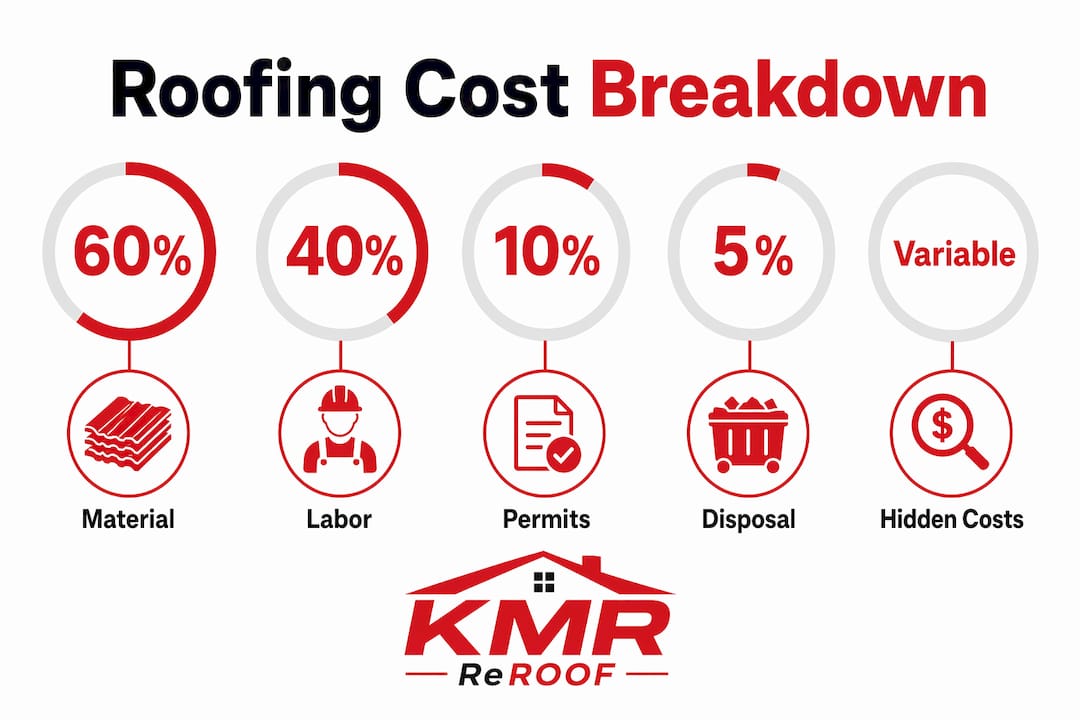
A roofing cost analysis covers four main cost categories: materials, labor, permits and disposal, and hidden or contingency expenses. Each category carries real weight in the final number, and skipping any one of them produces a budget that will not hold.
Materials are the largest single line item. Shingles account for roughly 60% of total material costs, with the remainder split among underlayment, flashing, ridge caps, pipe boots, and ventilation components. Architectural shingles run $4.50–$8.00 per square foot. Metal roofing and tile cost more upfront but last significantly longer.
| Material | Typical Cost per Sq Ft | Estimated Lifespan |
|---|---|---|
| Asphalt shingles (3-tab) | $3.50–$5.50 | 15–25 years |
| Architectural shingles | $4.50–$8.00 | 25–30 years |
| Metal roofing | $7.00–$14.00 | 40–70 years |
| Clay or concrete tile | $10.00–$18.00 | 50+ years |
| TPO (flat roofs) | $5.00–$9.00 | 20–30 years |
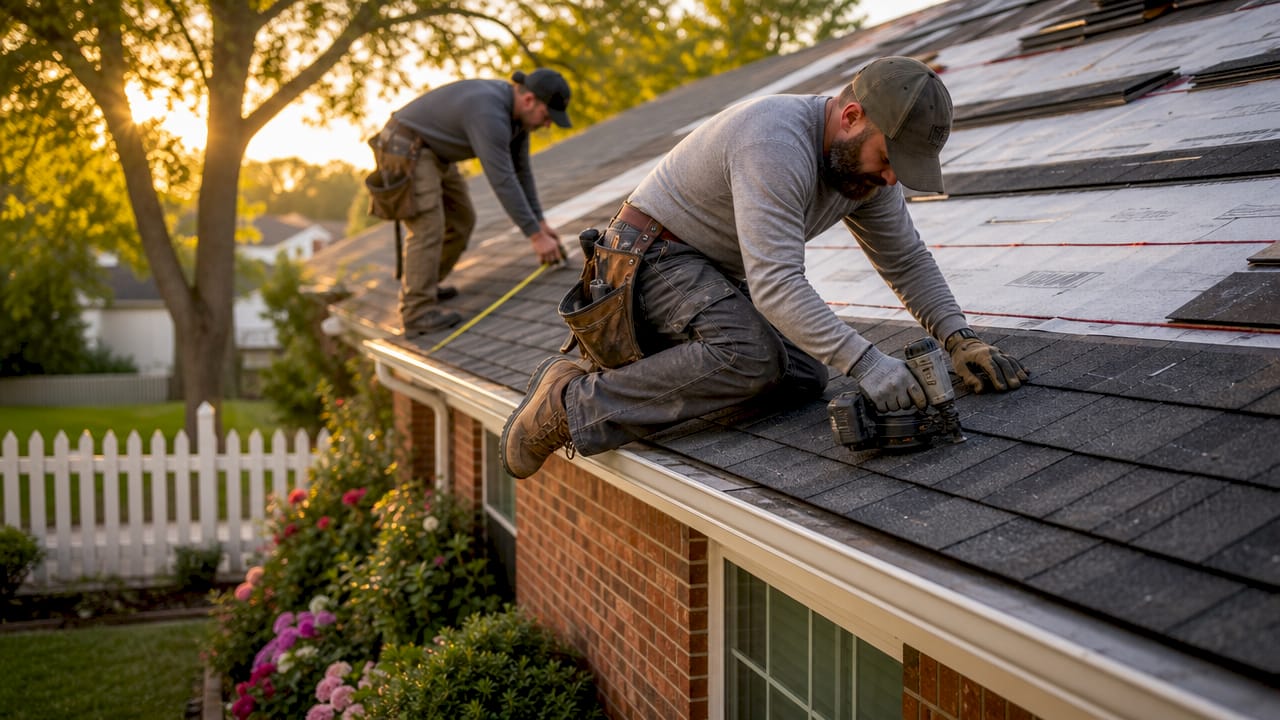
Labor is the second largest cost. Labor accounts for 35–45% of total project costs, with hourly rates ranging from $40 to $90 per worker. Steep roof pitches push that number higher. A roof with a pitch greater than 10/12 can increase total labor hours by 50% or more, because crews move slower and safety equipment requirements increase.
Permits and disposal are often underestimated. Most Texas municipalities require a permit for full roof replacements. Disposal of old roofing material adds a separate line item that varies by roof size and material weight.
Pro Tip: Ask every contractor to list permits and disposal fees as separate line items. If those costs are buried in a lump sum, you cannot verify whether they were actually included.
How do roofing contractors estimate total project costs?
Contractors follow a structured process to build a roofing estimate. Understanding those steps helps you read any quote with confidence.
- Measure the roof area. Contractors calculate total square footage, then convert to “roofing squares” (one square equals 100 square feet). They add a waste factor, typically 10–15%, for cuts and overlaps.
- Adjust for pitch. Steep slopes require more material and more labor hours. Tear-off labor alone averages 0.75 to 1 hour per roofing square and is priced separately from installation labor.
- Price materials. Contractors source materials at contractor pricing, then mark up for their supply chain costs.
- Calculate labor. Labor cost varies by crew experience, roofing material, complexity, and OSHA safety requirements. A more experienced crew may cost more per hour but finish faster and with fewer callbacks.
- Add overhead and profit. Overhead and profit margins typically add 15–25% on top of direct costs. Well-run contractors hold their margin near 25%. That markup covers insurance, equipment, warranties, and business operations.
- Produce a written, itemized estimate. A professional estimate lists every cost category separately, not as a single number.
A typical 2,000 square foot roof in 2026 costs between $9,000 and $15,000 including labor and materials, with a national midpoint around $10,000–$11,000 for standard installation. Roofing costs are currently 15–25% higher than in 2024, driven by material supply costs and labor demand. That context matters when you are reviewing quotes in El Campo.
Pro Tip: When you receive multiple estimates, compare them line by line, not by the bottom-line total. A $12,000 quote that includes flashing, ice shields, and a manufacturer warranty often delivers more value than a vague $9,000 quote that excludes those items.
Why do hidden costs inflate roofing quotes?
Hidden costs are the most common reason a roofing project runs over budget. They are not dishonest by nature. Many of them cannot be confirmed until the old roof comes off and the contractor sees the deck condition underneath.
The most frequent hidden costs include:
- Plywood decking replacement: Rotted or damaged decking boards cost $50–$100 per sheet to replace. A roof with significant water damage may need dozens of sheets.
- Flashing repairs or replacement: Step flashing around chimneys, skylights, and walls deteriorates over time. Replacing it adds labor and material costs that a surface-level inspection misses.
- Ventilation upgrades: Building codes in Texas have evolved. A contractor may be required to add ridge vents or soffit vents to meet current standards, adding cost to the project.
- Additional framing: Heavy materials like tile or thick metal panels sometimes require reinforced framing. Additional framing can add $1,000 to $5,000 to a project total.
- Permit fees: Some contractors quote labor and materials but exclude permit fees. Always confirm permits are included.
Changing building codes add another layer of cost that many property owners do not anticipate. If your roof was installed 20 years ago, the current code may require upgrades to ventilation, decking thickness, or underlayment type before a new roof can be installed.
Pro Tip: Ask your contractor: “What conditions would cause this estimate to increase after work begins?” A trustworthy contractor will walk you through the most likely scenarios before you sign anything.
How to use a roofing expense evaluation for long-term decisions
The most common mistake property owners make is choosing the lowest bid based on the initial price alone. A roofing expense evaluation that accounts for the full ownership period tells a very different story.
Lifecycle Cost Analysis (LCCA) measures total ownership cost over 20–30 years, including maintenance, energy efficiency, and repair frequency. A 3-tab asphalt shingle roof may cost $7,000 to install but require replacement in 15 years. A metal roof at $14,000 may last 50 years with minimal maintenance. Over a 30-year period, the metal roof is the lower-cost option.
| Material | Approx. Install Cost | Lifespan | 30-Year Cost Estimate |
|---|---|---|---|
| 3-tab asphalt shingles | $7,000–$9,000 | 15–20 years | $14,000–$18,000 (2 installs) |
| Architectural shingles | $9,000–$13,000 | 25–30 years | $9,000–$13,000 (1 install) |
| Metal roofing | $14,000–$22,000 | 40–70 years | $14,000–$22,000 (1 install) |
| TPO (flat) | $8,000–$12,000 | 20–30 years | $8,000–$12,000 (1 install) |
Value engineering is the practice of paying more upfront for durable materials to reduce total cost over time. For El Campo property owners dealing with Texas heat, hail, and high humidity, this principle is especially relevant. Metal roofs reflect heat and resist impact damage in ways that standard shingles cannot match.
Timing also affects cost. Scheduling roofing projects outside peak demand seasons reduces costs and improves contractor availability. In Texas, late fall and early winter tend to offer better pricing than spring and summer, when storm damage creates a surge in demand.
Request at least three detailed written estimates before committing to a contractor. Vague quotes prevent fair comparison and leave room for cost increases after work begins. You can also learn more about estimating replacement costs to sharpen your ability to evaluate what you receive.
Pro Tip: When reviewing estimates for a Texas roof replacement, ask each contractor to specify the exact brand and product line of materials they plan to use. Two estimates using “architectural shingles” may reference products with very different warranty terms and quality levels.
Key Takeaways
A thorough roofing cost analysis, grounded in lifecycle thinking, is the single most effective tool for avoiding budget overruns and making durable material choices.
| Point | Details |
|---|---|
| Labor drives 35–45% of total cost | Steep pitches and complex roofs push labor costs significantly higher. |
| Hidden costs are real and common | Budget for decking, flashing, and ventilation upgrades before work begins. |
| Lifecycle cost beats initial price | Metal and architectural shingles often cost less over 30 years than cheap alternatives. |
| Line-by-line comparison is required | Bottom-line totals hide exclusions; always compare itemized estimates. |
| Timing affects your final price | Off-peak scheduling in late fall or early winter typically lowers contractor rates. |
What I have learned from watching property owners get roofing wrong
Most property owners in El Campo treat a roofing project like buying a commodity. They collect a few quotes, pick the lowest number, and assume the job will go smoothly. That approach fails more often than it succeeds.
The property owners who come out ahead are the ones who treat the cost analysis as a research project, not a formality. They ask contractors to explain every line item. They check whether permits are included. They ask what happens if the decking is damaged. They compare materials by lifespan, not just price. That level of attention takes an extra hour or two, but it routinely saves thousands of dollars.
The other thing I have seen repeatedly: property owners who delay a roof project to save money end up spending more. A small leak that costs $500 to address today can destroy decking, insulation, and interior finishes within a single rainy season. The cost analysis is not just about the roof. It is about protecting everything underneath it.
El Campo’s climate adds a specific layer of urgency. Heat, humidity, and periodic hail create conditions that accelerate roof wear faster than in milder climates. A roofing project budget analysis built for this environment needs to account for that reality, not just copy a national average.
— Misterreroof
Misterreroof brings transparent roofing estimates to El Campo
Property owners in El Campo deserve clear, itemized estimates that show exactly what they are paying for. Misterreroof specializes in roof replacement across El Campo and the greater Houston area, covering shingle, metal, flat, and TPO roofing systems built for Texas conditions.
Whether you need a shingle roof replacement in El Campo or want to understand your full range of options before committing to a material, Mister Reroof provides the detailed, written estimates that make cost analysis possible. The team walks you through every cost component, from materials and labor to permits and potential hidden costs, so you can make a confident decision. Get your free estimate today and start your project with a clear picture of the full cost.
FAQ
What is a roofing cost analysis?
A roofing cost analysis is a detailed breakdown of all expenses involved in repairing or replacing a roof, including materials, labor, permits, disposal, and potential hidden costs. It gives property owners the information needed to budget accurately and compare contractor estimates fairly.
How much does a roof replacement cost in El Campo, TX?
A typical 2,000 square foot roof costs between $9,000 and $15,000 in 2026, including labor and materials, with the national midpoint around $10,000–$11,000 for standard installation. Local factors like roof pitch, material choice, and decking condition can push that number higher.
What hidden costs should I watch for in a roofing quote?
The most common hidden costs are plywood decking replacement at $50–$100 per sheet, flashing repairs, ventilation upgrades required by current building codes, and additional framing for heavy materials that can add $1,000 to $5,000 to the total.
Is it worth paying more for metal roofing in Texas?
Metal roofing costs more upfront but lasts 40–70 years with minimal maintenance, making it the lower total cost option over a 30-year period compared to asphalt shingles that require replacement every 15–20 years. Texas heat and hail conditions make the durability advantage especially significant.
How many roofing estimates should I get before deciding?
Get at least three detailed, written estimates and compare them line by line rather than by the bottom-line total. A higher quote that includes flashing, permits, and a manufacturer warranty often represents better value than a lower quote that excludes those items.
