
TL;DR:
- Single-ply roofing uses a single flexible membrane for long-term waterproof protection, offering durability and energy savings. Proper installation by experienced professionals is essential, as membrane quality and seam welding determine the roof’s lifespan, which typically ranges from 20 to 30 years. Choosing the right material, like TPO for hot climates, can enhance energy efficiency and structural flexibility, especially when maintenance is regularly performed.
Single-ply roofing is defined as a waterproofing system built from a single flexible membrane layer, installed across flat or low-slope surfaces to deliver reliable, long-term protection. Property owners and managers consistently choose single-ply roofing because it combines lower labor costs, proven durability, and energy-saving performance in one system. Whether you manage a warehouse in Houston, an industrial facility in El Campo, or a commercial building anywhere in between, this membrane-based approach outperforms older multi-layer systems on nearly every practical measure. The three dominant materials, EPDM, TPO, and PVC, each bring distinct advantages worth understanding before you commit to a replacement or new installation.
Why choose single-ply roofing over traditional systems
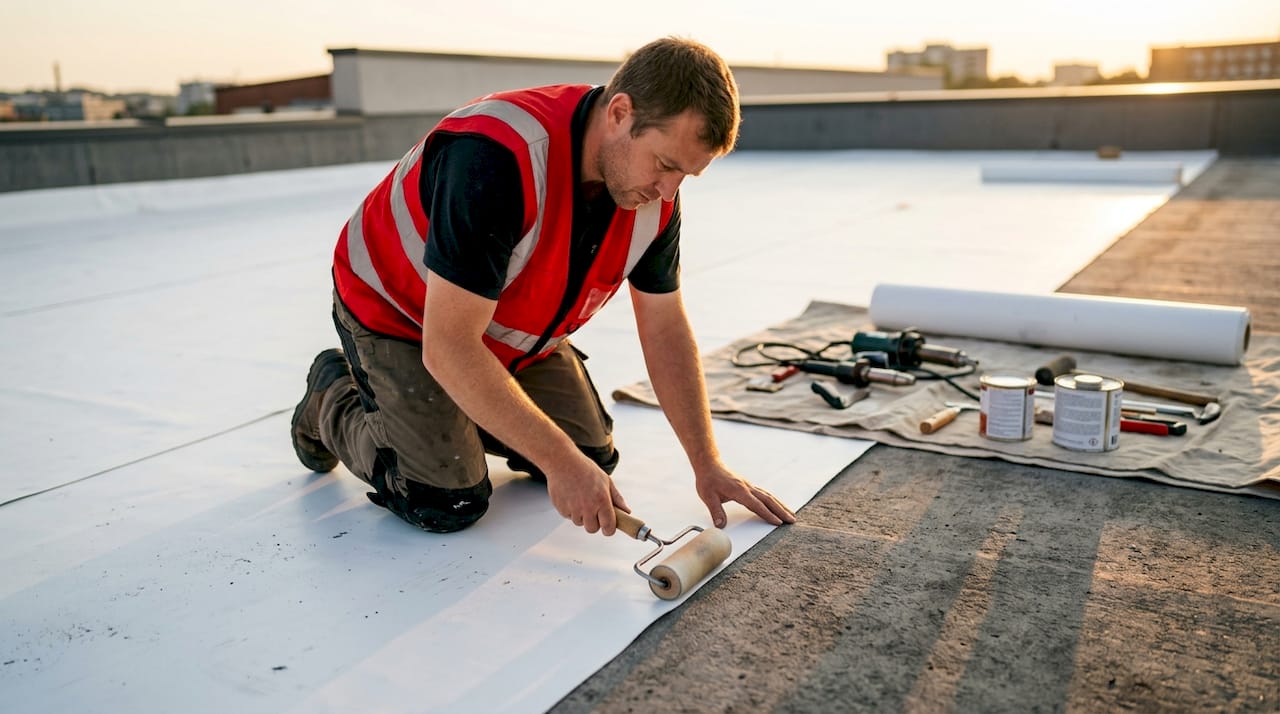
Single-ply roofing wins on total cost of ownership, not just upfront price. Labor is less intensive for single-ply installation compared to built-up roofing, which offsets the higher material cost and produces meaningful long-term savings through lower maintenance demands. Built-up roofing requires multiple layers of felt, bitumen, and aggregate applied in sequence, a process that takes significantly more crew time and generates more waste. Single-ply membranes arrive in large rolls and are installed in one pass, cutting installation days and reducing disruption to your operations.
The weight difference alone makes a compelling case. Single-ply membranes weigh 2 to 5 kg/m² compared to 15 to 30 kg/m² for traditional built-up roofs. That structural load reduction matters enormously for older buildings with limited load capacity, and it also leaves room for future additions like rooftop HVAC units or solar photovoltaic systems without requiring structural reinforcement. For a property manager planning a 10-year capital improvement roadmap, that flexibility has real dollar value. You can review how built-up vs. TPO roofing stacks up specifically for Texas properties if you want a deeper side-by-side comparison.
What materials are used in single-ply roofing?
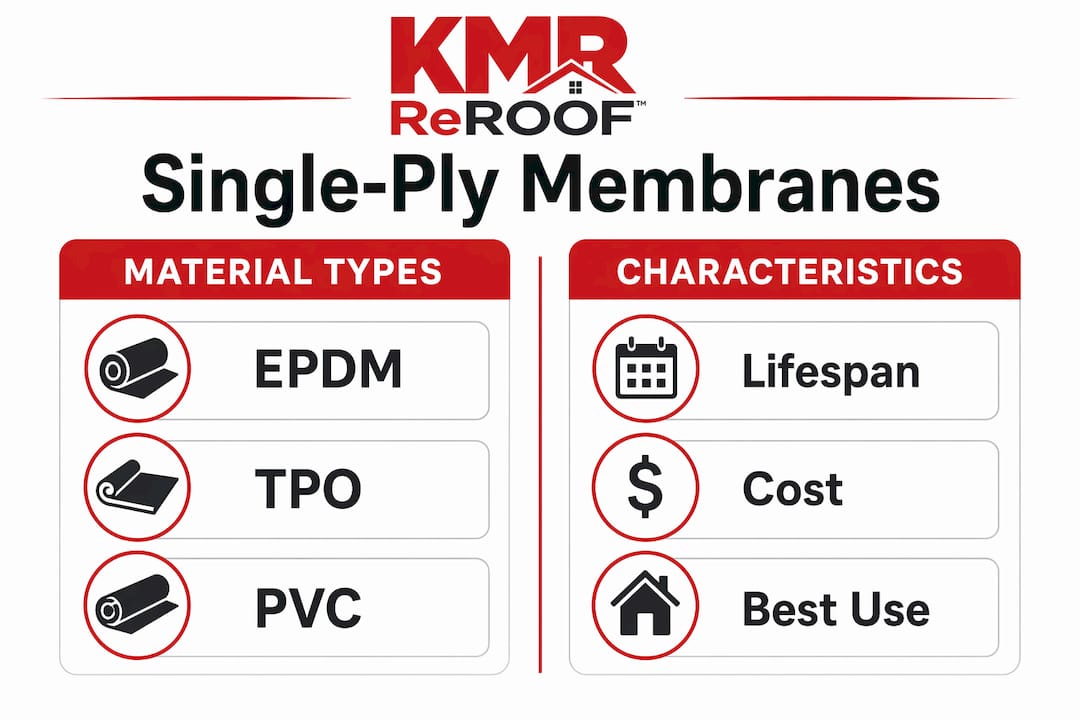
The three primary single-ply membrane types are EPDM (ethylene propylene diene monomer), TPO (thermoplastic polyolefin), and PVC (polyvinyl chloride). Each performs differently depending on climate, building use, and budget.
EPDM is a synthetic rubber membrane with a long track record in commercial roofing. It handles temperature extremes well and resists UV degradation effectively. Field-aged EPDM membranes often outperform lab accelerated aging tests, showing that real-world durability can exceed what manufacturers predict under controlled conditions. EPDM is typically black, which absorbs heat, making it better suited for cooler climates than for Texas summers.
TPO has become the most widely specified single-ply membrane in the U.S. commercial market. Its white or light-colored surface reflects solar radiation, which directly reduces cooling loads in hot climates. White TPO membranes act as cool roofs, lowering energy bills for cooling in hotter regions like Houston and El Campo. TPO is also weld-seamed with hot air, creating bonds that are often stronger than the membrane itself when done correctly.
PVC is the premium option. It carries superior chemical resistance, making it the right call for restaurants, food processing plants, or any facility where grease-laden exhaust contacts the roof surface. PVC membranes are self-extinguishing due to their chemical makeup, which is why hospitals, schools, and airports specify PVC when strict fire ratings are required.
| Material | Typical lifespan | Relative cost | Best for | Key limitation |
|---|---|---|---|---|
| EPDM | 20 to 30 years | Low to moderate | Cooler climates, budget projects | Absorbs heat; seams require adhesive |
| TPO | 20 to 30 years | Moderate | Hot climates, energy efficiency | Seam quality depends on installer skill |
| PVC | 25 to 35 years | Higher | Chemical exposure, fire-rated buildings | Higher upfront material cost |
Choosing between these materials is not purely a budget decision. Climate, building use, and local fire codes all influence which membrane delivers the best return over its service life.
How does single-ply roofing improve energy efficiency?
Reflective single-ply membranes, particularly white TPO and PVC, qualify as cool roofs under the U.S. Department of Energy’s definition: surfaces that reflect more sunlight and absorb less heat than standard roofing. The ENERGY STAR program certifies specific membrane products that meet minimum solar reflectance and thermal emittance thresholds. For a property in Texas, where summer cooling accounts for a disproportionate share of annual energy spend, this is not a minor detail. A reflective roof can meaningfully reduce the HVAC load on the hottest days, which are also the days when electricity demand peaks and rates are highest.
The environmental benefit compounds over time. Lower cooling demand means fewer carbon emissions from power generation, and many reflective membranes are recyclable at end of life, unlike built-up or modified bitumen systems that go straight to landfill. For property managers pursuing LEED certification or ESG reporting goals, a TPO or PVC roof contributes measurable points toward those targets. You can explore specific energy savings in Houston roofing to see how reflective membranes perform in the local climate.
Pro Tip: Select your membrane color based on your dominant season. In Houston and El Campo, white or light gray TPO is almost always the right call. In a climate with cold winters and mild summers, EPDM’s heat absorption can actually reduce heating costs.
What makes single-ply installation and maintenance practical?
Single-ply roofing installs faster than any multi-layer system, but the process still demands precision. There are two primary attachment methods, and the choice between them affects long-term performance significantly.
- Fully adhered systems bond the membrane directly to the substrate using adhesive across the entire surface. This method eliminates the mechanical fasteners that penetrate the roof deck, which are potential leak points. Fully adhered membranes perform better under wind uplift forces, making them the preferred choice in high-wind zones like coastal Texas.
- Mechanically fastened systems use screws and plates to secure the membrane at defined intervals. Installation is faster and costs less in labor, but the fasteners create penetrations that require careful sealing and can become stress points under repeated thermal cycling.
- Ballasted systems hold the membrane in place with stone or pavers. This method is rarely used in Texas due to the added structural load and the risk of wind-driven displacement during severe storms.
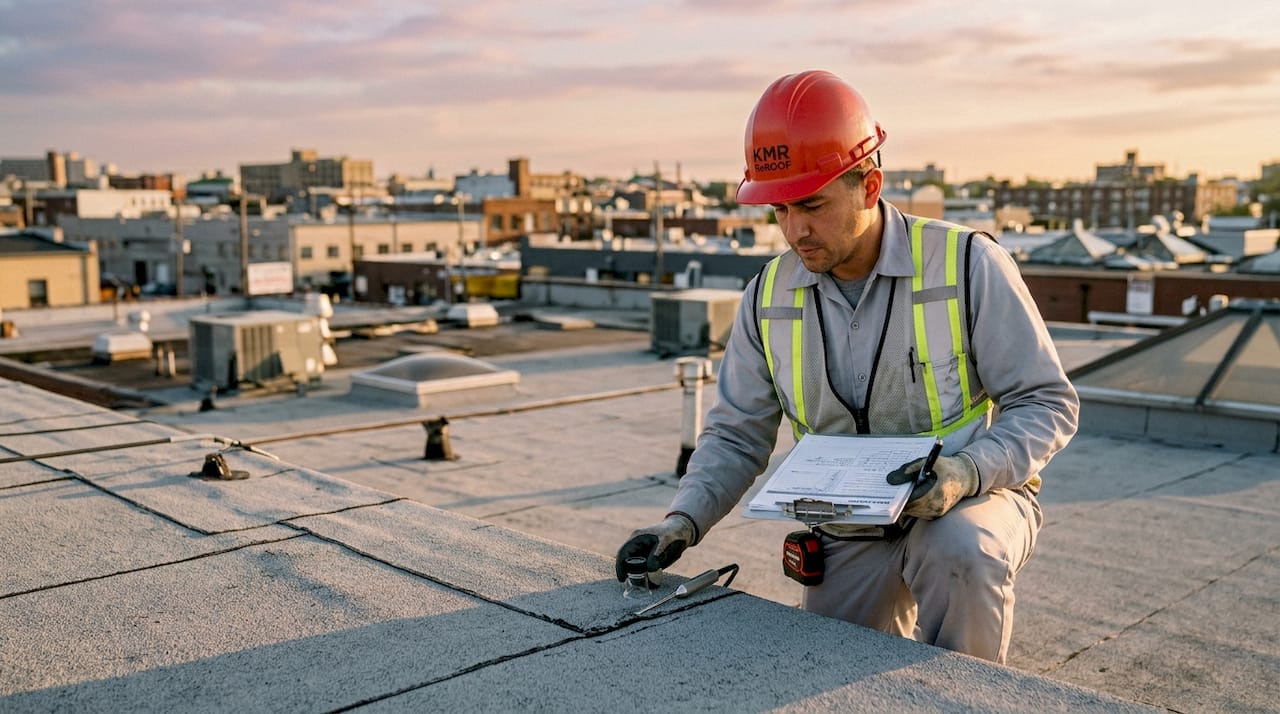
Maintenance for single-ply roofs is straightforward compared to built-up systems. Routine inspections twice a year, after summer heat and after any major storm, catch seam separations and flashing issues before they become water intrusion problems. Repairs are typically patch-based and can be completed quickly by a qualified crew.
Pro Tip: Never attempt to repair TPO or PVC seams with standard roofing caulk. These membranes require heat welding or membrane-compatible adhesive. Using the wrong product creates a false sense of security while the underlying seam continues to fail.
DIY installation risks improper sealing and water damage that far outweigh any labor savings. Single-ply roofing is one category where professional installation is not optional. It is the primary variable that determines whether your roof lasts 15 years or 35 years.
How long does single-ply roofing last in real conditions?
Single-ply membranes typically last 20 to 30 years, with the upper end achievable when installation quality is high and maintenance is consistent. PVC membranes in moderate climates with regular inspections can push past 30 years. EPDM in cooler northern climates has documented service lives exceeding 40 years in some commercial installations.
The roofing industry has responded to demand for greater durability by producing thicker membranes. Next-generation membranes reach 72 to 80 mil thickness, compared to the 45 to 60 mil standard that dominated the market a decade ago. Thicker membranes resist puncture from foot traffic, hail, and wind-driven debris more effectively, which matters in Texas where severe weather is a recurring reality. This advancement means the best materials for single-ply roofing today are meaningfully more resilient than what was available even five years ago.
Seam integrity is the most critical durability factor in any single-ply system. The membrane itself rarely fails first. Seams, flashings, and penetration details are where water finds its way in. Installation quality is the dominant factor influencing membrane longevity, often more than membrane type alone. A 45-mil TPO installed by an experienced crew will outlast an 80-mil membrane installed carelessly.
| Membrane | Standard lifespan | With optimal maintenance | Climate impact |
|---|---|---|---|
| EPDM | 20 to 25 years | Up to 40 years | Best in cooler, drier climates |
| TPO | 20 to 30 years | Up to 35 years | Strong in hot, sunny climates |
| PVC | 25 to 35 years | 35+ years | Performs well across most climates |
For Texas properties specifically, TPO at 60 mil or above is the most practical choice for balancing durability, energy performance, and cost. You can review flat roofing durability options for Texas to see how these membranes compare in local conditions.
Key takeaways
Single-ply roofing is the most cost-effective and durable solution for flat and low-slope commercial roofs when the right membrane is matched to the climate and installed by a qualified professional.
| Point | Details |
|---|---|
| Material selection matters | EPDM, TPO, and PVC each suit different climates, budgets, and building uses. |
| Weight advantage is real | Single-ply membranes weigh up to 85% less than built-up roofs, enabling future retrofits. |
| Energy savings are measurable | Reflective TPO and PVC membranes reduce cooling loads in hot climates like Texas. |
| Installation quality drives lifespan | Professional installation determines whether a roof lasts 15 years or 35 years. |
| Thicker membranes raise the ceiling | Modern 72 to 80 mil membranes offer significantly better weather and puncture resistance. |
The real reason installation quality is non-negotiable
After working with property owners and managers across Texas, one pattern stands out clearly. The owners who get 30-plus years from a single-ply roof are not always the ones who spent the most on materials. They are the ones who hired crews who understood seam welding, flashing details, and substrate preparation. I have seen 80-mil TPO fail within five years because a seam was heat-welded too fast on a humid afternoon. I have also seen 45-mil EPDM from the early 2000s still performing well because the original installer took the time to do penetration details correctly.
The single-ply roofing advantages that get promoted most, cost savings, energy efficiency, lightweight installation, are all real. But they only materialize when the membrane is installed correctly. A long-term roofing investment pays off when the workmanship matches the material quality. My honest recommendation: do not let price be the only filter when choosing a contractor. Ask specifically about their seam welding process, how they handle penetrations, and whether they do a post-installation inspection. Those questions separate experienced crews from everyone else.
— Misterreroof
Get expert single-ply roofing installation from Mister ReRoof
Mister ReRoof specializes in flat roof replacement across El Campo and Houston, TX, with hands-on experience in TPO, EPDM, and PVC membrane systems. If you are evaluating a roof replacement for a commercial building, warehouse, or industrial facility, the right starting point is a professional assessment of your current roof condition and substrate.
Mister ReRoof’s team installs single-ply systems built to handle Texas heat, Gulf Coast humidity, and severe storm seasons. Whether you need a full flat roof replacement in El Campo or want to compare your options across the Houston market, Mister ReRoof delivers the workmanship that makes the difference between a 15-year roof and a 35-year roof. Contact Mister ReRoof today for a free estimate and a clear recommendation based on your building’s specific needs.
FAQ
What is single-ply roofing used for?
Single-ply roofing is used on flat and low-slope commercial, industrial, and institutional buildings where a lightweight, waterproof membrane system is needed. It is the standard choice for warehouses, retail centers, office buildings, and any structure with a roof pitch too low for shingles.
How long does single-ply roofing last?
Single-ply membranes typically last 20 to 30 years, with well-maintained PVC systems reaching 35 years or more. Installation quality is the primary factor determining where a specific roof lands within that range.
Is single-ply roofing worth the cost?
Single-ply roofing is worth the cost for most flat-roof applications because lower labor costs and reduced maintenance offset the higher material price compared to built-up systems. Energy savings from reflective TPO or PVC membranes add further value over the roof’s service life.
What is the best single-ply membrane for hot climates?
White TPO is the most practical single-ply membrane for hot climates like Texas because its reflective surface reduces solar heat absorption and lowers cooling costs. PVC is a strong alternative for buildings with chemical exposure or strict fire rating requirements.
How often does single-ply roofing need maintenance?
Single-ply roofing requires inspection twice a year, typically in spring and fall, plus a check after any major storm. Routine maintenance focuses on seam integrity, flashing condition, and clearing drains to prevent ponding water.
