TL;DR:
- Regular roof cleaning every 2 to 3 years using soft washing prevents biological damage that shortens roof lifespan significantly. Biological growth such as moss and algae cause structural harm, moisture retention, and increased energy bills by reducing UV reflection. Neglecting maintenance leads to costly repairs or replacements, while consistent professional care preserves roof integrity and curb appeal.
Most homeowners glance at their roof once in a while and think: if it’s not leaking, it’s fine. That assumption is exactly why regular roof cleaning gets skipped year after year until what started as surface-level grime turns into a $15,000 replacement. The truth is, why regular roof cleaning matters has almost nothing to do with looks. Biological growth like moss and algae are actively breaking down your shingles right now. Understanding how that damage works, and how to stop it, is what separates homeowners who protect their investment from those who replace their roofs a decade too early.
Table of Contents
- Key takeaways
- Why regular roof cleaning protects more than appearances
- Soft washing vs. pressure washing
- How often to clean your roof
- Energy savings and curb appeal
- Risks of ignoring cleaning and DIY dangers
- My honest take on roof cleaning as a long-term investment
- When cleaning is not enough: Misterreroof can help
- FAQ
Key takeaways
| Point | Details |
|---|---|
| Cleaning protects structure | Moss and algae physically lift shingles and trap moisture, causing rot and leaks over time. |
| Soft washing beats pressure | High-pressure washing damages shingles and voids warranties; soft washing with controlled chemicals is the safe choice. |
| Clean every 2 to 3 years | Most roofs benefit from professional cleaning every 2 to 3 years, with annual attention in wet or shaded climates. |
| Costs far less than replacing | A $300 to $600 cleaning prevents $8,000 to $25,000 in premature replacement costs. |
| Energy bills drop too | A clean roof reflects more sunlight, reducing heat absorption and lowering your monthly cooling costs. |
Why regular roof cleaning protects more than appearances
Here is a fact most roofing professionals do not volunteer: moss reduces roof lifespan from a healthy 25 to 30 years down to 12 to 15 years if ignored. That is not a gradual cosmetic decline. That is your roof aging at twice the normal rate.
Moss is the most structurally damaging of the biological offenders. It grows directly into shingle layers, physically prying them apart and lifting their edges. Once those edges curl up, water gets underneath during rain. The wood decking beneath absorbs that moisture. Over time, you get wood rot, weakened structural support, and active leaks into your attic.
Algae tell a different story, but the damage is just as real. Algae are cyanobacteria that feed on the limestone filler inside asphalt shingles. As they eat through that filler, the protective granules on your shingles loosen and fall off. Those granules are your roof’s UV shield. Without them, the asphalt beneath bakes in the sun, dries out, cracks, and fails years ahead of schedule.
The climate you live in plays a major role in how fast this happens. In wet, shaded environments, biological growth spreads via airborne spores and can colonize large roof sections within a single season. Even in drier climates like Texas, roof sections shaded by trees or facing north accumulate moisture long enough to support this growth. The effects of a dirty roof compound quietly until the damage is impossible to ignore.
Pro Tip: Check the areas of your roof under overhanging branches first. That is where moss and algae almost always appear before spreading to the rest of the surface.
Soft washing vs. pressure washing
The method you use to clean your roof matters just as much as cleaning it at all. Get this wrong and you cause the very damage you were trying to prevent.
Soft washing uses low pressure under 500 PSI combined with chemical solutions to kill biological growth at the root. The chemistry does the work, not the force. The primary chemical used is sodium hypochlorite, which kills moss, algae, lichens, and mildew on contact when given proper dwell time.
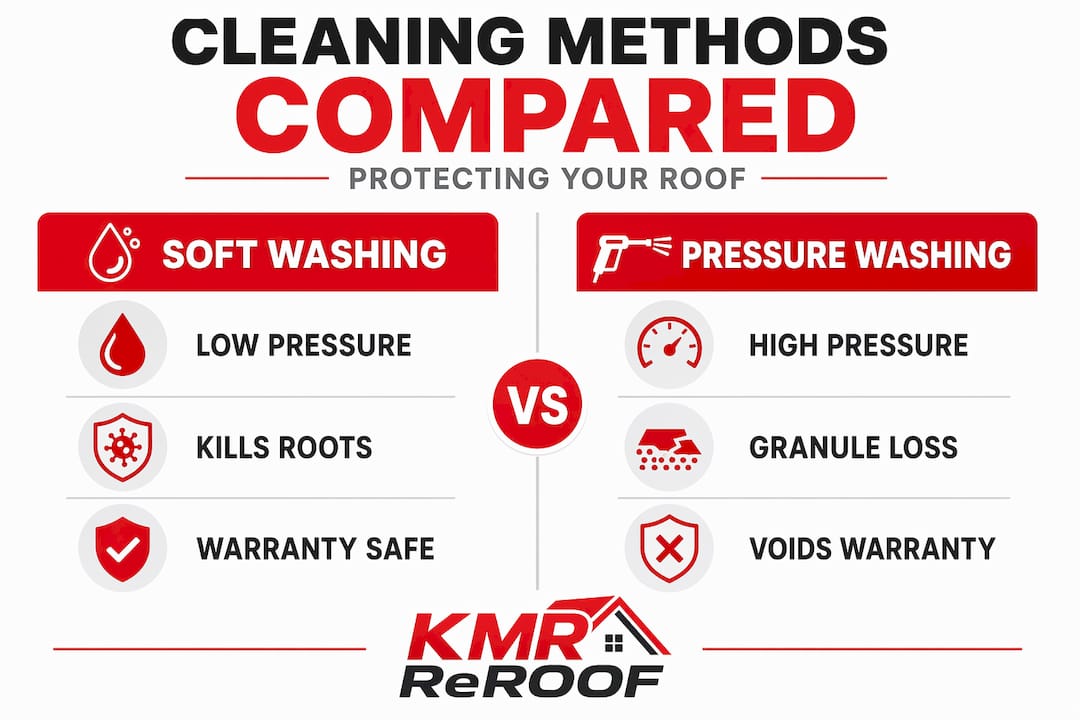
Pressure washing, by contrast, blasts granules off your shingles. Those granules do not grow back. Once they are gone, your shingles are permanently less protected. High-pressure washing voids manufacturer warranties on asphalt shingles, meaning if you need a warranty claim later, you will be denied.
| Method | Pressure | Result for shingles | Warranty safe? |
|---|---|---|---|
| Soft washing | Under 500 PSI | Kills growth without surface damage | Yes |
| Pressure washing | 1,500 to 3,000 PSI | Removes granules, accelerates aging | No |
The chemistry in soft washing needs to be applied correctly. Sodium hypochlorite works best at a pH between 9 and 11 with a dwell time of 15 to 30 minutes. Using too high a concentration near drainage areas or waterways requires precautions because concentrations above 6% can be toxic to aquatic life. A professional knows how to dilute, apply, and rinse properly without creating runoff problems.
Pro Tip: If a contractor shows up with a standard pressure washer and no chemical application setup, send them home. They are about to damage your roof.
How often to clean your roof
Frequency depends on your climate, roof type, and how much tree cover surrounds your home. There is no single universal answer, but there are clear frameworks that work.
For most homeowners in moderate climates, professional cleaning every 2 to 3 years is sufficient. That interval aligns with the typical regrowth cycle of moss and algae after a thorough soft wash. For homeowners in wet, humid, or heavily shaded conditions, annual cleaning is the standard recommendation from industry groups.
When it comes to seasonal timing, the approach breaks down like this:
- Spring is the best time to remove moss and algae that built up over winter. Moisture levels are high in fall and winter, so that is when growth accelerates. Clearing it in spring stops it from spreading through summer.
- Fall cleaning focuses on debris removal. Leaves, pine needles, and organic matter sitting on your roof hold moisture against the surface all winter. Clearing them before the cold sets in reduces biological growth throughout the season.
- Summer treatments work well as preventive applications. If you had a spring cleaning, a light preventive chemical treatment in summer can suppress new growth for the rest of the year.
Beyond scheduling, the most cost-effective preventive step is trimming overhanging branches. Overhanging branches contribute shading and debris that directly accelerate biological growth. Keeping trees trimmed back 6 to 10 feet from your roof reduces how often you need professional cleaning and slows regrowth between treatments.
The financial math behind this is not complicated. Professional soft washing costs $300 to $600 every 2 to 3 years. Ignoring algae damage can shorten shingle life by 5 to 10 years and push you into a replacement costing $8,000 to $25,000. You can also check this Houston roof replacement cost guide to see exactly how those numbers stack up before you decide cleaning is not worth the expense.
Energy savings and curb appeal
A dirty roof does not just fail structurally. It costs you money every month on your energy bill.
Algae and dark biological staining on shingles reduce the roof’s ability to reflect sunlight. Instead of bouncing heat away from your home, a stained roof absorbs it. That absorbed heat transfers into your attic and then into your living spaces. A clean roof reflects sunlight better and reduces the cooling load on your HVAC system, which directly lowers your utility bills during hot months.
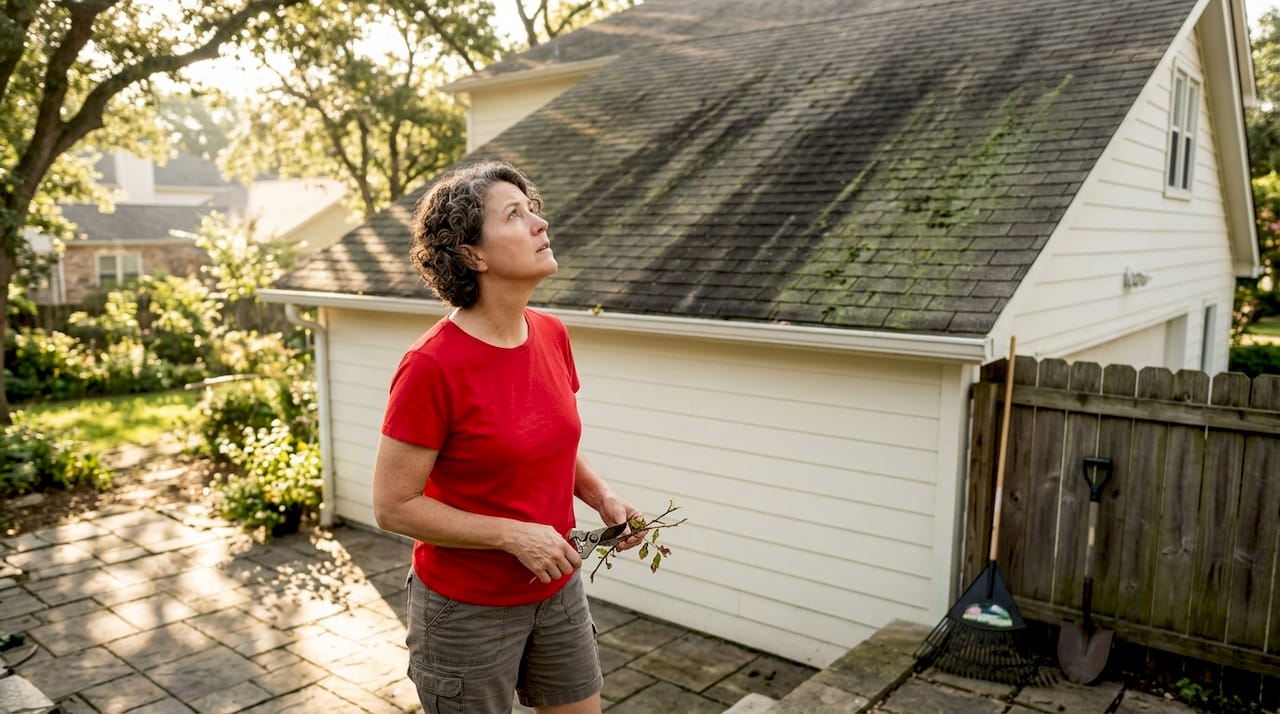
For Texas homeowners specifically, this matters more than almost anywhere else. Summers in Houston and El Campo push temperatures past 95 degrees for weeks at a time. A roof covered in dark algae staining is essentially a heat magnet placed directly over your living space. Regular cleaning maintains your roof’s original reflective surface and keeps your home cooler without any extra equipment investment. You can learn more about how this connects to your overall roofing energy efficiency and monthly costs.
Beyond energy, a clean roof dramatically improves curb appeal. Black streaks and green patches across your shingles are one of the fastest ways to reduce a property’s first impression. For property managers especially, a well-maintained roof signals to tenants and buyers that the entire property is cared for.
Risks of ignoring cleaning and DIY dangers
Skipping roof cleaning does not just mean dealing with biological staining. Left long enough, the damage follows a predictable and expensive path.
- Moss lifting shingles creates entry points for water. Water infiltration leads to wood rot in the decking beneath.
- Rotted decking weakens the structural support for the entire roof system.
- Interior leaks follow, damaging insulation, drywall, and in severe cases, the framing itself.
- Repair costs escalate from a simple cleaning to a partial or full roof replacement.
DIY cleaning carries its own serious risks that often make the situation worse. Falls from roofs account for a significant share of home maintenance injuries every year. Beyond the physical danger, homeowners using rented pressure washers often strip granules off entire sections of their shingles without realizing it until months later when those areas fail. Improper chemical mixing creates runoff that kills landscaping and pollutes nearby drainage systems.
Pro Tip: If you are set on monitoring your own roof, use binoculars from the ground or a ladder to check gutters and the lower edges. Leave the actual cleaning to someone with the right equipment and training.
Professional cleaning averages around $450 and comes with the right safety gear, correct chemical concentrations, and methods that preserve your warranty. For most homeowners, that cost is a clear win over risking injury or accidental damage.
My honest take on roof cleaning as a long-term investment
I have seen the pattern repeat too many times to count. A homeowner skips cleaning for five or six years because the roof looks acceptable from the driveway. Then an inspection before a home sale or a bad storm reveals moss-damaged decking or granule-stripped shingles, and suddenly they are looking at a full replacement they were not financially prepared for.
What I have learned is that most homeowners do not lack the information. They lack the mental model. They treat their roof like a passive structure rather than a system that needs regular upkeep, the same way your HVAC filter or gutters do. The difference is that roof neglect hides well for years before the bill arrives all at once.
The homeowners who get this right do not necessarily clean their roofs more aggressively. They just stay on a consistent schedule, hire professionals who use soft washing, and trim their trees regularly. Those three habits protect a 25 to 30-year roof investment for a few hundred dollars every couple of years. That is not maintenance. That is smart asset management.
If you are not sure where your roof stands right now, the Texas roof maintenance guide is a good place to start assessing what your specific situation calls for.
— Misterreroof
When cleaning is not enough: Misterreroof can help
Regular cleaning extends roof life significantly, but there comes a point where cleaning reveals deeper problems. Shingles past their service life, structural decking damage from years of moisture infiltration, or granule loss severe enough to strip UV protection entirely are signs that maintenance has run its course.
Mister ReRoof specializes in roof replacement across El Campo and Houston, TX. Whether your home needs a metal roof replacement in Victoria, TX, a shingle roof replacement in Hallettsville, TX, or a flat roof solution in El Campo, the team brings the same attention to detail and quality workmanship to every job. When your roof has given everything it can, Mister ReRoof makes sure your next one is built to last. Contact Mister ReRoof today for a free estimate and professional guidance on the right replacement option for your property.
FAQ
How often should you clean your roof?
Most roofs should be professionally cleaned every 2 to 3 years. In wet, humid, or heavily shaded climates, annual cleaning is the recommended standard to prevent biological growth from shortening roof life.
Does moss actually damage roofing shingles?
Yes. Moss grows into shingles, physically lifting and curling them while retaining moisture underneath. Over time, this causes wood rot, shingle failure, and leaks that require costly structural repairs.
Is pressure washing safe for asphalt shingles?
No. Pressure washing removes the protective granules from asphalt shingles and typically voids manufacturer warranties. Soft washing with low pressure and chemical solutions is the approved method for asphalt shingle roofs.
What does professional roof cleaning cost compared to replacement?
Professional soft washing costs $300 to $600 every 2 to 3 years. Neglecting roof cleaning can force a premature replacement costing $8,000 to $25,000, making regular cleaning one of the highest-return maintenance investments for homeowners.
Can a dirty roof increase my energy bills?
Yes. Algae and biological staining reduce a roof’s ability to reflect sunlight, causing heat to absorb into the attic and living spaces. A clean roof maintains its reflective properties and helps lower cooling costs, especially in hot climates like Texas.
