
TL;DR:
- A roof replacement permit in Texas is a local legal document ensuring compliance with building codes and safety standards. It is essential for protecting your home’s value, insurance coverage, and resale ability, especially in major cities that require permits and inspections. Skipping the permit can lead to fines, work removal, insurance issues, and resale complications.
A roof replacement permit in Texas is an official approval issued by a local city or county authority confirming that your roofing work meets applicable building codes and safety standards. Texas has no statewide building code or roofing permit requirement. Every rule comes from your municipality. That single fact causes more confusion for homeowners and contractors than almost anything else in the roofing process. Getting the permit right protects your home’s value, your insurance coverage, and your ability to sell the property later.
What is a roof replacement permit in Texas?
A roofing permit is the industry’s standard term for what most homeowners call a “roof replacement permit.” It is a legal document your local building department issues before work begins. The permit confirms the planned roofing work complies with local wind resistance, fire rating, and structural load requirements. Without it, your city has no record the work was ever done correctly.
Texas has no statewide roofing permit requirement, so the rules depend entirely on where your property sits. A homeowner in a rural county may face zero permit requirements. A homeowner in Houston faces a mandatory permit for any full roof replacement. That gap creates real risk for anyone who assumes their neighbor’s experience applies to their own situation.
The permit also triggers inspections. A city inspector visits the job site at key stages to verify the work matches the approved plans. This protects you from substandard installation that could fail during a Texas storm.
Which Texas cities require a roofing permit?
Major Texas metro areas require permits for full residential roof replacements. Houston, Dallas, Austin, and San Antonio all enforce this requirement strictly, with inspections tied to wind resistance and fire codes. Smaller towns and unincorporated counties often have no requirement at all, or they set a threshold such as work exceeding 25% of the total roof area.
Common permit triggers across Texas municipalities include:
- Full roof replacement on any residential or commercial structure
- Replacement of roof decking or structural sheathing
- Installation of a new roof system over an existing one (overlay)
- Any roofing work in a designated flood zone or historic district
- Projects that change the roof’s material type or slope
HOAs and historic districts add another layer of approval beyond the city permit. Architectural review committees can reject material choices or color selections, and that rejection delays your permit even after the city approves it. Coordinate with your HOA before submitting any permit application.
Pro Tip: Call your city’s building department directly before signing a contractor contract. Ask specifically whether a permit is required for a full shingle or metal roof replacement at your address. Get the answer in writing or by email.
How to get a roof permit in Texas
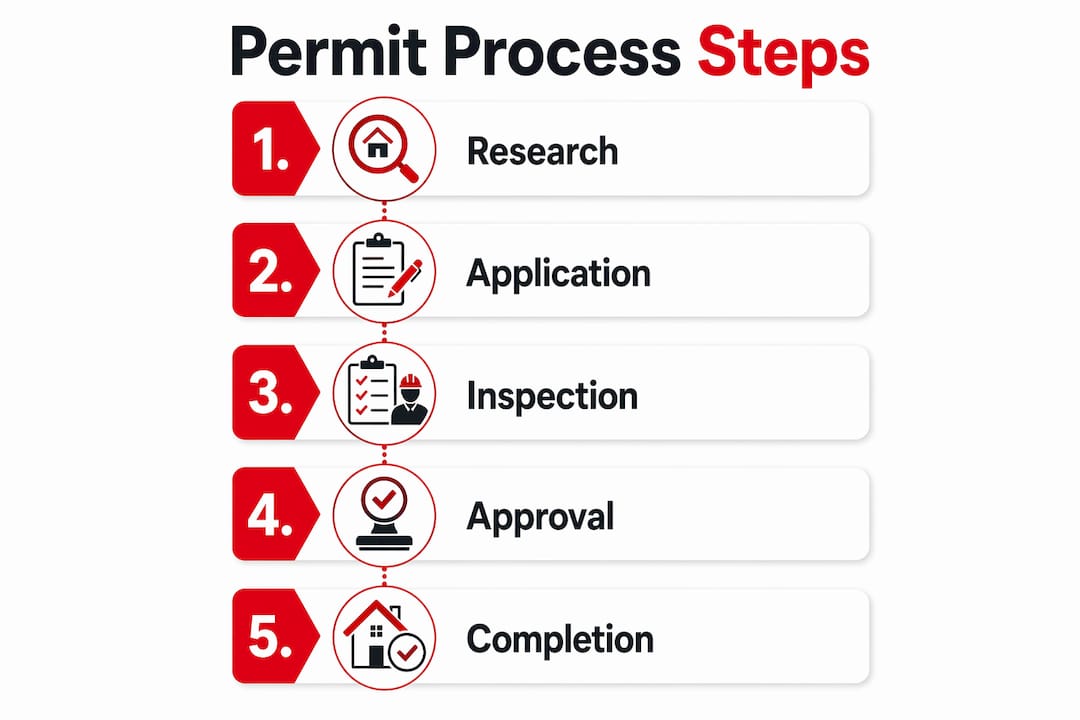
The permit application process in Texas follows a consistent pattern across most major cities, even though the specific forms and fees differ. A reputable contractor handles this process as part of their service. Here are the typical steps:
- Contractor submits the application. Your roofing contractor files the permit application with your city’s building department, either online or in person. The application includes the property address, scope of work, materials to be used, and contractor license and insurance information.
- Documentation is reviewed. The building department reviews the submitted plans for code compliance. Required documents typically include a site plan, material specifications, and proof of contractor insurance.
- Permit is issued and fees are paid. Once approved, the permit is issued and fees are collected. Permit fees range from $75 to $400 depending on the city and project size.
- Permit is posted at the job site. The permit must be visibly displayed at the property during all roofing work. Inspectors verify the posted permit before beginning any review.
- Roof decking inspection is conducted. If the decking is being replaced, an inspector visits before new roofing material is applied. Inspection phases include a decking check and a final inspection after the roofing is complete.
- Final inspection closes the permit. After the roofing is finished, the inspector returns for a final review. The permit is marked “finaled” in the city’s system, creating a permanent legal record.
Pro Tip: Ask your contractor to send you a copy of the finaled permit before you release the final payment. A permit that is issued but never closed is nearly as problematic as no permit at all.
How much does a roof replacement permit cost in Texas?

Permit costs vary by city, project size, and sometimes by the value of the work being performed. Most major Texas cities offer next-day or expedited online approval for standard roofing permits. Processing times stretch only during peak storm seasons when building departments are flooded with applications.
| City | Typical permit fee | Processing time |
|---|---|---|
| Houston | $150–$400 | 1–3 business days |
| Dallas | $100–$300 | 1–3 business days |
| Austin | $100–$350 | 2–5 business days |
| San Antonio | Varies; online apps available | 2–4 weeks for complex projects |
Permit costs are usually included in a contractor’s total quote, but verify this explicitly before signing. Ask your contractor to itemize the permit fee as a separate line item. That way you know the permit was actually pulled and paid for, not skipped to save time.
The fee itself is rarely the issue. The real cost of skipping a permit is far higher, as the next section explains.
What happens if you skip the permit?
Skipping a required roofing permit in Texas creates legal, financial, and practical problems that outlast the roof itself. Failing to obtain a required permit can lead to stop-work orders, fines, and forced removal of the completed work. Cities have the authority to require you to tear off a finished roof and start over with a proper permit.
The risks go beyond city enforcement:
- Insurance claim denials. Unpermitted roofing work is frequently excluded from homeowner’s insurance coverage. If your roof fails after a storm and the insurer discovers no permit was pulled, they can deny the claim entirely.
- Home resale complications. A permit is a legal record required for home resale. Title companies require proof of finaled permits for structural renovations. An unpermitted roof can derail a closing or force you to pay for a retroactive permit and inspection at the buyer’s demand.
- Personal liability. If an unpermitted roof causes water damage or structural failure, you bear full liability because no inspector ever verified the work was safe.
- Contractor liability shift. Unlicensed or uninsured contractors often ask homeowners to pull the permit themselves, transferring all compliance risk to the homeowner. This is a major red flag.
“Unpermitted work often excluded from insurance coverage; homeowners liable for repairs if no permit or inspection was obtained.” — HousePermits.com
How to work with contractors on permit compliance
Choosing the right contractor is the single most effective way to avoid permit problems. Texas does not require a state roofing license, meaning any contractor can legally perform roofing work without passing a state exam. That makes verifying insurance and local permit compliance your responsibility as a homeowner.
Watch for these warning signs when evaluating contractors:
- Contractor asks you to pull the permit yourself
- No proof of general liability or workers’ compensation insurance
- Quote does not mention permits or inspections
- Contractor offers a significant discount for skipping the permit
- No physical business address or local references
A contractor who handles permit procurement as part of their service is following best practice. Ask directly: “Will you pull the permit and manage all inspections?” The answer should be yes without hesitation. Also confirm the contractor will coordinate with your HOA if applicable, since lack of coordination between city departments and HOAs causes expensive project delays and rework.
Pro Tip: Before work begins, search your city’s online permit portal by address. Confirm the permit appears as “active” or “issued.” This takes two minutes and eliminates any doubt about whether your contractor actually filed.
You can also review how to hire a roofing contractor in Texas for a detailed checklist covering licensing, insurance, and permit verification.
Key Takeaways
A roof replacement permit in Texas is a locally issued legal document that protects your home’s safety record, insurance coverage, and resale value. Skipping it creates risks that far outweigh the cost of compliance.
| Point | Details |
|---|---|
| No statewide requirement | Texas sets no uniform permit rule; your city or county determines what is required. |
| Major cities enforce permits | Houston, Dallas, Austin, and San Antonio all require permits for full roof replacements. |
| Permit fees are manageable | Fees range from $75 to $400 and are typically included in contractor quotes. |
| Contractor should pull the permit | A contractor who asks you to pull the permit is shifting liability to you. |
| Finaled permit protects resale | Title companies require proof of a closed permit; confirm “finaled” status before final payment. |
The permit confusion is the real problem in Texas
The absence of a statewide roofing code in Texas sounds like freedom, but it creates a fragmented system that trips up homeowners and contractors alike. I have seen projects stall because a homeowner assumed no permit was needed based on a neighbor’s experience in a different county. The rules genuinely differ block by block in some Texas border areas.
The most common mistake is not skipping the permit intentionally. It is assuming the contractor handled it when they did not. A contractor who moves fast, keeps prices low, and never mentions inspections is almost always cutting corners on compliance. The permit process adds a few days to a project timeline. That is a small price for a legal record that protects you for the life of the home.
HOA requirements deserve more attention than most homeowners give them. An HOA architectural review can take two to four weeks in some communities. Starting that process before the permit application saves real time. Reputable contractors know this and build it into the project schedule automatically.
My practical advice: treat the finaled permit like a receipt. Do not close out the project financially until you have a copy in hand. That document is worth far more than the paper it is printed on when you go to sell your home or file an insurance claim.
— Misterreroof
Roof replacement resources from Misterreroof
Navigating local permit rules across Texas takes real knowledge of how each city’s building department operates. Misterreroof has built detailed guides specifically for Texas homeowners and contractors who want to get this right the first time.

The Texas homeowner roof replacement guide covers permit requirements, contractor selection, material choices, and inspection timelines in one place. Houston homeowners can also find city-specific advice in the Houston roof replacement tips resource, which addresses the city’s specific permit portal and inspection process. Mister Reroof serves El Campo, Houston, and surrounding Texas communities with professional installations that include full permit management from application to final inspection.
FAQ
Does Texas require a permit for roof replacement?
Texas has no statewide roofing permit requirement. Permits are required at the city or county level, and major cities like Houston, Dallas, Austin, and San Antonio mandate permits for full roof replacements.
How much does a roof replacement permit cost in Texas?
Permit fees in Texas range from $75 to $400 depending on the city and project scope. Most contractors include the permit fee in their total quote.
Can a homeowner pull their own roofing permit in Texas?
Homeowners can apply for permits themselves, but it is generally not recommended. A contractor asking you to pull the permit is a red flag that shifts legal liability to you.
What happens if I replace my roof without a permit in Texas?
Skipping a required permit can result in stop-work orders, fines, forced removal of the completed work, insurance claim denials, and complications when selling your home.
How long does it take to get a roofing permit in Texas?
Processing times are typically 1–5 business days in most major Texas cities. San Antonio’s online system can take 2–4 weeks for complex projects, and timelines extend during peak storm seasons.
