
TL;DR:
- TPO roofing is a reflective, heat-welded membrane that offers superior durability and energy savings in Texas’s harsh climate. Installing a 60-mil TPO with certified welds and proper maintenance can reduce cooling costs by up to 35% and provide a lifespan of 20 to 30 years. It also qualifies for utility rebates and outperforms many alternatives under storm and UV exposure.
TPO roofing is a single-ply, heat-welded, reflective membrane that outperforms every other flat roofing material in Texas’s extreme heat, UV exposure, and storm conditions. Property owners and facility managers across the state are choosing TPO because it cuts cooling costs, survives hurricane-force winds, and delivers a lifespan of 20–30 years when installed correctly. About 70% of new commercial roofs in Dallas-Fort Worth now use TPO. That number tells you everything about where the Texas commercial roofing market has moved. Understanding why Texas commercial roofs need TPO starts with the science behind its white reflective surface and ends with real dollars saved on your energy bill.
Why Texas commercial roofs need TPO: the energy case
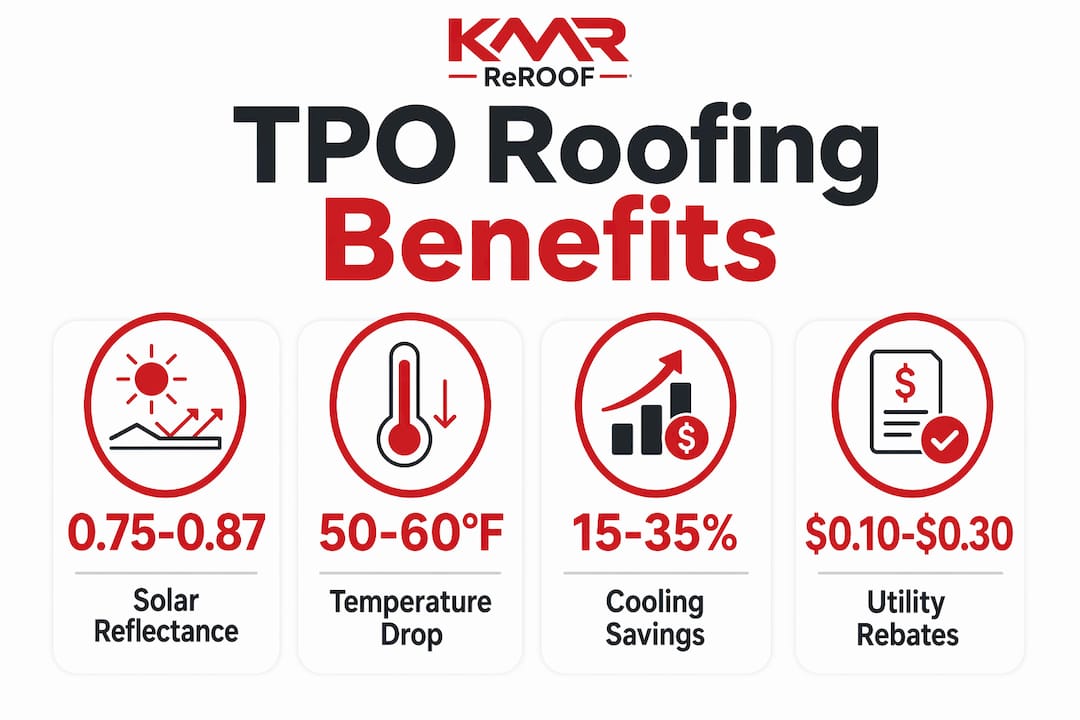
TPO’s white reflective surface is its most powerful feature in a Texas climate. White TPO membranes carry solar reflectance values between 0.75 and 0.87, which meets both ENERGY STAR standards and Texas energy code requirements. That reflectance keeps the sun’s heat off your building instead of pushing it through your ceiling into your HVAC system.
The temperature difference between TPO and a dark membrane is not subtle. TPO surfaces stay 50–60°F cooler than dark membranes under direct sun exposure. Dark EPDM roofs can reach 160–170°F on a July afternoon in Houston. A TPO roof on the same building stays well below that threshold, which directly reduces the load on your air conditioning units.
The financial result is measurable. TPO can reduce annual cooling costs by 15–35% for commercial buildings in Texas. Buildings in coastal regions like Houston see the strongest returns because the cooling season runs longer and humidity keeps temperatures elevated. Utility savings in humid Texas zones can deliver a simple payback within 4 years on the premium cost of TPO over cheaper alternatives.
Utility rebates add another layer of savings. Buildings with qualifying TPO membranes can receive rebates between $0.10 and $0.30 per square foot from Texas utility providers. On a 20,000-square-foot warehouse roof, that is up to $6,000 back in your pocket at installation.
Pro Tip: Ask your TPO installer for the membrane’s ENERGY STAR certification number before signing a contract. Some lower-grade products claim reflectivity but do not qualify for utility rebates.
| Energy metric | TPO performance |
|---|---|
| Solar reflectance | 0.75–0.87 |
| Surface temperature reduction | 50–60°F cooler than dark roofs |
| Annual cooling cost reduction | 15–35% |
| Utility rebate range | $0.10–$0.30 per sq ft |
How does TPO hold up against Texas weather?
Texas throws four distinct threats at commercial roofs: intense UV radiation, hurricane-force winds, heavy rainfall, and standing water from flat roof drainage failures. TPO addresses all four better than most alternatives.
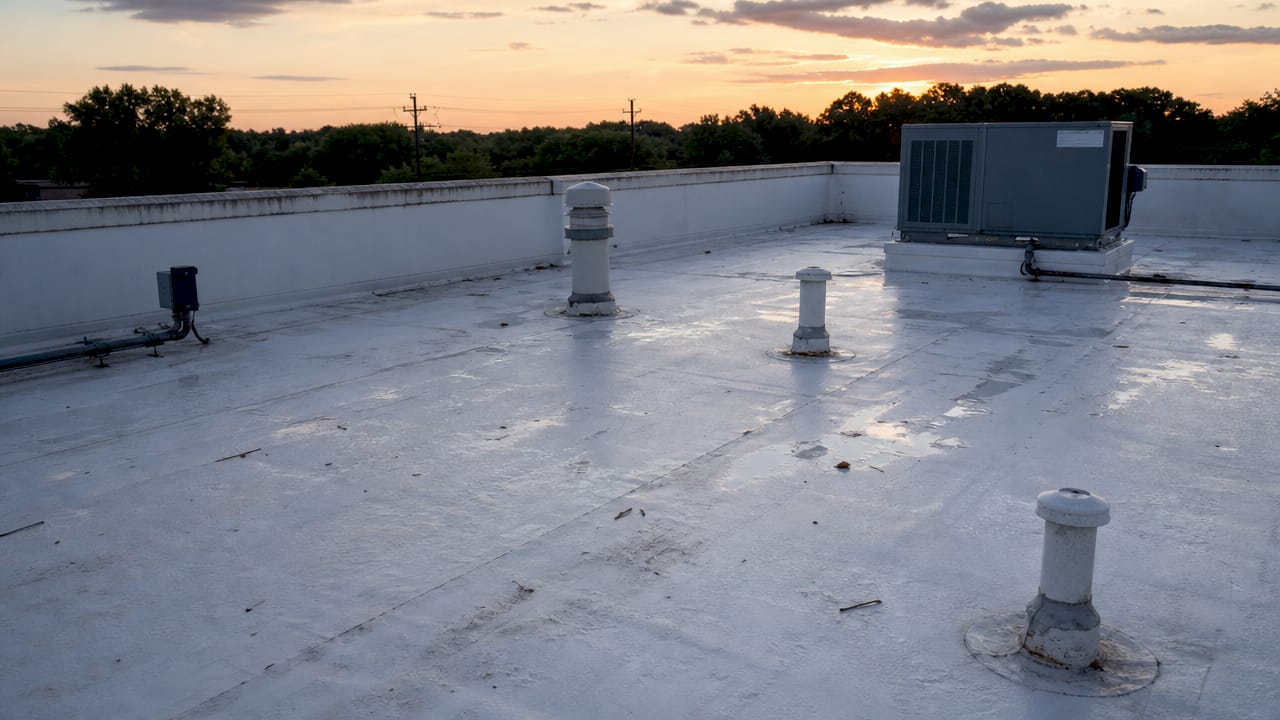
The heat-welded seam is TPO’s structural advantage over EPDM and other adhesive-bonded membranes. TPO’s heat-welded seams bond molecularly and resist separation under coastal wind and rain stress. An adhesive seam on an EPDM roof can peel under thermal cycling. A welded TPO seam cannot be pulled apart without tearing the membrane itself.
Membrane thickness determines how long a roof survives Texas sun. Specifying a 60-mil or 80-mil membrane can extend service life by 5–10 years compared to thinner 45-mil options. The 60-mil thickness is the industry gold standard for Texas commercial roofs targeting a 20-plus-year asset life. Thinner membranes cut upfront cost but fail faster under UV degradation and foot traffic from HVAC maintenance crews.
Ponding water is the silent killer of flat commercial roofs in Texas. Poor slope design or clogged HVAC drainage leaves water sitting on the membrane for days after a storm. Thermal drone inspections identify early membrane damage before it becomes a leak, which is a maintenance practice every facility manager should schedule twice a year.
Third- and fourth-generation TPO formulations have resolved the premature heat-aging failures seen in early products. Modern TPO is a reliable choice for Texas climates in a way that first-generation membranes were not.
Pro Tip: Specify 60-mil minimum thickness in your roofing contract. Contractors who quote only 45-mil are cutting corners that will cost you a reroof in 10 years instead of 25.
TPO vs. other commercial roofing options in Texas
Facility managers evaluating commercial roofing options in Texas typically compare TPO against EPDM, modified bitumen, and metal roofing. Each has a place, but TPO wins on the combination of upfront cost, energy performance, and durability for most flat-roof commercial applications.
TPO installed cost in Texas ranges from $4.50 to $9.00 per square foot. Two-ply modified bitumen runs $6.00 to $10.00 per square foot. That cost gap, combined with TPO’s energy savings, makes the choice straightforward for most property owners.
| Roofing type | Installed cost (per sq ft) | Energy efficiency | Seam type | Texas wind resistance |
|---|---|---|---|---|
| TPO | $4.50–$9.00 | High (reflective) | Heat-welded | Excellent |
| EPDM | $4.00–$8.00 | Low (dark surface) | Adhesive/tape | Good |
| Modified bitumen | $6.00–$10.00 | Moderate | Torch-welded | Good |
| Metal roofing | $10.00–$20.00 | High (coated) | Mechanical | Excellent |
EPDM costs slightly less upfront but its dark surface absorbs heat, which drives up cooling costs every summer. Over a 20-year period, the energy penalty on EPDM erases its initial cost advantage in Texas. Metal roofing delivers excellent performance and longevity but costs two to three times more per square foot than TPO, making it a harder case for large flat-roof commercial buildings.
TPO’s performance aligns with Texas’s high UV exposure and hurricane wind zone requirements in a way that EPDM simply does not. For property owners managing large square footage in Houston, San Antonio, or the Gulf Coast corridor, TPO delivers the best balance of cost and performance available in 2026.
Best practices for TPO installation and maintenance in Texas
A TPO membrane is only as good as the contractor who installs it. Certified installers from manufacturers like GAF and Carlisle follow strict welding protocols that determine whether a roof lasts 10 years or 30.
The welding temperature is the most critical installation variable. Certified installers set hot-air welders between 900 and 1,100 degrees Fahrenheit to achieve a molecular bond at every seam. Too cold and the seam peels. Too hot and the membrane burns. This is not a job for an uncertified crew.
Follow this maintenance schedule to protect your investment:
- Biannual inspections. Walk the roof in spring and fall to check seam integrity, membrane punctures, and drainage paths. Schedule a thermal drone inspection every two years to catch subsurface moisture before it spreads.
- Clear drainage points after every major storm. Standing water accelerates membrane degradation and adds structural load. Clear all drains and scuppers within 48 hours of a heavy rain event.
- Document HVAC service visits. Mechanical contractors walking on the roof cause punctures. Require protective walkway pads around all rooftop equipment and log every access visit.
- Recoat seams at year 10. Even molecularly welded seams benefit from a liquid sealant inspection and spot recoat at the 10-year mark to extend service life toward the 20–30-year target.
- Verify warranty terms before signing. GAF and Carlisle both offer manufacturer warranties that require certified installers. An uncertified contractor voids the warranty on day one.
Pro Tip: Pair your TPO maintenance program with professional roof cleaning to remove algae and debris that trap moisture against the membrane. A clean surface reflects more sunlight and lasts longer.
Financial and sustainability benefits of TPO for Texas commercial properties
TPO roofing supports LEED and ENERGY STAR certification goals for commercial buildings, which directly affects property market value and tenant appeal. Green building certifications are no longer a luxury. Texas energy codes are tightening, and buildings that already meet or exceed those standards carry a measurable competitive advantage.
The sustainability case for TPO connects directly to the financial case. Lower cooling costs reduce operating expenses, which improves net operating income. Higher NOI increases the capitalized value of the property. A TPO roof is not just a maintenance decision. It is an asset management decision.
Key financial and sustainability benefits for Texas commercial property owners:
- LEED contribution. TPO’s reflectivity and reduced heat island effect contribute points toward LEED certification under the Sustainable Sites and Energy categories.
- ENERGY STAR compliance. Qualifying membranes meet Texas energy code and open the door to utility rebates.
- Reduced HVAC wear. Lower cooling loads extend the service life of rooftop HVAC units, reducing capital expenditure on mechanical replacements.
- Improved tenant retention. Lower utility bills in leased commercial spaces make properties more attractive to tenants who pay their own utilities.
- Sustainability in commercial roofing supports long-term asset value in a Texas market where energy performance is increasingly priced into commercial real estate transactions.
Key Takeaways
TPO is the leading commercial roofing choice in Texas because its reflective membrane, heat-welded seams, and 60-mil thickness standard deliver energy savings, storm resistance, and a 20–30-year service life that no other flat-roof material matches at the same cost.
| Point | Details |
|---|---|
| Energy savings are significant | TPO cuts annual cooling costs by 15–35% and qualifies buildings for utility rebates. |
| Membrane thickness matters | Specify 60-mil minimum to reach a 20-plus-year service life in Texas heat. |
| Seam quality determines durability | Heat-welded seams outperform adhesive alternatives in wind and rain resistance. |
| Maintenance extends lifespan | Biannual inspections and thermal drone scans prevent costly early failures. |
| TPO beats modified bitumen on cost | Installed cost of $4.50–$9.00 per sq ft undercuts two-ply modified bitumen systems. |
What I’ve learned about TPO after years of Texas roofing work
The biggest mistake I see property owners make is treating membrane thickness as a negotiable line item. A contractor who quotes a 45-mil membrane is not saving you money. They are shifting the cost of a premature reroof onto your balance sheet in year 12 instead of year 25. Specify 60-mil in writing and walk away from any bid that does not honor it.
The second mistake is underestimating regional climate differences within Texas. Houston and the Gulf Coast corridor are not the same roofing environment as Dallas or Lubbock. Coastal humidity extends the cooling season and makes TPO’s energy savings more pronounced. A facility manager in Houston who chooses EPDM to save $1.00 per square foot upfront is leaving years of utility savings on the table.
The third thing I would tell any property owner is to verify installer certification before signing a contract. GAF and Carlisle both maintain certified contractor networks. A certified installer is not just better trained. They are the only path to a manufacturer warranty that actually holds up when you need it.
TPO is not a perfect product. Early formulations had heat-aging problems that gave the membrane a bad reputation in some markets. Modern third- and fourth-generation TPO has resolved those issues. If a contractor dismisses TPO based on problems from 15 years ago, they are not current on the product. That is a red flag.
The TPO roof advantages in Texas are real and measurable. But they only materialize when the membrane is specified correctly, installed by a certified crew, and maintained on a consistent schedule.
— Misterreroof
Misterreroof’s TPO roofing services for Texas commercial properties
Texas commercial property owners need a roofing contractor who understands the specific demands of Gulf Coast humidity, UV intensity, and hurricane-season wind loads. Misterreroof serves El Campo, Houston, and the surrounding Texas market with professional TPO roof replacement services backed by certified installation and manufacturer warranty compliance.

Mister Reroof’s team specifies the correct membrane thickness, verifies welding temperatures, and documents every installation step to protect your warranty. Whether you manage a warehouse in El Campo or a commercial complex in Houston, Misterreroof delivers TPO installations built to last in Texas weather. Review the flat roof replacement guide for Houston to understand the full replacement process, or contact Misterreroof today for a free estimate on your commercial property.
FAQ
What is TPO roofing and why is it used in Texas?
TPO (Thermoplastic Polyolefin) is a single-ply reflective membrane used on flat and low-slope commercial roofs. Texas property owners choose it because it reduces cooling costs by 15–35% and withstands high UV exposure and hurricane-force winds.
How long does a TPO roof last in Texas?
A properly installed 60-mil TPO roof lasts 20–30 years in Texas when maintained with regular inspections and prompt drainage management. Thinner 45-mil membranes typically fail sooner under intense Texas sun and thermal cycling.
Is TPO more expensive than EPDM or modified bitumen?
TPO installs at $4.50–$9.00 per square foot, which is comparable to EPDM and less than two-ply modified bitumen at $6.00–$10.00 per square foot. TPO’s energy savings and utility rebates typically make it the lower-cost option over the full roof lifecycle.
Does TPO qualify for utility rebates in Texas?
Yes. White TPO membranes with solar reflectance values between 0.75 and 0.87 meet ENERGY STAR requirements and qualify for Texas utility rebates ranging from $0.10 to $0.30 per square foot.
What thickness of TPO should I specify for a Texas commercial roof?
Specify a minimum of 60-mil thickness. This is the industry gold standard for Texas commercial roofs and can extend service life by 5–10 years compared to 45-mil membranes under the same UV and thermal stress conditions.
