
TL;DR:
- A roof damage estimate is a detailed document outlining the scope, materials, labor, and costs needed to repair or replace a damaged roof. It includes line items for materials, labor, and disposal, with total costs reflecting damage severity and roofing type, and often varies from contractor bids due to hidden damages and code upgrades. Homeowners should review estimates carefully, verify quantities, compare insurance scopes, and document damage to ensure accurate repairs and avoid unexpected costs.
A roof damage estimate is a formal document that specifies the scope, materials, labor, and total cost required to repair or replace a damaged roof. Known in the insurance industry as a scope of loss or damage appraisal, this document drives every decision from filing a claim to signing a contractor agreement. Most insurance adjusters generate these estimates using Xactimate, an industry-standard software that breaks repairs into line items with regional pricing. Understanding what is a roof damage estimate, and how it works, puts you in control of the repair process rather than at the mercy of it.
What is a roof damage estimate and what does it contain?
A roof damage estimate is a line-item breakdown of every task and material needed to restore a damaged roof to its pre-loss condition. The standard estimate format produced by tools like Xactimate can contain 20–30 individual line items covering materials, labor, and disposal. Each line item lists a unit of measurement, a quantity, and a unit price. The total of all lines gives you the estimated cost of repairs.
The roof inspection estimate process follows a clear sequence:
- Visual inspection from the ground and attic. A qualified inspector looks for missing shingles, sagging decking, water stains, and damaged flashing without climbing the roof unnecessarily.
- On-roof inspection by a professional. A licensed roofer or adjuster walks the surface to document granule loss, hail strikes, punctures, and lifted seams.
- Measurement and documentation. The inspector records square footage, linear footage of ridges and valleys, and counts individual components like vents or skylights.
- Software entry. Data goes into Xactimate or a similar platform, which applies local labor rates and material costs to each line item.
- Final review. The completed estimate lists every category: shingles, underlayment, decking, flashing, labor, and disposal.
Common measurement types you will see on an estimate include:
- SQ (square): One roofing square equals 100 square feet of roof surface.
- LF (linear foot): Used for ridges, hips, valleys, and drip edge.
- EA (each): Used for individual items like pipe boots, vents, or skylights.
Pro Tip: Ask your contractor to walk you through each line item before signing anything. If a category like “ice and water shield” or “drip edge” is missing, request it be added before work begins.
How are costs broken down in a roof damage estimate?
Roof damage estimate costs divide into four main categories: labor at 45%–60%, materials at 30%–45%, tear-off and disposal at 5%–10%, and permits at 1%–3%. Labor is the largest single cost driver. That proportion holds whether you are replacing asphalt shingles in El Campo or a TPO flat roof in Houston.
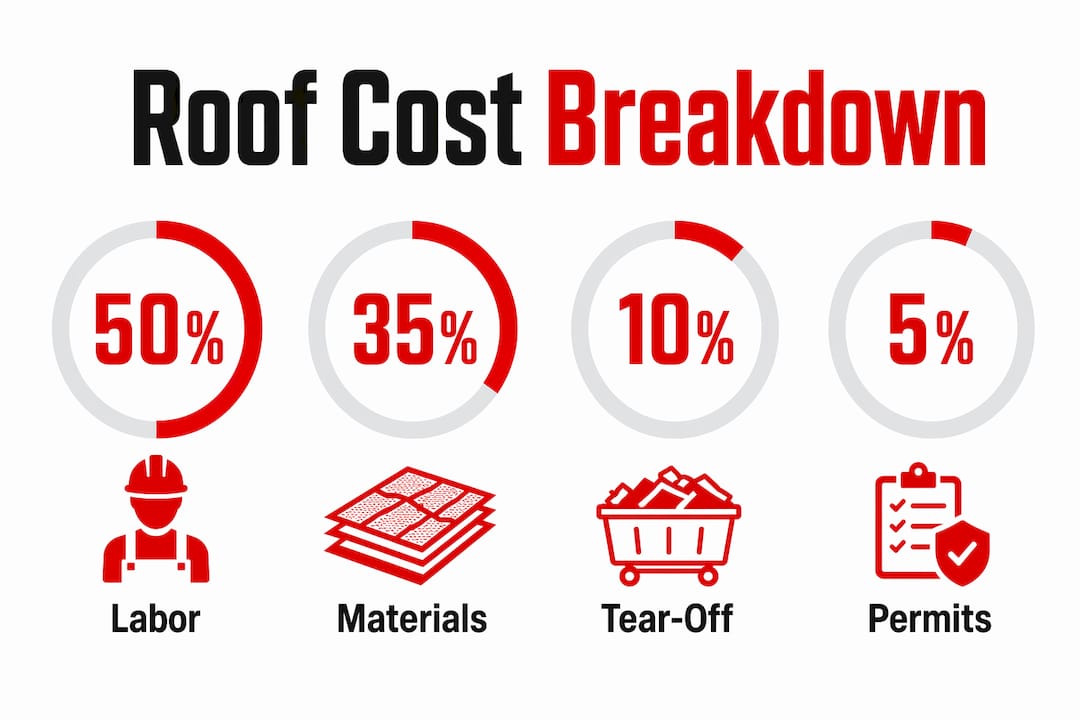
| Cost Component | Typical Proportion | What It Covers |
|---|---|---|
| Labor | 45%–60% | Installation, removal, and cleanup crew wages |
| Materials | 30%–45% | Shingles, underlayment, flashing, fasteners |
| Tear-off and disposal | 5%–10% | Removing old roofing and hauling debris |
| Permits and fees | 1%–3% | Local building permits and inspection fees |
The national average cost for roof repair in the U.S. sits at about $1,150 in 2026, with minor repairs ranging from $150 to $600 and major structural repairs reaching $2,000 to $6,500 or more. That wide range reflects how dramatically material choice and damage severity affect the final number.
Roof complexity pushes costs up fast. A steep-pitch roof requires safety equipment and slower installation, which increases labor hours. Metal roofing costs more per square than asphalt shingles but requires less frequent replacement. Flat roofs with TPO membrane have their own labor and material pricing that differs entirely from sloped systems.
Pro Tip: Get at least three contractor estimates for any repair over $2,000. Comparing line items, not just totals, reveals where one contractor is cutting corners or another is padding costs.
How does an insurance estimate differ from a contractor’s bid?
A contractor’s estimate and an insurance scope of work are fundamentally different documents with different purposes. The insurance estimate reflects what the insurer believes is covered under your policy. The contractor’s bid is a proposal to perform specific work at a specific price.
Key differences homeowners need to understand:
- Scope: Insurance estimates cover only the damage attributed to the covered event. Contractor bids may include related work, upgrades, or code-required improvements.
- Code upgrades: Items like improved ventilation, ice and water shield, or updated drip edge are often excluded from insurance estimates unless specifically requested. Omitting these creates unexpected out-of-pocket costs.
- Hidden damage: Insurance adjusters write initial estimates based on visible damage. When a contractor tears off the old roof and finds rotted decking or damaged sheathing, those costs require a supplement claim.
- Supplements: Insurance estimates are rarely final. Hidden damage discovered during tear-off leads to supplement claims, which adjusters and contractors treat as a normal part of the process.
- Pricing source: Insurance estimates use Xactimate’s regional pricing database. Contractor bids reflect actual supplier quotes and local market rates, which may differ.
The practical takeaway is that you should never assume the insurance estimate covers everything your contractor will charge. Review both documents side by side before work begins.
What factors influence the cost and accuracy of roof estimates?
Several variables determine how accurate and how expensive a roof inspection estimate turns out to be. Knowing them helps you spot gaps before they become disputes.
- Damage severity and hidden issues. Surface damage is easy to price. Rotted decking, damaged rafters, or compromised sheathing only appear after tear-off. These hidden issues are the most common reason estimates change during a project.
- Roofing material type. Asphalt shingles, metal panels, TPO membrane, and tile each carry different material costs and labor requirements. A roof replacement cost estimate for a metal roof in Houston will look very different from one for a three-tab shingle roof.
- Roof pitch and height. Steep roofs and multi-story homes require additional safety equipment and slower work, which raises labor costs directly.
- Local labor rates and permit costs. Texas markets like Houston and El Campo have their own labor rate benchmarks. Permit fees vary by municipality and add to the total.
- Emergency or after-hours work. Repairs made immediately after a storm, especially at night or on weekends, carry surcharges that standard estimates do not reflect.
- Accessibility. A roof with limited access due to landscaping, fencing, or neighboring structures costs more to work on. Contractors factor in equipment rental and additional setup time.
Regional pricing is a real variable. The same repair in Houston can cost more than the same repair in a rural Texas county because of labor market differences and material delivery costs.
How can homeowners read and use roof estimates effectively?
Reading a roof damage estimate is a skill that pays off. Most homeowners skip straight to the total. That is a mistake.
Start with the quantity column. Verify that the square footage listed matches your roof’s actual size. A roofer or adjuster who measures 18 squares on a 22-square roof will underprice the job, and you will face a change order mid-project. Cross-reference measurements against your home’s footprint if you have access to blueprints or a prior estimate.
Check for these commonly missing items:
- Code upgrade allowances: Ventilation improvements, updated flashing standards, and ice and water shield requirements vary by local code. Verify these are included or request a supplement.
- Decking replacement: Many initial estimates assume existing decking is sound. If your roof is older, budget for at least partial decking replacement.
- Drip edge and starter strips: These are small line items that some estimates omit entirely, but they are required by most building codes.
- Disposal fees: Confirm the estimate includes haul-away. Some contractors price this separately.
Document storm damage carefully before calling anyone. Photos of the damage, the date of the storm, and any collateral damage to gutters or siding help contractors and adjusters separate new storm damage from pre-existing wear. A pre-inspection packet with this information speeds up the appraisal process and reduces disputes.
Pro Tip: Never climb your own roof to document damage. Roof inspections should be performed by qualified professionals. Ground-level photos and attic inspections give you useful documentation without the safety risk.
For Texas homeowners dealing with storm damage, understanding the storm damage repair workflow helps you know when to expect each estimate and what triggers a supplement request.
Key Takeaways
A roof damage estimate is only as useful as your ability to read it. Homeowners who verify quantities, check for code upgrades, and compare insurance scopes against contractor bids consistently get better repair outcomes and fewer surprise costs.
| Point | Details |
|---|---|
| Estimates are line-item documents | Each line covers a specific material or task with a unit, quantity, and price. |
| Labor dominates the cost | Labor accounts for 45%–60% of total repair costs, making it the largest single variable. |
| Insurance estimates are rarely complete | Hidden damage and code upgrades require supplement claims after initial inspections. |
| Contractor bids and insurance scopes differ | Compare both documents side by side before authorizing any repair work. |
| Documentation protects your claim | Photos, storm dates, and roof history help adjusters and contractors price damage accurately. |
What I have learned from watching homeowners navigate estimates
Most homeowners treat the insurance estimate as the final word. That is the single most expensive mistake I see. Insurance adjusters work from visible damage and policy language. They are not trying to shortchange you, but their initial scope is almost always incomplete once a contractor starts tearing off material.
The roof damage assessment report produced by a certified inspector carries more weight in disputes than a contractor’s verbal opinion. If your insurance estimate and contractor bid are far apart, a third-party assessment from a National Roof Certification and Inspection Association (NRCIA) member can resolve the gap faster than back-and-forth emails with an adjuster.
Getting multiple contractor estimates is not about finding the cheapest bid. It is about finding the most complete one. A bid that includes decking, code upgrades, and proper disposal will cost more upfront and save you thousands in change orders. The contractors who skip those line items are not giving you a deal. They are giving you a starting price that will grow.
Active claim management matters. Follow up on supplements. Ask your contractor to document every piece of hidden damage with photos before covering it. That documentation is what gets supplements approved quickly. Homeowners who stay involved in the process get better settlements than those who hand everything off and wait.
— Misterreroof
Misterreroof helps Texas homeowners get accurate roof estimates
Getting a reliable roof damage estimate starts with a professional inspection from a team that knows Texas weather and local building codes.

Mister Reroof serves homeowners and property managers in El Campo, Houston, and surrounding Texas communities with thorough roof assessments, insurance claim support, and complete replacement services. Whether you are dealing with hail damage, wind damage, or an aging roof that needs a full replacement, the Misterreroof team documents damage correctly, works alongside your insurer, and provides estimates that reflect the actual scope of work. Read the Texas homeowner roof replacement guide to understand what a full replacement involves, or review roof inspection guidance to prepare before your first call. Contact Misterreroof to schedule your free estimate today.
FAQ
What is included in a roof damage estimate?
A roof damage estimate includes line items for materials, labor, tear-off and disposal, and permits. Standard estimates generated with tools like Xactimate can contain 20–30 line items covering every component of the repair.
How is roof damage calculated for an estimate?
Roof damage is calculated by measuring the total roof surface in squares (one square equals 100 square feet), counting individual components like vents and skylights, and applying regional labor and material rates to each item.
Why does my insurance estimate differ from my contractor’s bid?
Insurance estimates reflect the insurer’s interpretation of covered loss under your policy. Contractor bids are proposals for the actual work required, which often includes code upgrades and hidden damage not captured in the initial insurance scope.
How much does a typical roof repair estimate cost to complete?
The national average for roof repair is about $1,150 in 2026. Minor repairs range from $150 to $600, while major repairs involving structural damage can reach $2,000 to $6,500 or more.
Can a roof damage estimate change after work begins?
Yes. Hidden damage discovered during tear-off, such as rotted decking or damaged sheathing, requires a supplement claim. Supplements are a normal part of the insurance claim process and should be documented with photos before the damage is covered.
