TL;DR:
- Roof pitch measures the vertical rise per 12 inches of horizontal run, crucial for material choice and drainage. Pitches above 8:12 require professional safety measures due to increased risk, and accurate measurement from attic or rooftop prevents costly errors. Understanding your roof’s pitch helps optimize repair, maintenance, and material selection for safety and durability.
Most homeowners assume roof pitch is just about how a house looks. It’s not. What is roof pitch, really? It’s the measurement that determines which roofing materials your home can use, how well your roof drains during a Texas rainstorm, and whether a repair job is something you can handle yourself or requires a professional with safety equipment. Getting this number wrong before a renovation can cost you thousands in mid-project corrections. This guide gives you the full picture, from definition to measurement to practical decisions.
Table of Contents
- Key takeaways
- What is roof pitch and how it’s measured
- Types of roof pitch and what they mean for your home
- How roof pitch affects materials and costs
- Safety and structural considerations
- How to measure and apply roof pitch for your project
- My take after years in roofing
- Work with a team that knows your roof
- FAQ
Key takeaways
| Point | Details |
|---|---|
| Pitch is rise over run | Roof pitch is measured as vertical rise in inches for every 12 inches of horizontal run. |
| Terminology matters | Pitch, slope, and angle are different; using the wrong term can cause material compliance failures. |
| Attic measurement is safest | Measuring pitch from inside the attic is more accurate and avoids ladder risks entirely. |
| Pitch drives material choices | Low, medium, and steep pitches each require different roofing materials for proper performance. |
| Above 8:12 needs caution | Roofs steeper than 8:12 are dangerous to walk on without professional safety equipment. |
What is roof pitch and how it’s measured
Roof pitch definition, at its simplest: it’s the ratio of how many inches a roof rises vertically for every 12 inches it travels horizontally. A roof that rises 6 inches for every 12 inches of horizontal run has a 6:12 pitch. That number tells you almost everything about how a roof will perform.
Here’s where many homeowners get confused. Pitch, slope, and angle are three different things, even though contractors sometimes use them interchangeably. Pitch is a ratio, slope is a percentage, and angle is degrees. For example, a 4:12 pitch equals a 33.3% slope and roughly 18.43 degrees. Architects tend to prefer degree angles for structural drawings, while framers work in the 12-inch run ratio because it maps directly to how they cut lumber. When you’re reviewing a material spec sheet, you need to know which system the manufacturer is using. Confirming terminology with manufacturers prevents compliance problems that are easy to miss until something leaks.
How to measure roof pitch accurately
There are two practical methods: from the rooftop and from inside the attic.
- Rooftop method: Place a 12-inch carpenter’s level flat against the roof surface. Lift the level until it reads perfectly horizontal. Measure the vertical distance between the end of the level and the roof surface. That measurement in inches is your rise, giving you a pitch in X:12 format.
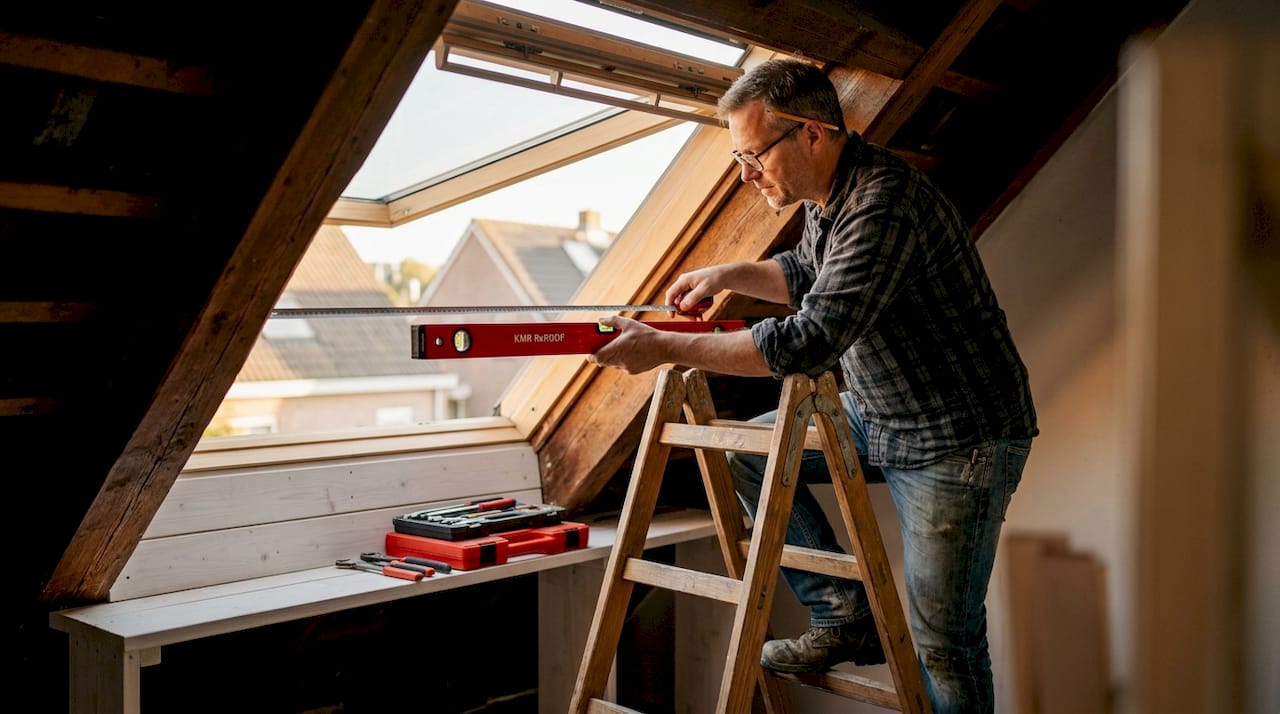
- Attic method: Go inside the attic and place the level against the underside of a rafter. Same process. Measure 12 inches horizontally from where the level touches the rafter, then measure the vertical gap. Measuring from inside the attic is safer, more precise, and avoids the interference you get from shingles or granule texture on the surface.
Pro Tip: Mark exactly 12 inches on your carpenter’s level before you start. This simple modification turns a standard tool into a dedicated pitch-measuring device, reducing the chance of measuring from the wrong point.
Types of roof pitch and what they mean for your home
Roof pitches fall into three broad categories, and each one shows up in different architectural styles across the country.
| Pitch range | Category | Typical use | Walkability |
|---|---|---|---|
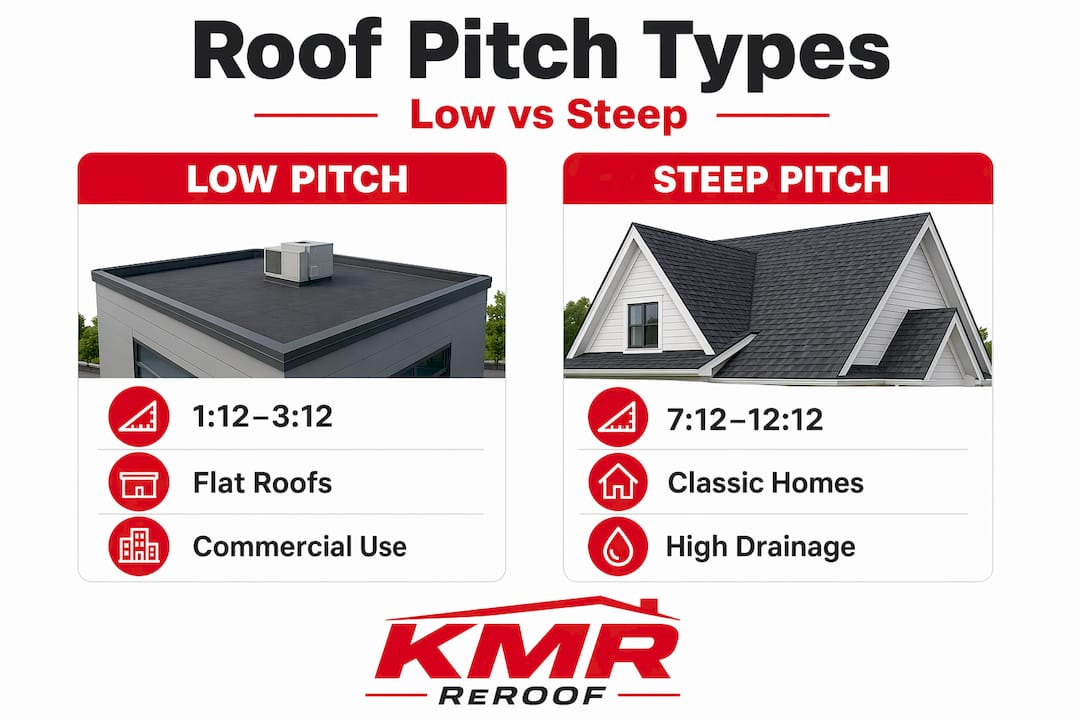
| 1:12 to 3:12 | Low pitch | Commercial buildings, modern homes, additions | Easy to walk |
| 4:12 to 6:12 | Medium pitch | Most American residential homes | Manageable with care |
| 7:12 to 9:12 | Steep pitch | Craftsman, Tudor, traditional colonial homes | Requires caution |
| 10:12 and above | Very steep | Victorian homes, decorative dormers | Professional access only |
Low-pitch roofs drain water more slowly by design, which is why they rely on waterproof membrane systems rather than shingles. Medium-pitch roofs are the standard across most American suburbs. They handle rain well, accept almost any residential roofing material, and sit in the sweet spot for both aesthetics and function.
Steep-pitch roofs give homes a dramatic, classic look. You see them on older neighborhoods in Houston and across central Texas. But that visual appeal comes with real trade-offs. The steeper the pitch, the harder it is to work on. It also affects what it costs to replace or reroof those surfaces, since labor time increases significantly above a 7:12.
How roof pitch affects materials and costs
Pitch does more than shape your roof. It determines which materials will perform correctly and which ones will fail ahead of schedule.
Here’s how the numbers line up in practice:
- Asphalt shingles work well from 4:12 and above. Below that, water moves too slowly to shed properly through overlapping shingles, creating leak risk.
- Metal roofing is effective from 1:12 upward when installed with standing seam panels and proper sealing. The material selection for your pitch directly impacts long-term durability, especially in Texas heat and hail events.
- Flat roofing systems (including TPO and modified bitumen) are designed for 0:12 to 2:12. They use fully sealed membranes instead of gravity drainage.
- Wood shakes and slate require a minimum of 4:12 and often perform best above 6:12, where water clears the surface fast enough to prevent moisture retention.
Pitch also affects how well your gutters and downspouts manage runoff. Faster water from a steep pitch hits gutters harder and requires more downspout capacity. A well-designed roof drainage system accounts for pitch when sizing gutters. Get the pitch wrong in your planning and your drainage system will either overflow in a downpour or collect standing water at the eaves.
Maintenance costs climb with pitch. A 4:12 is straightforward for most roofing contractors to work on. A 12:12 takes more time, more equipment, and more risk, all of which show up in the quote. If you’re comparing bids and one seems unusually low for a steep roof, that’s worth questioning.
Safety and structural considerations
This is where roof pitch explanation gets real for anyone considering DIY repairs or managing a renovation project.
Above 8:12, extreme caution is required. At 10:12 and steeper, professional safety equipment is not optional. That means roof jacks, harness systems, and in many cases a two-person crew. At these angles, a single misstep can be fatal. Even experienced roofers move more deliberately on a 12:12 pitch than on a 4:12.
For property managers overseeing multiple buildings, understanding the pitch of each roof before scheduling maintenance work protects both workers and your liability. Knowing your roof’s pitch before a contractor arrives is a sign of good project management, not over-preparation.
There’s also a structural angle. Higher pitch means more roof surface area, which means more load from wind, rain, and in rare Texas cases, ice. A roof renovation that changes pitch even slightly requires engineering review because the rafter sizing and wall support assumptions in the original build may no longer apply.
Pro Tip: Measure your pitch early in any renovation or repair planning process. Discovering mid-project that your 6:12 roof is actually a 9:12 can change your material order, your safety plan, and your budget all at once.
How to measure and apply roof pitch for your project
Follow these steps to get an accurate pitch measurement and put the number to work:
- Gather your tools. You need a carpenter’s level (at least 12 inches long), a tape measure, and something to write with.
- Choose your measurement location. Attic access is preferred. If you’re measuring from the rooftop, do it from a stable ladder position near the eave, never from the peak.
- Set your level. Place it horizontally against the rafter (attic) or roof surface (rooftop). Confirm the bubble is centered.
- Measure your rise. At the 12-inch mark on the level, measure straight down to the rafter or roof surface. That number in inches is your pitch. A 6-inch gap means a 6:12 pitch.
- Record and verify. Measure in at least two locations to confirm consistency. Hip roofs and complex roof shapes sometimes have multiple pitches on different sections.
- Apply the number. Cross-reference your pitch with material minimum requirements before ordering anything. Check whether your drainage design is scaled to handle the water volume your pitch produces.
Getting this process right at the start of a project is one of the simplest ways to avoid expensive corrections later. As early pitch measurement reduces surprises and ensures your safety gear and material planning are dialed in before work begins.
My take after years in roofing
I’ve watched a lot of homeowners skip the pitch measurement step because it feels like a detail. It never is. The projects that go sideways most often are the ones where someone assumed the pitch instead of measuring it.
The other mistake I see constantly: treating pitch and slope as the same word when talking to suppliers. I’ve seen material orders come back wrong because a contractor asked for products rated for a “6:12 slope” when the spec sheet used degree angles. The terminology confusion is real, and it costs people money.
My honest opinion on DIY pitch measurement: the attic method works great for most homeowners. The rooftop method is where people get into trouble, not because the technique is hard, but because they rush it. A level that’s even slightly off horizontal gives you a wrong number, and that number follows your project all the way to the final invoice.
If you’re hiring a contractor, ask them what the pitch of your roof is before they give you a quote. Any experienced roofer should be able to answer immediately. If they can’t, or if they haven’t measured, that tells you something about how they’re going to handle the rest of the project.
— Misterreroof
Work with a team that knows your roof
Understanding your roof pitch sets you up to make smarter decisions. Acting on that knowledge is where Mister ReRoof comes in.

Whether your home has a low-pitch flat roof or a steep traditional design, Mister ReRoof matches the right materials and methods to your specific roof. Their team handles metal roof replacement, shingle systems, and flat roof replacement in El Campo, all installed to handle Texas weather conditions. Pitch-specific expertise means no guesswork on material compatibility or safety planning. Contact Mister ReRoof today for a free estimate and get a roofing team that already knows what your pitch means for your project.
FAQ
What is roof pitch in simple terms?
Roof pitch is the measurement of how steep your roof is, expressed as a ratio of vertical rise to horizontal run. A 6:12 pitch means the roof rises 6 inches for every 12 inches of horizontal distance.
How do I calculate roof pitch myself?
Use a carpenter’s level and a tape measure. Hold the level horizontal against the rafter or roof surface, then measure the vertical distance at the 12-inch mark. That measurement is your pitch in X:12 format.
What roof pitch is too steep to walk on safely?
Pitches above 8:12 require extreme caution, and anything above 10:12 requires professional safety equipment. At these steepness levels, homeowners should not attempt repairs without a trained contractor.
Does roof pitch affect which materials I can use?
Yes. Asphalt shingles require at least a 4:12 pitch, while flat roofing materials like TPO work on pitches from 0:12 to 2:12. Using the wrong material for your pitch leads to premature failure and leaks.
What is the most common roof pitch on American homes?
Most American residential homes fall between a 4:12 and 6:12 pitch. This range handles rain well, works with standard shingle materials, and sits in the comfortable zone for roofing crews to work safely.
