
TL;DR:
- Homeowners often choose roof shingles based on appearance, but durability, cost, and climate compatibility are crucial factors. Asphalt shingles are most common, with architectural options offering longer lifespans and better storm resistance, while metal, slate, and synthetic shingles provide premium, long-lasting choices. Proper installation and understanding local codes significantly influence the roof’s lifespan and overall performance.
Your roof is one of the most expensive systems on your home, yet most homeowners choose shingles the same way they pick paint colors: by what looks good at first glance. The types of roof shingles you select affect how long your roof lasts, how much it costs to maintain, and whether it survives the next major storm. This guide breaks down every major roof shingle material, explains the real tradeoffs, and gives you a clear path to making a decision that fits your home, your budget, and where you live.
Table of Contents
- Key takeaways
- What types of roof shingles should you consider?
- 1. 3-tab asphalt shingles
- 2. Architectural (dimensional) asphalt shingles
- 3. Luxury (premium) asphalt shingles
- 4. Metal shingles
- 5. Wood shingles and shakes
- 6. Slate shingles
- 7. Synthetic shingles
- 8. Shingle type comparison at a glance
- 9. How to choose the right shingles for your situation
- My honest take on choosing roof shingles
- Ready to replace your roof with confidence?
- FAQ
Key takeaways
| Point | Details |
|---|---|
| Asphalt dominates for a reason | Asphalt shingles offer the best balance of cost, lifespan, and ease of installation for most homeowners. |
| Architectural beats 3-tab long-term | Architectural shingles last up to 30+ years and handle storms better, making them worth the extra cost. |
| Installation quality is non-negotiable | Even premium shingles fail early if the installation is sloppy; choose your contractor as carefully as your material. |
| Climate dictates material performance | Hot, windy, or wildfire-prone regions call for specific shingle materials to avoid premature degradation. |
| Know your timeline before you buy | Long-term owners benefit from investing in durable shingles, while short-term owners may prioritize lower upfront cost. |
What types of roof shingles should you consider?
Not all shingles are created equal, and the differences go well beyond price. Before you pick a product, you need to understand what separates one type from another. Here are the key criteria that should guide every roofing decision.
Durability and lifespan. This is the number most homeowners focus on first, and for good reason. A shingle that lasts 15 years versus one that lasts 50 years represents a completely different cost picture over the life of your home. Climate conditions significantly influence which type performs best, especially in areas with intense UV exposure or high winds.
Budget: upfront vs. long-term. Cheaper shingles cost less today but often cost more in total. Factor in the number of replacements you will need over 30 years, not just the invoice you get this week.
Aesthetics and curb appeal. The right shingles can add real estate value. The wrong ones can make a well-maintained home look dated. Some materials mimic the look of slate or wood without the weight or expense.
Local building codes. Certain municipalities restrict wood shingles due to fire risk. Others require specific wind ratings in storm-prone zones. Always check local requirements before committing.
- Durability vs. cost tradeoff varies widely by material
- Climate suitability affects lifespan dramatically
- Style choices impact resale value
- Local codes may limit your options
Pro Tip: Get at least three bids from licensed contractors and ask each one to specify the shingle brand, product line, and warranty. Vague quotes almost always lead to disputes later.
1. 3-tab asphalt shingles
3-tab shingles are the entry-level option in the asphalt family. They are a single flat layer with three evenly spaced cutouts along the bottom edge, giving roofs a uniform, grid-like appearance. They are lightweight and straightforward to install, which keeps labor costs low.
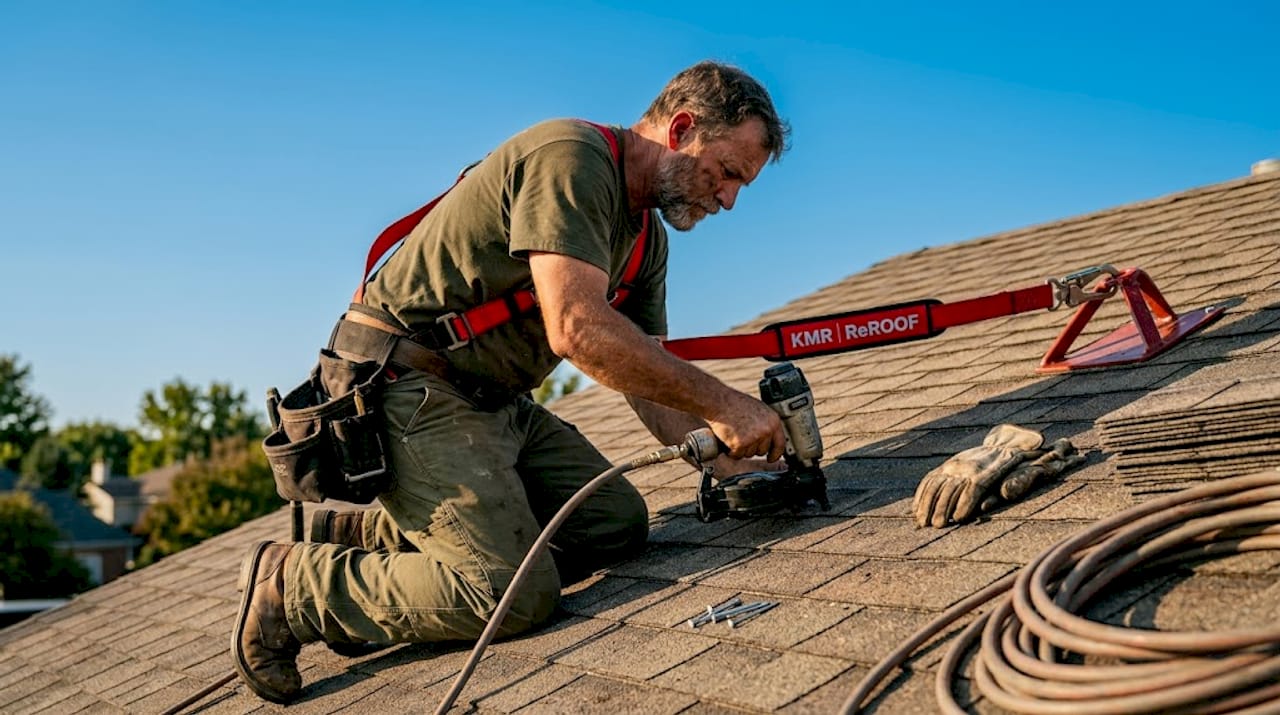
The tradeoff is durability. 3-tab shingles last around 15 to 20 years in mild climates but degrade faster under harsh UV or high wind. Their wind resistance rating typically tops out at 60 to 70 mph, which is not enough for severe weather zones. If you are in a coastal or hurricane-prone area, this matters enormously.
3-tab shingles make practical sense for rental properties, short-term ownership situations, or budgets with little flexibility. They do the job at a lower cost, but they are not a long-term investment.
2. Architectural (dimensional) asphalt shingles
Architectural shingles are the most popular type on the market today, and the reasons are straightforward. They are constructed from multiple asphalt layers bonded together, which gives them a textured, three-dimensional appearance that reads as premium from the street. They weigh 40 to 50% more than 3-tab shingles and carry wind resistance ratings of 80 to 130 mph.
They also last significantly longer. Architectural shingles typically last 25 to 30+ years, compared to the 15 to 20 year ceiling on 3-tab products. That extended lifespan, combined with fewer storm-related repairs, usually offsets the higher upfront cost. For most homeowners who plan to stay in their home for a decade or more, this is the sweet spot of value and performance.
You can learn more about why architectural shingles work well in Houston’s climate in a dedicated breakdown for Texas homeowners.
Pro Tip: When shopping architectural shingles, look for products with a Class 4 impact resistance rating. These carry insurance discounts in many Texas counties and perform far better in hailstorms.
3. Luxury (premium) asphalt shingles
Luxury shingles sit at the top of the asphalt category. They are designed to mimic slate or cedar shake without the structural demands or costs of the real materials. They can weigh twice as much as a standard 3-tab shingle, which translates directly into enhanced impact resistance and wind performance.
These shingles are a smart choice if you want high-end aesthetics on a wood-frame home that cannot support real slate, or if you want the look of a premium roof without committing to the maintenance that natural materials require. The cost is higher than standard architectural shingles, but warranties often extend to 30 to 50 years.
4. Metal shingles
Metal shingles are not metal standing-seam roofing. They are individual metal panels stamped to look like conventional shingles or tiles, installed similarly to asphalt products but with a much longer service life. Metal shingles last 40 to 70 years, offer superior fire resistance, and are increasingly popular in wildfire-prone regions.
They also pair well with solar panel installations, since their long lifespan means you will not need to remove and reinstall panels for a re-roof project partway through a solar system’s life. The upfront cost is significantly higher than asphalt, but metal roof replacement is often the smartest long-term investment for homeowners who plan to stay put.
For Texas homeowners dealing with intense summer heat and storm systems, metal shingles deserve a serious look. You can review storm-resistant roofing methods to see how metal compares to other materials under real-world Texas weather conditions.
5. Wood shingles and shakes
Wood shingles are sawn smooth on both sides, while wood shakes are split on one or both faces for a rougher, more rustic texture. Both deliver excellent natural aesthetics and modest insulating properties. Cedar is the most common species used.
The maintenance requirement is real. Wood shingles need periodic treatment to resist moisture, moss, and rot. Their lifespan runs 20 to 30 years with proper care, but neglect shortens that window considerably. They are also restricted or prohibited in many fire-risk areas, particularly in California and parts of Texas. If you love the look, confirm local code compliance before getting attached to the idea.
6. Slate shingles
Natural slate is the most durable roofing material available. It is not unusual for slate roofs to last 75 to 150 years. The material is completely fireproof, does not absorb moisture, and improves the resale value of high-end homes significantly.
The catch is weight. Slate is heavy enough that many residential roof structures require reinforcement before installation, adding to the already substantial cost. It is also fragile underfoot, making repairs tricky. Slate shingles are the right choice for period homes, historic properties, or premium new construction where budget is not the primary constraint.
7. Synthetic shingles
Synthetic shingles are made from rubber, plastic, or composite materials engineered to replicate the look of slate, wood, or stone. The manufacturing technology has improved dramatically over the past decade. High-quality synthetic shingles are now nearly indistinguishable from the materials they imitate, at a fraction of the weight and cost.
Lifespans range from 30 to 50 years depending on the product, and many carry Class 4 impact ratings. They are also easier to install than natural materials, which reduces labor costs. Synthetic shingles are the go-to option for homeowners who want premium aesthetics without premium structural requirements.
Pro Tip: Ask your contractor for the specific ASTM testing data on any synthetic shingle. Quality varies widely between brands, and not all products marketed as premium actually perform at that level.
8. Shingle type comparison at a glance
Choosing between materials is easier when the numbers are side by side.
| Shingle type | Lifespan | Relative cost | Wind resistance | Best for |
|---|---|---|---|---|
| 3-tab asphalt | 15 to 20 years | Low | 60 to 70 mph | Budget installs, rentals |
| Architectural asphalt | 25 to 30+ years | Moderate | 80 to 130 mph | Most homeowners |
| Luxury asphalt | 30 to 50 years | Moderate-high | 110 to 130 mph | Premium curb appeal |
| Metal shingles | 40 to 70 years | High | 120 to 160 mph | Long-term owners, fire zones |
| Wood shingles | 20 to 30 years | Moderate | Variable | Rural, low fire-risk areas |
| Slate | 75 to 150 years | Very high | Excellent | Historic, premium homes |
| Synthetic | 30 to 50 years | Moderate | Class 4 rated | Aesthetic upgrades |
One dimension this table cannot fully capture is disposal. Asphalt shingles are widely recyclable, while wood, slate, and older asphalt containing asbestos carry stricter disposal rules and potentially higher removal costs. Factor that into your long-term budget, especially for older homes.
9. How to choose the right shingles for your situation
The best shingles for your neighbor are not necessarily the best shingles for you. Here is a practical framework to narrow your options.
- Assess your timeline. Long-term homeowners get the best value from architectural or luxury shingles due to durability and lower lifetime repair costs. If you are selling in three years, a 3-tab product may be the smarter spend.
- Map your climate risks. In Texas, that means heat, UV exposure, hail, and tropical storm systems. Architectural shingles handle most of that well. Metal handles all of it. Check proper roof ventilation as well since poor attic airflow degrades even the best shingles faster.
- Set a realistic budget. Include not just material and installation, but the likely number of replacement cycles over 30 years. A $10,000 roof you replace twice is more expensive than a $16,000 roof that lasts a lifetime.
- Check local codes. Some areas restrict wood shingles. Others offer insurance credits for impact-resistant products. A call to your local building department takes 10 minutes and can save you thousands.
- Prioritize installation quality. Proper installation is more important than shingle brand or type for maximizing roof lifespan. Correct nailing, flashing, and ventilation determine whether your shingles reach their rated lifespan or fall short.
Pro Tip: Request a copy of the manufacturer’s installation instructions before work begins and confirm your contractor is following them. Most warranty voids come from improper installation, not defective materials.
My honest take on choosing roof shingles
I have seen homeowners spend weeks comparing shingle brands and hours on color samples, then hand the job to the lowest bidder without checking a single reference. That is the wrong priority order, and it costs people real money.
In my experience, architectural shingles are the right call for the vast majority of homeowners. The short-term savings on 3-tab shingles rarely survive contact with a Texas hailstorm or a summer heat cycle. I have watched roofs installed with perfectly decent 3-tab products fail in 10 years because the attic had no ventilation and the nailing pattern was wrong.
What I tell every homeowner: your shingles are only as good as the crew that puts them on. Spend 20% of your research time on materials and 80% verifying your contractor is licensed, insured, and accountable. The material choice matters. The installation is everything.
— Misterreroof
Ready to replace your roof with confidence?
If you are weighing your options and want a professional assessment before committing to a material, Misterreroof is ready to help. The team serves homeowners across El Campo, Houston, and the surrounding Texas region with shingle roof replacement and metal roof installations built to handle real Texas weather.
Whether you are leaning toward architectural asphalt, luxury composition, or want to explore a metal roof in Hallettsville, Mister reroof brings the workmanship and product knowledge to back up every recommendation with results. Contact Misterreroof today for a free estimate and find out which shingle type makes the most sense for your home and your budget.
FAQ
What is the most common type of roof shingle?
Asphalt shingles are by far the most common type, with architectural (dimensional) shingles leading in popularity due to their balance of cost, durability, and appearance.
How long do architectural shingles last?
Architectural shingles typically last 25 to 30 or more years, significantly outlasting 3-tab shingles, which average 15 to 20 years in mild conditions.
Are metal shingles better than asphalt shingles?
Metal shingles last 40 to 70 years and offer superior fire resistance, making them better for long-term value and extreme climates, though they cost considerably more upfront than asphalt.
What causes roof shingles to fail early?
Poor installation is the leading cause of premature shingle failure. Incorrect nailing, inadequate flashing, and poor attic ventilation can all cut a shingle’s lifespan well short of its rated years.
Can you recycle old roof shingles?
Asphalt shingles are widely accepted at recycling facilities, but wood, slate, and older shingles that may contain asbestos face stricter disposal requirements and higher handling costs.
