TL;DR:
- Many roofing failures result from poor installation and planning mistakes rather than material defects. Homeowners must verify contractor licenses, obtain permits, and ensure proper ventilation to avoid costly repairs and voided warranties. Making informed, detail-focused decisions early in the process extends roof lifespan and protects investment.
Roof replacement mistakes are defined as installation and planning errors that shorten a roof’s lifespan, void warranties, and cost homeowners thousands in avoidable repairs. Over 70–80% of premature roof failures trace back to poor installation, not defective materials. That single fact changes how you should approach every decision in a roofing project. A typical replacement in 2026 costs between $7,500 and $15,000 and takes 1–3 days. Getting it wrong means paying that price twice.
1. Skipping contractor credential verification
Hiring an unlicensed or uninsured contractor is the single most common roofing installation pitfall homeowners make. If a worker is injured on your property and the contractor carries no liability insurance, you bear the financial risk. An unlicensed contractor also cannot pull permits legally, which creates a chain of problems that follows your home for years.
Trustworthy contractors share these credentials without hesitation:
- A valid state contractor’s license
- General liability insurance with at least $1,000,000 in coverage
- Workers’ compensation coverage for all crew members
- A physical business address and verifiable local references
- A track record of completed projects you can inspect
Pro Tip: Search the contractor’s license number on your state licensing board’s website before signing anything. A five-minute check prevents months of headaches.
Check online reviews on Google and the Better Business Bureau. One or two negative reviews are normal. A pattern of complaints about unfinished work or billing disputes is a red flag you should not ignore.
2. Ignoring building permits and inspections
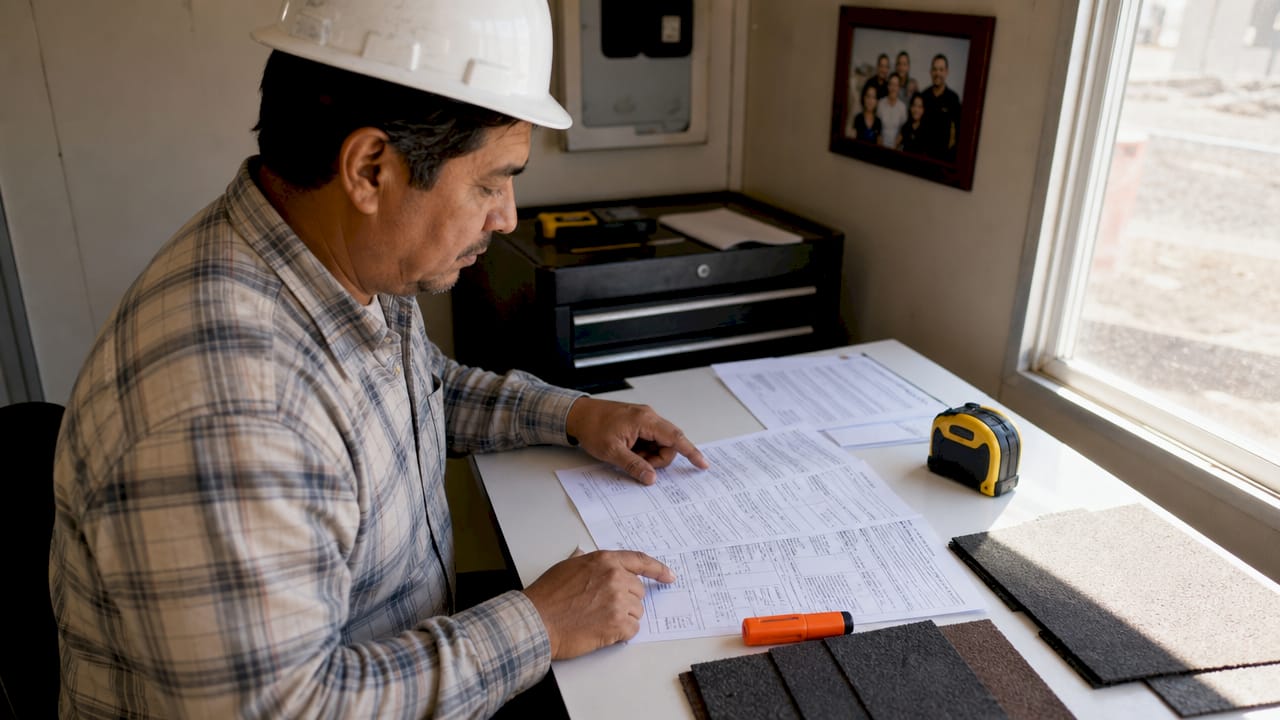
Building permit fees typically range from $100 to $500, and your contractor should handle the application. Skipping this step is one of the costliest roofing blunders a homeowner can make. An unpermitted roof can trigger code violations, delay or kill a future home sale, and leave you personally liable for non-compliant work.
Permits protect you in three specific ways:
- A city inspector verifies the installation meets local building codes.
- The permit creates a legal record that the work was done properly.
- Your homeowner’s insurance claim is less likely to be disputed after a storm.
Ask your contractor directly: “Will you pull the permit, and will I receive a copy of the final inspection report?” Any hesitation on that question tells you something important. Read the full breakdown of Texas permit requirements before your project starts.
3. Choosing the lowest bid without reading the details
Contractors with the lowest bids often omit essential components like flashing, underlayment, or proper ventilation to appear cheaper. The number looks attractive until the roof leaks six months later and you discover those items were never included. Price shopping is reasonable. Choosing on price alone is not.
Request a line-item estimate from every contractor you interview. The estimate should list materials by brand and quantity, labor costs, disposal fees, and permit costs separately. When you compare estimates side by side, scope gaps become obvious. A contractor who charges $2,000 less but excludes ice and water shield, drip edge, and new flashing is not cheaper. They are more expensive once you add the repair bills. Review what a complete roofing estimate should include before you sign.
4. Getting ventilation wrong
Blocking soffit vents or failing to balance attic intake and exhaust creates an attic “hot box” that damages shingles from below. Heat and moisture trapped in the attic cause shingles to curl, crack, and fail years ahead of schedule. Most homeowners never see this happening until the damage is already severe.
Proper ventilation requires a balanced system:
- Soffit vents provide cool air intake at the eaves
- Ridge vents or power vents exhaust hot air at the peak
- The ratio of intake to exhaust must be calibrated to your attic’s square footage
Proper attic ventilation is also a warranty requirement for most major shingle manufacturers. Installing new shingles over a poorly ventilated attic can void your warranty before the first winter. Ask your contractor to document the ventilation calculation for your specific roof.
Pro Tip: Walk your attic in summer before the project starts. If it feels like an oven, your current ventilation is already failing. A good contractor will address this as part of the replacement, not as an add-on.
Get a full explanation of ventilation design for Texas homes to understand what your roof actually needs.
5. Reusing old or incorrectly installed flashing
Roof flashing is the leading cause of leaks, and reusing old flashing is one of the most common errors contractors make to cut costs. Flashing seals the joints where the roof meets walls, chimneys, skylights, and valleys. Old flashing loses its seal over time and rarely bonds correctly to new underlayment.
Watch for these flashing failure signs during and after installation:
- Visible gaps or lifted edges around the chimney base
- Rust stains running down from roof penetrations
- Water stains on interior ceilings near walls or skylights
- Caulk used as a substitute for properly overlapped metal flashing
Ask your contractor specifically: “Are you replacing all flashing with new material, or reusing existing pieces?” The answer should always be new material. Improper flashing installation causes leaks that appear months after installation, making the source hard to trace and expensive to fix. Learn more about how flashing protects your roof and what proper installation looks like.
6. Skipping damaged decking repairs
Damaged roof decking must be repaired before new shingles go down. Laying new materials over soft, rotted, or water-damaged plywood traps the problem underneath and accelerates deterioration. The new roof looks fine on day one. Within two to three years, the shingles above the damaged section begin to sag and fail.
A reputable contractor will inspect the decking once the old shingles are removed and flag any soft spots before proceeding. Get this in writing as part of your contract. The agreement should state that damaged decking will be replaced at a set per-sheet cost, so there are no surprise charges when the crew finds a problem mid-project.
7. Nail gun pressure errors
Incorrect nail gun pressure causes two distinct failures. Too much pressure blows the nail through the shingle, leaving a hole and no holding power. Too little pressure leaves the nail head raised above the shingle surface, which allows wind to lift the tab and eventually tear it off. Both errors weaken the roof and void most manufacturer warranties.
This mistake is invisible from the ground. The only way to catch it is to have an experienced supervisor on site during installation or to request a post-installation inspection. Ask your contractor whether they calibrate nail gun pressure at the start of each day and after any equipment change.
8. Using mismatched or substandard materials
Mixing shingle brands or grades across a single roof creates inconsistent performance and voids most manufacturer warranties. Some contractors substitute lower-grade underlayment or skip ice and water shield entirely in regions where it is technically optional but practically necessary. In Texas, where roof damage signs often follow severe hail and wind events, material quality directly determines how long your roof survives.
Specify materials by brand and product line in your contract. If the estimate says “30-year architectural shingle,” that is not specific enough. It should name the manufacturer and product. This protects you if the crew shows up with a different product than what was quoted.
9. Failing to register the manufacturer warranty
Manufacturer warranties require certified installers and registration within 30–60 days of installation. Missing that window voids the coverage entirely. A 30-year shingle warranty also prorates after 10–15 years, meaning the manufacturer covers less and less of the replacement cost as time passes. Registering promptly locks in the strongest coverage period.
Ask your contractor for the warranty registration paperwork on the day the job is complete. Do not wait for them to mail it. Register directly on the manufacturer’s website and save the confirmation number with your home records.
10. Pressure washing the roof after installation
Pressure washing a roof damages shingles and strips the protective granule coating that shields the asphalt layer from UV rays. This is a commonly overlooked homeowner error that shortens shingle life significantly. Algae or moss growth on a new roof should be treated with a low-pressure chemical wash, not a power washer.
This mistake happens most often when homeowners try to maintain their new roof themselves without guidance. Ask your contractor for a written maintenance checklist at project completion. A good contractor provides one as standard practice.
Key Takeaways
The most expensive roof replacement mistakes are not material failures. They are planning and installation decisions made before the first shingle goes down.
| Point | Details |
|---|---|
| Verify contractor credentials | Confirm a valid license, liability insurance, and workers’ comp before signing any contract. |
| Always pull permits | Permit fees of $100–$500 protect you from code violations and future home sale problems. |
| Replace all flashing | Reusing old flashing is the leading cause of post-installation roof leaks. |
| Register your warranty promptly | Manufacturer warranties must be registered within 30–60 days or coverage is void. |
| Read every line-item estimate | Low bids often exclude flashing, underlayment, or ventilation to appear cheaper. |
What I have learned from watching homeowners rush this decision
The homeowners who regret their roof replacement almost always made the same move: they picked the fastest, cheapest contractor and assumed the result would be fine. It rarely is. The roof looks identical from the street whether the flashing is new or reused, whether the decking was repaired or covered over, whether the nail gun was calibrated or not. The difference only shows up when it rains hard enough or the wind hits the right angle.
The detail that surprises most people is how much of a roof’s performance depends on decisions made in the first hour of installation, before a single shingle is placed. Decking condition, ventilation balance, and flashing material are all set before the visible work begins. By the time you can see the new shingles, the most consequential choices are already locked in.
My honest advice: get three line-item estimates, verify every license number yourself, and be present when the old shingles come off. That is the moment your contractor will find decking damage, and that is the moment you need to be there to approve the repair in writing. A quality installation costs more upfront. It costs far less over the life of the roof.
— Results
Misterreroof helps Texas homeowners get it right the first time
Avoiding the mistakes covered here requires a contractor who treats every step of the process with the same care. Misterreroof serves homeowners in El Campo and Houston, TX, with licensed, insured roof replacement across shingle, metal, flat, and TPO systems.
Every Mister Reroof project includes proper permitting, new flashing, verified ventilation, and manufacturer-certified installation to protect your warranty from day one. If you are planning a replacement and want to make sure nothing gets missed, the Texas roof replacement guide walks through every phase of the process. For Houston homeowners, the Houston replacement tips page covers local weather considerations that affect material and installation choices. Contact Misterreroof today for a free estimate and a line-item quote you can actually compare.
FAQ
What causes most premature roof failures?
Poor installation causes 70–80% of premature roof failures, with improper ventilation, bad flashing, and incorrect nailing as the top contributors. Material defects account for a much smaller share of early failures.
How much does a roof replacement cost in 2026?
A typical residential roof replacement costs between $7,500 and $15,000 depending on roof size, material choice, and project complexity. Most jobs complete in 1–3 days under normal weather conditions.
Do I need a permit for a roof replacement in Texas?
Yes. Permit fees range from $100 to $500 and your contractor should pull the permit before work begins. Skipping permits risks code violations, insurance claim disputes, and complications when you sell the home.
How do I know if my contractor replaced the flashing correctly?
Ask for new flashing materials to be specified in the written contract. After installation, inspect the chimney base, skylights, and wall transitions for visible gaps, lifted edges, or caulk used in place of properly overlapped metal.
When should I register my new roof warranty?
Register directly with the manufacturer within 30–60 days of installation. Most manufacturers require a certified installer and timely registration to activate full coverage. Missing the deadline voids the warranty regardless of shingle quality.
