TL;DR:
- Changing roof color can significantly reduce Texas homes’ solar heat absorption and cooling costs. Light or cool-colored roofs reflect more sunlight, lowering attic temperatures and extending shingle lifespan, which saves energy and money over time. Combining reflective roofing with proper attic ventilation and insulation maximizes savings and durability.
Roof color is the single fastest variable you can change to reduce how much solar heat your home absorbs in Texas. The role of roof color in Texas heat management is well documented: dark shingles reflect as little as 5–15% of sunlight, while high-quality white shingles reflect 60–75%. That gap translates directly into attic temperature, air conditioner runtime, and monthly cooling bills. Austin Energy reports average residential summer cooling bills between $180–$320 per month, which means even a modest reduction in cooling load adds up fast. Understanding how color, material, and system design interact gives you real leverage over those numbers.
How does roof color affect heat absorption in Texas?
Solar reflectance is the percentage of sunlight a roof surface bounces back instead of absorbing. Thermal emittance is the roof’s ability to release the heat it does absorb. Both numbers together determine how hot your attic gets on a July afternoon in Houston or El Campo.
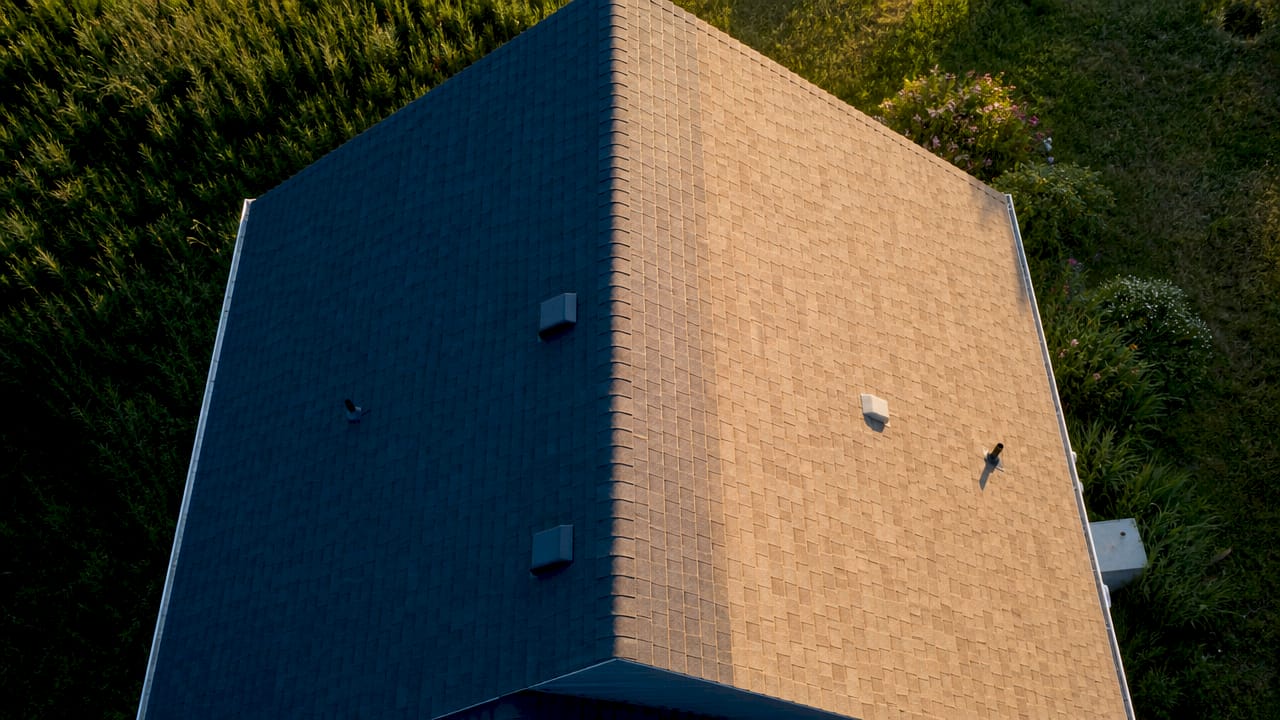
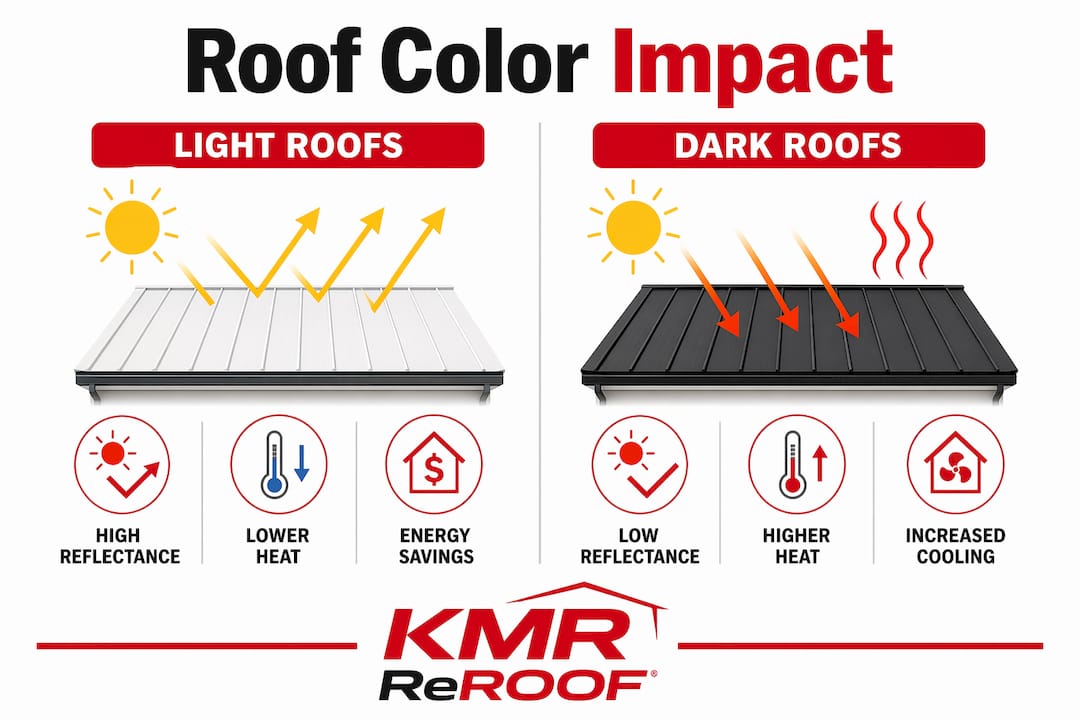
Dark shingles absorb the vast majority of solar radiation. That absorbed energy heats the roof deck, then radiates into the attic space below. Light-colored or white roofs work in the opposite direction. High-quality white shingles reflect 60–75% of incoming sunlight, keeping the roof deck significantly cooler. The practical result is an attic that stays 25–40°F cooler compared to a home with a standard dark roof.
That temperature difference matters because your air conditioner works against attic heat. A cooler attic means less heat bleeds through your ceiling insulation into living spaces. Your AC runs shorter cycles, uses less electricity, and wears out more slowly. Switching to a high-reflectance cool roof reduces summer cooling loads by 10–25% for a typical Texas home.
Key physical differences between light and dark roofs
- Solar reflectance: White and light-colored roofs reflect 60–75% of sunlight. Standard dark shingles reflect only 5–15%.
- Attic temperature: Cool roofs can reduce attic temperatures by 20–50°F, directly cutting the heat load on your ceiling.
- AC runtime: Lower attic temperatures reduce the heat your cooling system must overcome, shortening run cycles.
- Shingle degradation: Extreme heat accelerates shingle breakdown. Cooler roof surfaces extend shingle lifespan noticeably.
What are cool roofing options beyond basic color?
Cool roofing is the industry term for roofing products engineered to maximize solar reflectance and thermal emittance, regardless of color. The technology has moved well past “paint it white.” Modern asphalt shingles use infrared-reflective pigments that allow darker colors to achieve high solar reflectance values. A charcoal or medium-brown shingle with cool-color granule technology can outperform a standard dark shingle by a wide margin, even though both look similar from the street.
This matters enormously for Texas homeowners with HOA restrictions or neighborhoods where a bright white roof would stand out. You no longer have to choose between curb appeal and energy performance. ENERGY STAR qualification is the clearest signal that a product meets tested standards for both solar reflectance and thermal emittance in climates like Texas. Always check for that label when comparing shingle options.
Beyond asphalt shingles, metal roofing is one of the strongest performers in Texas heat. Metal roofs reflect a high percentage of solar energy and have excellent thermal emittance. TPO membrane roofing, common on flat and low-slope commercial properties, is typically white or light gray and delivers outstanding reflectance right out of the box. You can explore energy-efficient roofing options across all these material categories to find the right fit for your property.
Pro Tip: When shopping for shingles, ask the manufacturer for the product’s SRI (Solar Reflectance Index) rating. A higher SRI means better performance in Texas heat, regardless of the shingle’s visible color.
- Cool-color asphalt shingles: Use infrared-reflective granules to achieve energy efficiency in mid-tone and darker shades.
- Metal roofing: High reflectance and emittance; metal roofs in Texas can reflect up to 70% of solar heat.
- TPO membrane: Standard choice for flat roofs; white surface delivers high reflectance with minimal maintenance.
- Reflective coatings: Applied over existing roofing as a retrofit; cost ranges from $0.75–$1.50 per square foot.
- ENERGY STAR-rated products: Independently tested and verified for reflectance and emittance performance.
Does a cool roof actually save money in Texas?
The cost-benefit case for cool roofing in Texas is stronger than in almost any other state. Texas has a long, intense cooling season and a short, mild heating season. Cool roofs carry a heating penalty of only about 5–15% of summer cooling savings during winter months. The net result is clearly positive year-round.
Cool-rated roofing products cost 10–20% more than standard options. For asphalt shingles, that premium is roughly $0.10–$0.20 per square foot. Over a 20-year lifespan, a 2,200 square foot Texas home switching from a dark roof to a high-reflectance cool roof can save an estimated $2,000–$5,000 in energy costs. That range depends heavily on your existing insulation, local utility rates, and how much direct sun your roof receives.
Roof lifespan is a second financial benefit that often gets overlooked. High-quality cool roofs reduce attic temperatures by 20–50°F, which slows the thermal cycling that cracks and ages shingles. A roof that lasts 5 years longer than expected saves the full cost of a premature replacement. That is a significant number in Texas, where UV radiation and heat stress are relentless.
Pro Tip: Before committing to a cool roof upgrade purely for energy savings, get a professional assessment of your attic insulation R-value. A well-insulated home will see smaller incremental savings from cool roofing than an older, poorly sealed home.
| Factor | Standard dark roof | Cool-rated roof |
|---|---|---|
| Solar reflectance | 5–15% | 60–75% (white) or 25–40% (cool-color dark) |
| Estimated cooling load reduction | Baseline | 10–25% lower |
| Price premium | None | 10–20% higher upfront |
| Estimated 20-year energy savings | Baseline | $2,000–$5,000 |
| Heating season penalty | None | 5–15% of cooling savings |
How do ventilation and insulation work with roof color?
Roof color alone does not solve a Texas heat problem. Roofing experts consistently find that attic insulation and ventilation have a greater impact on overall home energy efficiency than roof color by itself. Color is one layer of a system. When you treat it as the whole solution, you leave significant savings on the table.
Attic ventilation removes hot air that builds up under the roof deck. Even a highly reflective roof generates some heat. Without adequate airflow, that heat accumulates and eventually transfers into living spaces. Solar-powered attic fans are a practical upgrade for Texas homes because they run hardest on the hottest, sunniest days, exactly when you need them most. Proper ridge and soffit ventilation creates continuous airflow that a reflective roof can then work with, not against. Learn more about how attic ventilation works alongside your roofing choices.
Radiant barriers are another tool that pairs well with cool roofing. A radiant barrier is a reflective foil installed on the underside of the roof deck or attic rafters. It blocks radiant heat from transferring down into the insulation layer below. Combined with a cool roof above and quality insulation beneath, a radiant barrier creates a genuine thermal buffer. Experts recommend this system-wide approach for Texas homes to achieve the best energy savings.
- Attic ventilation: Ridge vents, soffit vents, and solar-powered fans remove accumulated heat before it transfers into living spaces.
- Radiant barriers: Foil installed on the attic side of the roof deck blocks radiant heat transfer downward.
- Attic insulation: R-38 to R-60 is the recommended range for Texas attics per the Department of Energy. Higher R-values reduce heat bleed-through regardless of roof color.
- Air sealing: Gaps around light fixtures, HVAC penetrations, and attic hatches allow conditioned air to escape and hot air to enter. Sealing these is often the highest-ROI upgrade available.
What is the best roof color for Texas heat?
The best roof colors for Texas heat are whites, light tans, light grays, and any mid-tone shade produced with cool-color granule technology. These colors either reflect the most sunlight outright or use infrared-reflective pigments to punch above their visual weight. You can find roofing styles optimized for Texas heat across all these color families.
Standard black and deep charcoal shingles without cool-color technology absorb the most heat and are the worst performers in Texas climates. If your neighborhood or HOA requires a darker roof, the answer is not to accept the energy penalty. It is to specify a cool-color version of that shade and verify the product’s ENERGY STAR rating before purchase.
Durability matters as much as reflectance in Texas. UV radiation, thermal cycling, and hail are all real threats. A roof that reflects heat well but degrades in three years is not a good investment. Look for shingles rated for high-wind and impact resistance alongside their reflectance credentials. Misterreroof’s guide to roofing materials for Texas homes covers how different materials hold up under these specific stressors.
- Best colors: Bright white, off-white, light gray, light tan, and cool-pigmented mid-tones.
- Avoid: Standard black, deep charcoal, and dark brown shingles without cool-color technology.
- Verify: Always check for ENERGY STAR certification and ask for the product’s Solar Reflectance Index rating.
- HOA constraints: Specify cool-color granule shingles in the required shade. Performance can match lighter options.
- Material choice: Metal and TPO outperform asphalt in raw reflectance. Asphalt with cool-color technology is the practical middle ground for most residential roofs.
Key Takeaways
Roof color directly controls solar heat absorption, but maximum energy savings in Texas require combining a reflective roof with proper attic ventilation, insulation, and air sealing.
| Point | Details |
|---|---|
| Color drives reflectance | White and light-colored roofs reflect 60–75% of sunlight; dark roofs reflect only 5–15%. |
| Cool-color technology expands choices | Infrared-reflective pigments let darker shingles perform well without sacrificing aesthetics. |
| Savings are real but variable | Cool roofs cut cooling loads 10–25%, saving $2,000–$5,000 over 20 years in Texas. |
| System approach wins | Ventilation, radiant barriers, and insulation amplify the gains from a reflective roof. |
| Verify before you buy | ENERGY STAR certification confirms tested solar reflectance and thermal emittance performance. |
The part most homeowners get wrong about roof color
The most common mistake I see Texas homeowners make is treating roof color as a binary decision: go light and save money, or go dark and pay for it. The reality is more layered than that, and the binary framing causes people to either overpay for a white roof on a well-insulated home or dismiss cool roofing entirely because they want a traditional look.
Cool-color granule technology genuinely changed the equation. A homeowner in a traditional neighborhood can now install a medium-brown or weathered-wood shingle that satisfies the HOA, carries an ENERGY STAR rating, and performs close to a light-colored roof in terms of heat reflection. That option did not exist at scale a decade ago. Ignoring it means leaving real savings behind for no reason.
The second thing I would push back on is the idea that a new cool roof alone will dramatically cut your energy bill. If your attic has R-19 insulation from 1995 and no radiant barrier, the heat is getting through regardless of what color shingles are on top. The roof is the first line of defense. Insulation and ventilation are the second and third. All three need to work together. A professional energy assessment before any roofing decision will tell you exactly where your home is losing the most ground, and that answer is not always the roof.
— Misterreroof
Misterreroof helps Texas homeowners choose the right roof
Texas heat is not a problem you solve once and forget. The right roof color, material, and system design all need to match your home’s specific conditions, your neighborhood’s requirements, and your long-term budget.

Mister Reroof serves homeowners and property managers in El Campo, Houston, and surrounding Texas communities with professional roof replacement built for the Texas climate. From cool-color shingle installations to metal and TPO systems, every project is designed for durability and energy performance. Start with the Texas roof replacement guide to understand your options, then contact Misterreroof for a free estimate and a roof that works as hard as the Texas sun demands.
FAQ
What is the role of roof color in Texas heat?
Roof color determines how much solar energy a home absorbs or reflects. Lighter colors and cool-rated products reflect significantly more sunlight, reducing attic temperatures and lowering cooling costs throughout Texas’s long summer season.
How much can a cool roof reduce my energy bill?
Switching to a high-reflectance cool roof reduces summer cooling loads by 10–25%. For a typical 2,200 square foot Texas home, that translates to an estimated $2,000–$5,000 in energy savings over 20 years.
Can dark shingles be energy-efficient in Texas?
Yes. Asphalt shingles made with infrared-reflective pigments deliver high solar reflectance even in darker shades. Look for ENERGY STAR-certified cool-color shingles if your HOA or aesthetic preference requires a darker roof.
Does roof color matter more than attic insulation?
Attic insulation and ventilation generally have a greater impact on overall home energy efficiency than roof color alone. A reflective roof works best when paired with adequate insulation, a radiant barrier, and proper attic airflow.
What roof colors should Texas homeowners avoid?
Standard black, deep charcoal, and dark brown shingles without cool-color technology absorb the most heat and perform worst in Texas climates. If a dark color is required, always specify a cool-color granule version with an ENERGY STAR rating.
