
TL;DR:
- Your roof plays a crucial role in qualifying for energy rebates and tax deductions for commercial buildings.
- Combining roofing upgrades with utility programs and tax incentives in 2026 can yield significant cost savings and improve energy efficiency.
Your roof is one of the most direct levers you have for qualifying your commercial building for energy rebates and tax deductions. The right roofing material or coating can push your building past the energy savings thresholds that unlock federal deductions under Section 179D, utility rebates like Austin Energy’s reflective roof coating program, and full expensing under Section 179. Here is what you need to know before you start any roofing project in 2026.
Key rebate opportunities tied to commercial roofing:
- Section 179 expensing: Deduct the full cost of a qualifying roof replacement in one tax year, up to a $2,560,000 limit in 2026.
- Section 179D energy deduction: Federal deductions of $0.59–$5.94 per square foot for building envelope improvements that achieve at least 25% energy cost savings versus ASHRAE 90.1 standards.
- Austin Energy Reflective Roof Coating program: A utility rebate of $0.25 per square foot for qualifying reflective coatings, applied before work begins.
- Cool Roof Rating Council (CRRC) standards: Many rebate programs require roofs to meet CRRC-certified solar reflectance of 0.7 or greater.
Combining these programs in a single project year is possible and, done right, can return tens of thousands of dollars on a mid-size commercial roof.
Table of Contents
- How your roof directly affects energy efficiency and rebate eligibility
- What rebate programs are available for commercial roofing in the US?
- Rebate application timing and documentation best practices
- How to combine Section 179 and Section 179D for maximum savings
- How roofing improvements work with other building systems
- Common pitfalls when claiming roofing-related energy rebates
- The long-term cost picture beyond the rebate check
- Real-world examples of roofing rebates in action
- Misterreroof helps you capture every dollar your roof qualifies for
- Key Takeaways
How your roof directly affects energy efficiency and rebate eligibility
The building envelope, which includes the roof, is one of three systems the IRS recognizes under Section 179D for energy-efficient commercial building deductions. That makes roofing a primary pathway to qualification, not a secondary consideration.
What drives the energy impact:
- Reflective coatings and membranes: Reflective roof coatings reduce roof surface temperatures by more than 50°F compared to traditional dark roofs, cutting the heat load transferred into the building.
- Metal roofing: Commercial metal roofs combine high reflectivity with strong thermal emissivity, and can reduce energy costs by up to 40%.
- TPO membranes: White TPO is a standard choice for flat commercial roofs in hot climates. Its reflective surface qualifies under most utility rebate programs when it meets CRRC solar reflectance thresholds.
- Insulation upgrades: Adding or upgrading roof insulation reduces heat gain in summer and heat loss in winter, directly improving the energy model score used to calculate 179D deductions.
To qualify for the base Section 179D deduction, your building’s total energy and power costs must be certified to drop by at least 25% compared to a reference building meeting ASHRAE 90.1 standards. Roofing alone rarely gets you there, but it is often the single largest contributor to hitting that threshold.
Pro Tip: Have a certified energy modeler run a preliminary simulation before you select roofing materials. The model will show exactly how much each material option moves your energy savings percentage, so you can choose the roof that clears the 25% threshold rather than guessing.

What rebate programs are available for commercial roofing in the US?
1. Section 179D energy deduction
The federal deduction under IRC Section 179D covers building envelope improvements, including roofing. For projects placed in service in 2026, the base deduction starts at $0.50 per square foot for 25% energy savings and rises by $0.02 per square foot for each additional percentage point above 25%, up to $1.00 per square foot at 50% savings. If your project meets prevailing wage and apprenticeship requirements, the maximum jumps to approximately five times the base amount, reaching up to $5.94 per square foot in 2026.
2. Section 179 expensing
Under Section 179, you can expense the full cost of a qualifying commercial roof replacement in the year it is placed in service rather than depreciating it over decades. The 2026 deduction limit is $2,560,000. This is separate from 179D and both can be claimed in the same tax year when requirements are met.
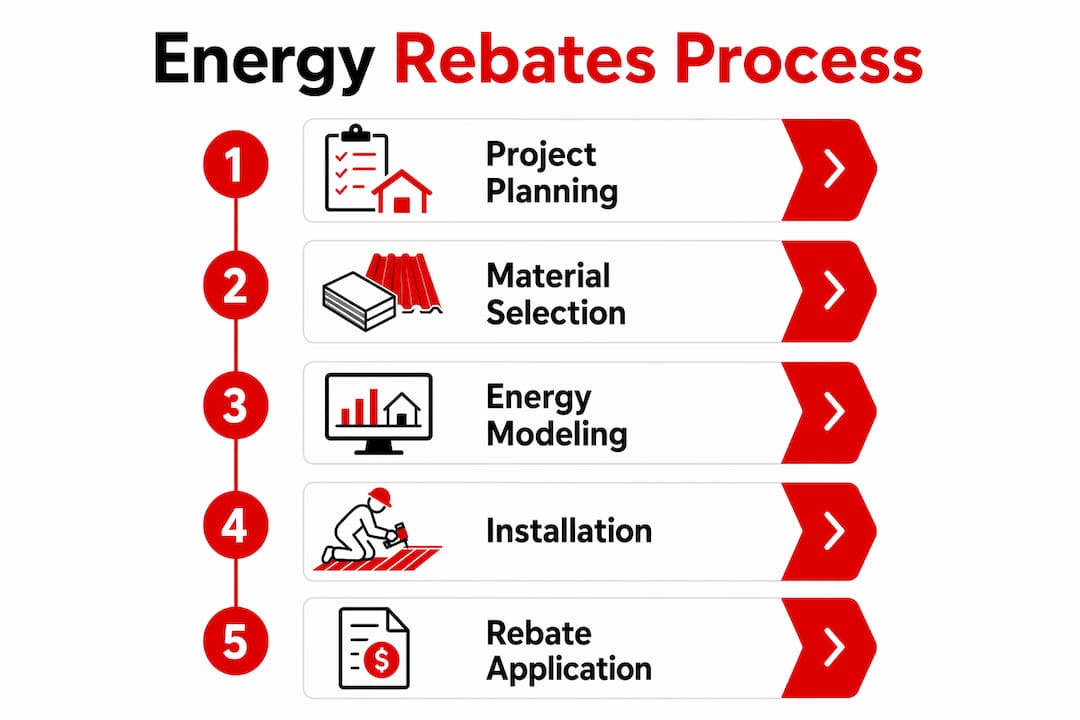
3. Austin Energy Reflective Roof Coating program
Austin Energy offers commercial customers $0.25 per square foot for reflective roof coatings that meet specific reflectivity standards. The coating must reduce roof surface temperature significantly, and the application must be submitted and approved before work starts. No pre-approval means no rebate, regardless of how well the coating performs.
4. Utility rebate programs broadly
Austin Energy is one example of a broader category. Many utilities across the US offer similar rebates for cool roofing upgrades, typically requiring CRRC-certified products with a solar reflectance of 0.7 or greater. OUC in Florida, PSO in Oklahoma, and others run comparable programs. Check your utility’s current rebate catalog before finalizing your roofing spec.
Common eligibility conditions across programs:
- CRRC-certified product with solar reflectance ≥ 0.7
- Pre-approval submitted before installation begins
- Licensed contractor installation with documentation
- Proof of energy usage before and after (some programs)
- Certificate of occupancy or equivalent for the building
Rebate application timing and documentation best practices
Timing is where most commercial property managers lose money they were otherwise entitled to. Utility rebate programs will deny applications retroactively if pre-approval was not secured before installation started. That is not a technicality they waive.
Critical documentation checklist:
- Pre-approval confirmation from the utility or program administrator
- CRRC product data sheet showing solar reflectance and thermal emittance values
- Certified energy model report (required for 179D)
- Contractor invoices and installation records
- Prevailing wage and apprenticeship certifications (required for the enhanced 179D rate)
- Certificate of occupancy or building permit records
For Section 179D, the hard deadline is significant: energy-efficient property must be placed in service on or before June 30, 2026 to qualify for the deduction in the 2026 tax year. Missing that date pushes the project into the next tax cycle.
Pro Tip: Start your pre-approval paperwork at least 60 days before your planned installation date. Utility programs can have processing backlogs, and a delayed approval can push your project past a program’s funding cutoff.
How to combine Section 179 and Section 179D for maximum savings
Most commercial property managers know about one of these deductions. Far fewer realize both can be claimed in the same year on the same project, which is where the real financial leverage sits.
Section 179 lets you expense the full installed cost of the roof. Section 179D then provides an additional per-square-foot deduction based on the energy performance of that roof as part of the building envelope. They are calculated differently and draw from different parts of the tax code, so they do not cancel each other out.
The catch is coordination. Your tax advisor needs to know the energy model results before filing, and your energy modeler needs to know the roofing spec before running the simulation. When those two professionals are not talking to each other early in the project, you end up with a roof that qualifies for one deduction but misses the threshold for the other.
Pro Tip: Bring your tax advisor and your energy modeler into the same conversation before you sign a roofing contract. A 30-minute call at the planning stage can mean the difference between a partial deduction and the full enhanced 179D rate.
Deduction range for qualifying commercial roofs in 2026: $0.59–$5.94 per square foot under Section 179D, depending on energy savings percentage and prevailing wage compliance.
How roofing improvements work with other building systems
A roof upgrade rarely qualifies a building for the maximum 179D deduction on its own. The deduction is calculated based on the building’s total energy performance across three systems: the envelope (which includes the roof), HVAC, and lighting. Improving all three together is how buildings reach the 50% energy savings threshold that unlocks the highest deduction rates.
In practice, a new reflective TPO roof combined with an upgraded HVAC system creates a compounding effect. The roof reduces the cooling load, which means the HVAC runs less, which improves the HVAC system’s measured efficiency. The energy model captures that interaction, and the combined savings percentage is higher than either improvement would produce alone. Lighting upgrades add a third layer. For commercial properties in Houston, where cooling loads dominate the energy budget, starting with the roof and HVAC together is typically the fastest path to the 25% threshold.
Common pitfalls when claiming roofing-related energy rebates
Missing pre-approval is the most common and most expensive mistake. Both Austin Energy and similar utility programs are explicit: submit before you start, or forfeit the rebate. No exceptions.
Using non-CRRC-certified products disqualifies a roof from most utility rebate programs even when the installed product performs well. Always verify the product is on the CRRC-rated products directory before purchasing.
Skipping the certified energy model eliminates 179D eligibility entirely. The deduction requires a third-party certification from a qualified engineer or contractor, not just a contractor’s estimate.
Misunderstanding the June 30, 2026 deadline for Section 179D. “Placed in service” means the roof is installed and the building is operational, not that you signed a contract or ordered materials.
Failing to document prevailing wages means you qualify only for the base deduction rate, not the enhanced rate. On a large roof, that gap is substantial.
The long-term cost picture beyond the rebate check
Rebates and deductions are a one-time event. The energy savings they are tied to are not. A reflective roof that reduces cooling costs by 20% or more keeps producing that return every summer for the life of the roof. Metal roofs, which can last 50 years with minimal maintenance, extend that payback period far beyond what any rebate calculation captures.
There is also the roof lifespan angle. Reflective coatings lower surface temperatures, which slows thermal cycling and UV degradation. A roof that runs cooler simply ages more slowly. That deferred replacement cost is real money, even if it does not show up in a rebate program spreadsheet. For commercial properties weighing a full replacement against a coating, the long-term math often favors the coating when the building is otherwise sound.
Real-world examples of roofing rebates in action
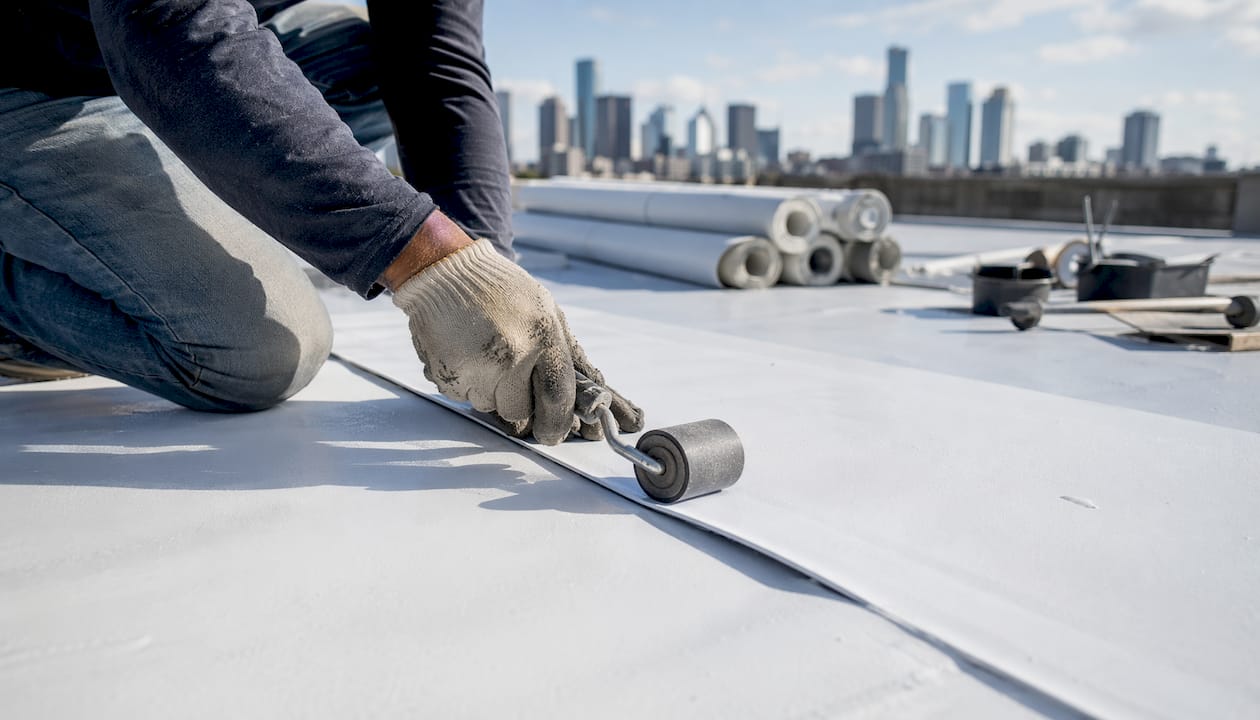
A warehouse owner in Austin installs a CRRC-certified reflective coating on 50,000 square feet of flat roof. At $0.25 per square foot, the Austin Energy rebate alone returns $12,500. If the coating is part of a broader energy upgrade that achieves 25% total building energy savings, the same project also qualifies for a Section 179D deduction starting at $0.50 per square foot on the envelope portion.
A Houston commercial property manager replaces an aging dark membrane roof with white TPO on a 30,000-square-foot building. The TPO qualifies under the utility’s cool roof rebate program. Combined with Section 179 expensing of the full replacement cost and a 179D deduction for the envelope improvement, the first-year tax and rebate benefit offsets a significant portion of the project cost. The energy savings on roofing then continue reducing the utility bill for the next two decades.
These are not edge cases. They are the standard outcome when the project is planned with rebate eligibility in mind from the start.
Misterreroof helps you capture every dollar your roof qualifies for
Replacing a commercial roof in Houston or El Campo is a significant investment. The rebates and deductions covered in this article can return a meaningful portion of that cost, but only when the roof is specified, installed, and documented correctly from day one.
Mister Reroof installs metal, TPO, flat, and shingle roofing systems built for Texas heat, and the team understands which materials meet CRRC reflectance standards, ASHRAE 90.1 thresholds, and utility rebate requirements. You get a roof that performs and documentation that holds up when your tax advisor and energy modeler need it.
Start with a free estimate. Review your Texas roof replacement options and get the specs your rebate applications will require.
Key Takeaways
The most effective way to maximize commercial energy rebates is to select CRRC-certified, high-reflectance roofing materials, secure utility pre-approval before installation, and coordinate Section 179 and Section 179D claims with a tax advisor in the same project year.
| Point | Details |
|---|---|
| Section 179D deduction range | Qualifying roofs earn $0.59–$5.94 per square foot depending on energy savings and prevailing wage compliance. |
| Pre-approval is non-negotiable | Utility programs like Austin Energy deny rebates retroactively if pre-approval was not secured before work started. |
| June 30, 2026 deadline | Property must be placed in service by this date to qualify for Section 179D deductions in the 2026 tax year. |
| Stack 179 and 179D | Both deductions can be claimed in the same year on the same roof project when requirements are met. |
| Misterreroof | Installs TPO, metal, and flat roofing in Houston and El Campo with materials and documentation that support rebate and deduction eligibility. |
