TL;DR:
- Texas homeowners can significantly reduce indoor temperatures and cooling costs by choosing high-reflectance, durable roofing materials suited for the state’s extreme weather conditions. Reflective metal roofs, cool shingles, and reflective coatings on flat roofs offer long-lasting performance, but proper installation and material quality are critical for maximizing benefits. Investing in certified products and professional installation transforms cool roofs from a simple upgrade into a long-term infrastructure improvement with measurable energy savings.
Texas summers are relentless. When temperatures push past 100°F for weeks at a stretch, your roof absorbs that punishment directly. The result shows up on your electric bill every month. Cool roof ideas Texas homeowners are adopting right now go beyond standard shingles and address the problem at the source: how much solar heat your roof pulls into your home in the first place. This article breaks down the best materials, coatings, and strategies to help you make a smart decision for your specific situation.
Table of Contents
- Key takeaways
- 1. Key criteria for choosing cool roofs in Texas
- 2. Reflective metal roofing
- 3. Cool reflective shingles and tiles
- 4. Roof coatings and membranes for flat and low-slope roofs
- 5. Comparison of cool roof options for Texas homeowners
- My honest take on cool roofs after years in Texas roofing
- Ready to install a cool roof? Mister ReRoof can help
- FAQ
Key takeaways
| Point | Details |
|---|---|
| Reflectivity matters most | Choose materials with high solar reflectance to meaningfully reduce indoor temperatures and cooling costs. |
| Metal roofs lead on longevity | Reflective metal roofing can last 40 to 70 years and withstand Texas hail better than most alternatives. |
| Coatings work for flat roofs | Elastomeric and acrylic coatings are cost-effective for commercial and residential flat roofs across Texas. |
| Installation quality is non-negotiable | Even the best roofing material underperforms when installed incorrectly. Choose certified contractors. |
| Cost range varies widely | Cool roof installation typically runs from $7,500 to $30,000 depending on material choice and roof size. |
1. Key criteria for choosing cool roofs in Texas
Before picking a material, you need to understand what actually makes a roof “cool” in the Texas context. Two measurements drive performance: solar reflectance (how much sunlight bounces off) and thermal emittance (how quickly the roof releases absorbed heat). A roof that scores high on both keeps your attic dramatically cooler than a standard dark shingle. Cool roofs reflect more sunlight than conventional roofs, which directly lowers indoor temperatures and trims your cooling costs.
Texas throws several challenges at roofing materials simultaneously. You need durability against hail in the Dallas-Fort Worth corridor and the Hill Country. You need wind resistance for coastal areas near Houston and Corpus Christi. And you need sustained UV resistance for areas like West Texas and the Rio Grande Valley that bake year-round.
Here are the key factors to evaluate before committing to a cool roof:
- Solar Reflectance Index (SRI): Look for an SRI of 78 or higher for steep-slope roofs and 29 or higher for low-slope roofs per ENERGY STAR guidelines.
- Material durability: Texas weather means hail, high winds, and UV exposure. Not every cool roof product handles all three equally well.
- Cost and ROI: Installation costs range from $7,500 to $30,000. Calculate your current cooling costs against projected savings before deciding.
- Roof compatibility: Some coatings and materials work better on existing structures than others. A flat commercial roof has different needs than a steep residential pitch.
- HOA and local codes: Some Texas subdivisions restrict color or material choices. Verify before you buy.
Pro Tip: Ask your contractor for the product’s ENERGY STAR label and specific SRI rating in writing before signing a contract. A general claim of “reflective” means nothing without the number.
2. Reflective metal roofing
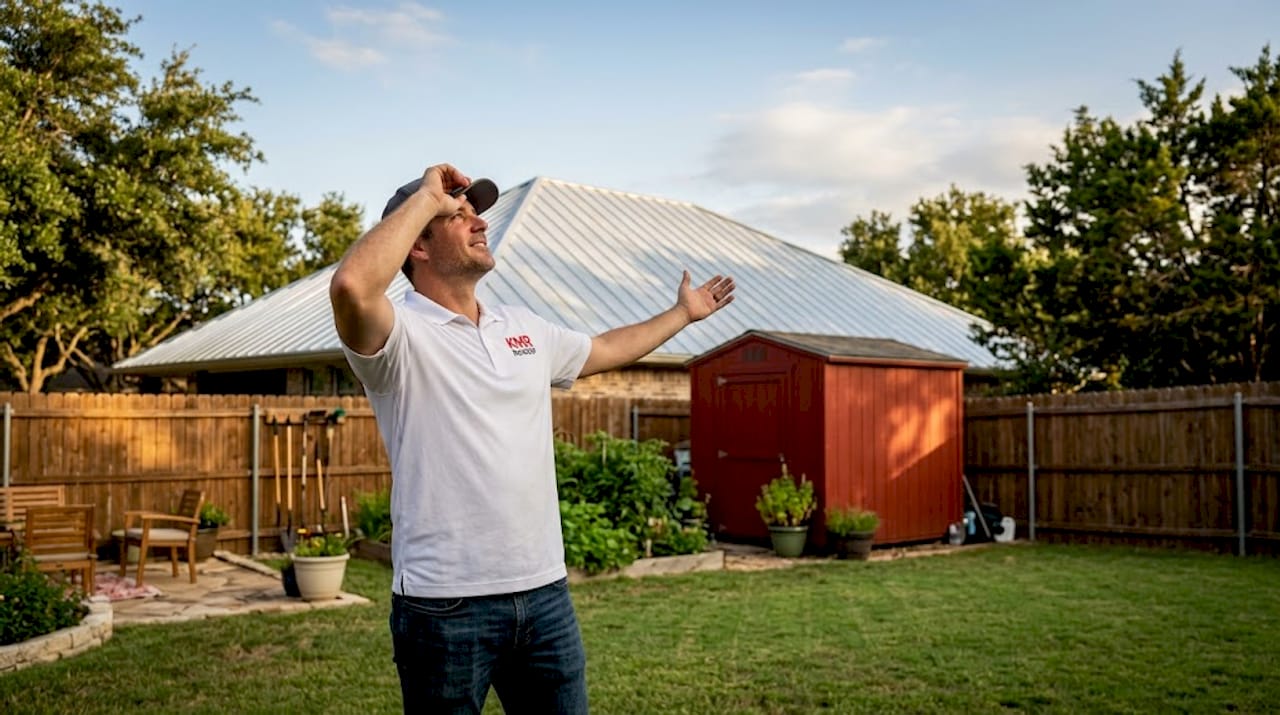
Reflective metal roofing is one of the strongest cool roof options available for Texas homes, and it earns that reputation through measurable performance. Metal roofs can last 40 to 70 years and frequently carry Class 4 impact ratings, which is the highest hail-resistance classification available. For a state where hailstorms cause billions in property damage annually, that matters.
The energy case is equally strong. Metal roofs reflect a substantial portion of solar radiation, which reduces heat transfer into the living space below. Homeowners in South Texas and the Houston area report meaningful drops in cooling costs after switching from dark asphalt shingles to a light-colored standing seam metal system.
The two most common metal roof styles you will encounter are:
- Standing seam: Panels run vertically with raised seams connecting them. This design is watertight, clean-looking, and excellent for solar panel attachment if that is part of your plan.
- Metal shingles: These mimic the look of traditional shingles or slate but deliver the thermal performance of metal. Great for neighborhoods where aesthetics matter.
Metal roofing does require a higher upfront investment than asphalt. But when you factor in a 50-year lifespan against a 15 to 20-year shingle replacement cycle, the math often favors metal over time. Consider exploring your metal roof options before settling on a budget number.
Pro Tip: Specify a Kynar 500 paint finish when choosing metal roofing. This fluoropolymer coating holds its reflective properties and color far longer than standard paint, giving you better long-term performance.
3. Cool reflective shingles and tiles
Not every Texas homeowner wants a metal roof, and that is a completely reasonable position. Cool asphalt shingles and ceramic tiles offer a familiar look with meaningfully better thermal performance than their standard counterparts.
Modern cool shingles use reflective coatings designed to improve solar reflectivity without dramatically changing the appearance of the shingle. This is a genuine advantage for subdivisions with HOA restrictions that require a traditional look. You can choose colors that match your neighborhood while still getting a measurable reduction in heat absorption.
Ceramic and clay tiles have been used in hot climates for centuries, and there is a reason for that. Their thermal mass and curved profile allow airflow underneath, which adds a passive cooling benefit beyond simple reflectivity. In Spanish-colonial style homes common across central and south Texas, tile roofing is both authentic and practical.
Key things to know about cool shingles and tiles:
- Reflective shingles cost more than standard asphalt but less than metal. They fit comfortably into most mid-range roofing budgets.
- Ceramic tile is heavier than asphalt. Older homes may need structural reinforcement before installation.
- Both options hold up reasonably well under Texas sun. Hail resistance varies by manufacturer, so confirm the impact rating for any product you are considering.
- Cool roofing products have expanded significantly in recent years, giving you more color and style options than were available even five years ago.
4. Roof coatings and membranes for flat and low-slope roofs
Flat and low-slope roofs are common across Texas, particularly on commercial buildings, older ranch-style homes, and modern architectural designs. These roofs face an especially harsh reality in Texas: they sit nearly horizontal under direct sun for the entire day, absorbing far more heat than a pitched roof does. Reflective coatings and membranes address this problem directly and affordably.
Elastomeric reflective coatings reduce roof surface temperatures and protect the underlying membrane from UV degradation. Acrylic coatings are water-based, easy to apply, and effective in dry climates. Silicone coatings hold up better in areas with heavy rainfall or ponding water, making them a better choice for Houston-area properties.
Reflective membranes and coatings act as a barrier to solar heat gain and extend the life of the roof beneath them. For a commercial property manager in El Campo or the Houston suburbs, a coating application can be a fraction of the cost of a full roof replacement while delivering real performance gains.
Practical notes on coatings:
- Most coatings require a clean, structurally sound substrate to perform correctly. Application on a failing roof just masks the problem.
- Lifespan ranges from 5 to 15 years depending on the product, application thickness, and maintenance.
- Recoating is typically far cheaper than the initial application, making long-term maintenance costs predictable.
- TPO membranes are another strong option for flat roofs, offering built-in reflectivity and weld-sealed seams that resist leaks.
For property managers handling multiple flat-roof buildings, a consistent maintenance schedule with a trusted roofing contractor pays off significantly in extended roof life and reduced emergency repair costs.
5. Comparison of cool roof options for Texas homeowners
Choosing between these options comes down to your roof type, budget, and long-term goals. The table below puts the key factors side by side.
| Feature | Reflective metal | Cool shingles | Roof coatings / membranes |
|---|---|---|---|
| Lifespan | 40 to 70 years | 15 to 25 years | 5 to 15 years per coat |
| Hail resistance | Class 4 (highest) | Varies by product | Not rated for impact |
| Solar reflectance | Very high | Moderate to high | High (white coatings) |
| Best roof type | Steep slope | Steep slope | Flat / low slope |
| Cost range | $15,000 to $30,000+ | $8,000 to $15,000 | $1,500 to $7,000 |
| Energy savings | High | Moderate | Moderate to high |
| Maintenance | Low | Low to moderate | Moderate (recoating) |
| HOA compatibility | Moderate | High | High |
The right choice depends on your roof slope and structure, your budget range, and how long you plan to stay in the property. A homeowner planning a 30-year stay in a Houston home with frequent hailstorms should lean toward metal. A commercial property manager with 10 flat-roof buildings should prioritize coatings for cost efficiency. And a homeowner in an HOA neighborhood who wants the benefits of energy efficient roofing Texas without changing the look of their home will find cool shingles to be the practical middle ground.
My honest take on cool roofs after years in Texas roofing
I have seen homeowners make the same mistake repeatedly. They choose a cool roof product based on a single metric, usually price, without thinking through the full picture. A budget coating applied over a roof that has five years of structural deterioration underneath it is not a cool roof. It is a temporary fix that creates a false sense of security.
The second mistake I see is skipping certified installation. Roofing certifications contribute significantly to warranty coverage and actual durability. A manufacturer will not honor a warranty on a product that was incorrectly installed. In Texas, that warranty matters because your roof faces more stress in a single summer than a roof in Minnesota faces in three years.
My actual recommendation: treat your cool roof as a long-term infrastructure investment, not a home improvement project. When you pair quality materials with professional installation and a maintenance plan, the return on investment is real and measurable. If you partner with a contractor who also understands how your roof interacts with your HVAC system, you can get additional savings by right-sizing your cooling equipment after the roof upgrade. Some homeowners work with their Texas HVAC provider after a cool roof installation to reassess their system capacity and find additional savings.
Cool roofs work. The data is consistent. The difference between a good outcome and a disappointing one almost always comes down to material quality and installation standards.
— Misterreroof
Ready to install a cool roof? Mister ReRoof can help
Choosing the right cool roof material is one decision. Getting it installed correctly in the Texas heat is another. Misterreroof serves homeowners and property managers across El Campo and Houston with professional roof replacement services that include metal roofs, reflective shingles, and flat roof systems built for this climate.

Whether you are looking at metal roof replacement for maximum longevity, cool shingle installation for a budget-conscious upgrade, or a flat roof replacement with reflective membranes, Mister ReRoof brings certified workmanship and local Texas experience to every project. Contact Mister ReRoof today for a free estimate and find out exactly what a cool roof can do for your home.
FAQ
What makes a roof “cool” in Texas terms?
A cool roof uses materials with high solar reflectance and thermal emittance to bounce sunlight away and release absorbed heat quickly. Cool roofs lower indoor temperatures compared to standard roofing, which directly reduces air conditioning demand.
How much does a cool roof cost in Texas?
Costs vary widely based on material and roof size. Cool roof installation typically ranges from $7,500 to $30,000, with reflective coatings on the lower end and full metal roof systems at the higher end.
Which cool roof material handles Texas hail best?
Reflective metal roofing offers the strongest hail protection. Metal roofs carry Class 4 impact resistance ratings, the highest available, making them the top choice for hail-prone areas of Texas.
Can I add a cool coating to my existing flat roof?
Yes. Elastomeric and acrylic coatings can be applied over most existing flat roof membranes as long as the underlying structure is sound. This is one of the most cost-effective ways to improve thermal performance without a full replacement.
Do cool roofs qualify for any Texas energy incentives?
ENERGY STAR-certified cool roofing products may qualify for federal tax credits and utility rebates depending on your provider and location. Check with your local utility company and a tax advisor to confirm what applies to your specific situation.
