TL;DR:
- A storm-resistant roof is a complete system that combines impact-rated materials, proper installation, and effective ventilation to withstand severe weather. Proper fastening, sealing, and regular inspections are essential to maintain its integrity and prevent failure during storms. Choosing the right materials and qualified contractors ensures optimal protection for Texas homes against high winds, hail, and heavy rain.
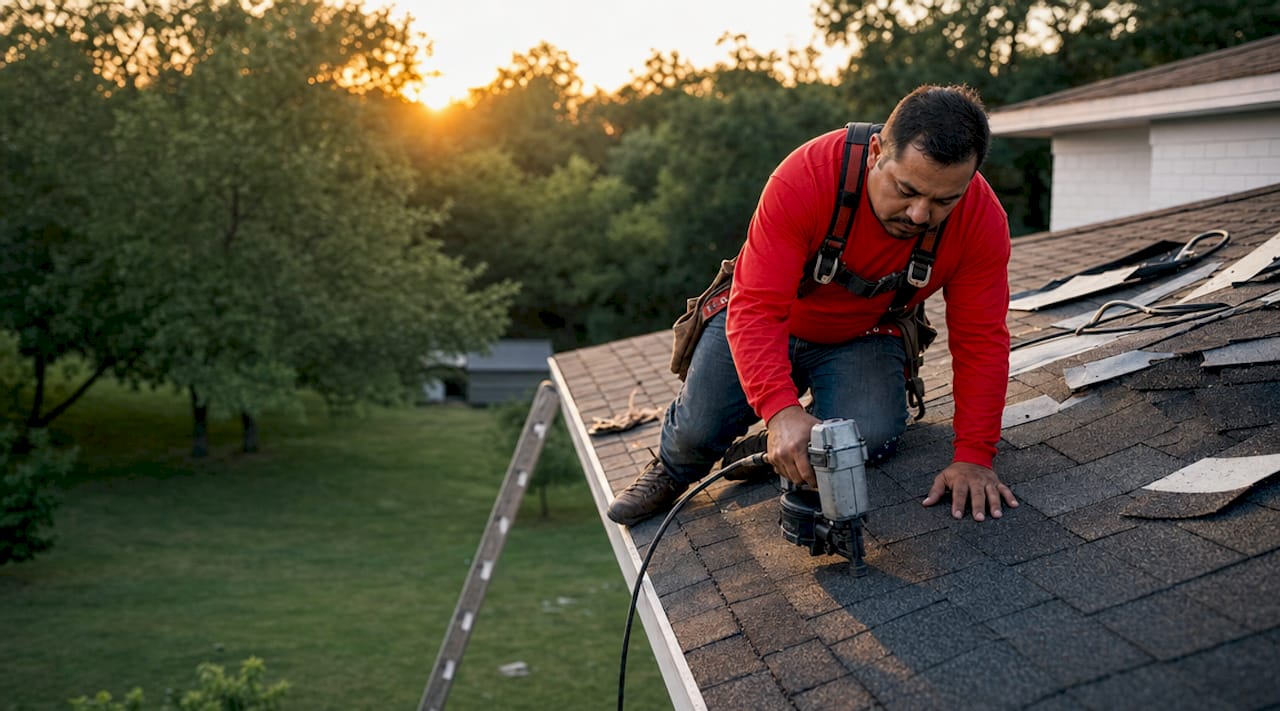
A storm-resistant roof is a complete system designed to withstand high winds, hail, and heavy rain by combining durable materials with expert installation techniques. This guide to storm-resistant roofing covers every layer of that system, from shingles and underlayment to fastening schedules and post-storm inspections. Texas homeowners in Houston, El Campo, and surrounding areas face some of the most punishing weather in the country, and the decisions you make before a storm hits determine how much damage you absorb afterward. Storm-proofing extends beyond shingles, requiring every component to work together for real wind, rain, and hail performance.
What components make up a storm-resistant roofing system?
Storm resistance is not a property of any single material. It is the result of every layer performing its role correctly, from the roof deck to the ridge cap. Miss one component and the whole system can fail under pressure.
Here are the core elements that define a weather-resistant roofing system:
- Impact-rated shingles. Class 3 and Class 4 impact-resistant shingles are tested under UL 2218 standards and carry the highest resistance to hail damage. Class 4 shingles can also qualify you for insurance discounts in Texas.
- Self-adhering underlayment. Self-adhering underlayments provide a superior secondary barrier compared to mechanically fastened felt in storm conditions. If the shingles lift, this layer keeps water out.
- Proper attic ventilation. Balanced intake and exhaust ventilation prevents pressure buildup during high-wind events. Without it, suction forces from wind can pull the roof deck apart from the inside.
- Flashing, starter strips, and ridge caps. These seal the most vulnerable transitions on your roof. Poorly installed flashing at chimneys, skylights, and valleys is where water intrusion almost always begins.
- Hurricane straps and structural fasteners. Metal connectors that tie the roof framing to the wall framing prevent the entire roof structure from lifting off during severe uplift events.
Pro Tip: Ask your contractor to show you the underlayment product spec sheet before installation begins. If it is standard felt paper, request an upgrade to a self-adhering membrane, especially along eaves and valleys.
How to choose the best roofing materials for your local storm risks
Climate-driven material selection is the foundation of any smart roofing decision. Uplift resistance matters most in hurricane zones, while impact resistance takes priority in hail corridors like the Texas Hill Country and the Gulf Coast.
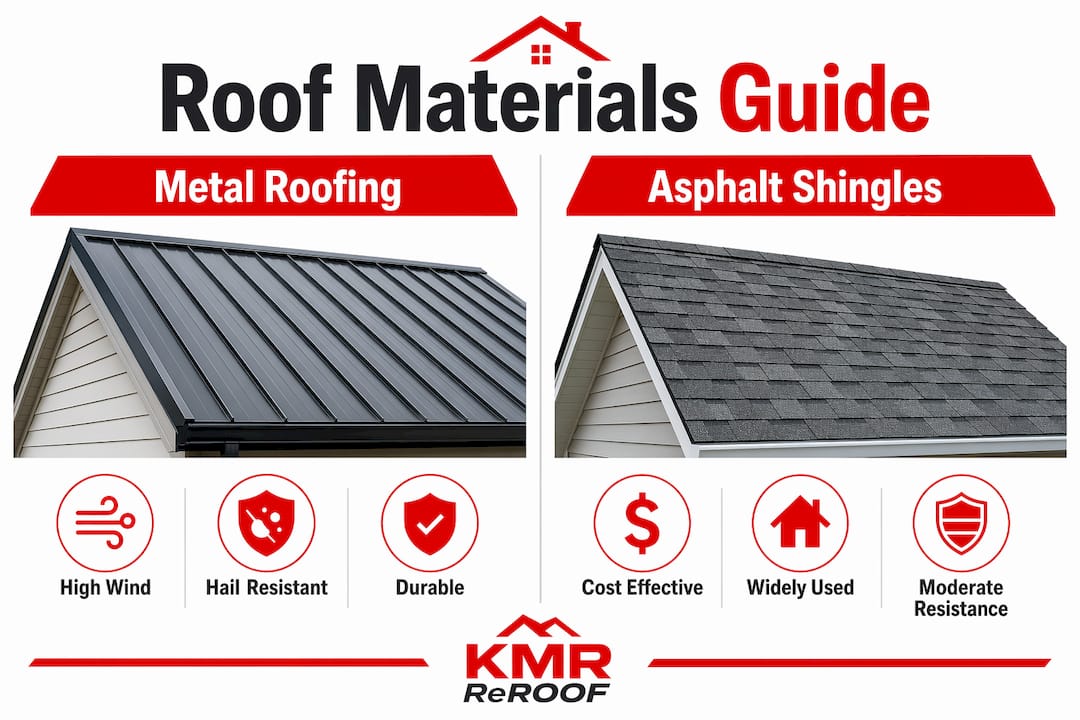
Here is how the most common protective roofing materials compare:
| Material | Wind rating | Hail resistance | Best for |
|---|---|---|---|
| Asphalt shingles (Class 4) | Up to 130 mph | Class 4 UL 2218 | Hail-prone areas, budget-conscious upgrades |
| Standing seam metal | 140+ mph | Moderate to high | High-wind coastal and Gulf Coast regions |
| Concrete/clay tile | 125 mph+ | High (with proper install) | Hot climates, Mediterranean-style homes |
| Composite/synthetic shingles | Up to 130 mph | Class 4 UL 2218 | All-around storm performance, lighter weight |
Standing seam metal roofing with concealed fasteners and engineered clips delivers the highest wind uplift resistance of any residential roofing option. That makes it the top choice for coastal Texas properties where sustained wind speeds regularly exceed 100 mph during hurricane season.
Asphalt shingles remain the most widely installed option, and prices range from $75 to $350 per square depending on grade and manufacturer. That spread means two bids for the same job can look very different, not because of shingle cost alone but because of labor rates, underlayment quality, and fastening specifications.
Pro Tip: When comparing bids for durable roofing solutions, ask each contractor to itemize the underlayment type, fastener count per shingle, and flashing material. Those three line items reveal more about storm performance than the shingle brand alone.
A few additional factors worth weighing when learning how to choose roofing materials:
- Wind zone classification. Texas coastal counties fall under ASCE 7 high-wind zones. Your material and installation must meet those code minimums, not just manufacturer recommendations.
- Freeze-thaw cycles. North Texas homeowners face ice damming risks that coastal homeowners do not. Ice-and-water shield underlayment along eaves is non-negotiable in those regions.
- Roof pitch. Low-slope roofs below 2:12 pitch require different materials entirely, typically TPO or modified bitumen, since standard shingles cannot shed water fast enough at shallow angles.
What installation practices make or break storm performance?
Installation quality and system integrity impact storm performance more than material ratings alone. A Class 4 shingle installed with the wrong nail pattern offers less protection than a standard shingle installed correctly.
Follow these steps to verify your installation meets storm-resistant standards:
- Confirm the fastening schedule. Manufacturers specify the number of nails per shingle and their placement. Deviating from this voids the wind warranty and reduces uplift resistance significantly.
- Apply self-adhering underlayment across the full deck. Standard felt paper is acceptable in mild climates but not in storm-prone Texas. Full-deck self-adhering membrane is the baseline for serious weather resistance.
- Verify balanced attic ventilation. Your contractor should calculate net free area for both intake (soffit vents) and exhaust (ridge vents) before installation. An imbalanced system creates negative pressure that works against you in high winds.
- Seal every penetration and edge meticulously. Roof deck sealing at edges and penetrations is where wind-driven rain intrusion and uplift damage most often begin. Pipe boots, vent collars, and drip edges all need hand-applied sealant in addition to mechanical fastening.
- Install hurricane straps at every rafter-to-wall connection. In Texas coastal counties, this is a code requirement. In inland areas, it is still one of the highest-value upgrades you can make for structural storm resistance.
- Use zone-aware fastening at perimeter and corners. Denser nails at roof edges and corners prevent early failure during wind uplift. Building codes in high-wind zones require this, but many contractors apply standard field nailing patterns across the entire deck unless specifically instructed otherwise.
Pro Tip: Request a mid-installation inspection from your contractor when the underlayment is down but before shingles are applied. That is the only moment you can verify deck coverage, seam laps, and edge treatment without tearing anything apart.
How to inspect and maintain your storm-resistant roof
Integrating inspections into your regular home care routine is the most cost-effective way to sustain roofing performance in storm-prone regions. A small repair caught in October costs a fraction of what water damage costs in January.
Post-storm inspection checklist:
- Check flashing at all transitions. Chimney bases, skylight frames, and valley flashing are the first places to show separation after wind events. Look for lifted edges, gaps, or rust staining.
- Inspect ridge caps and starter strips. These are the highest-exposure areas on your roof. Post-storm inspections should focus on flashing boots and ridge caps, where most water intrusion originates.
- Look for nail pops and lifted shingles. Wind can partially lift shingles without removing them, breaking the seal strip and leaving the fastener exposed. These need resealing before the next rain event.
- Clean gutters and downspouts. Blocked drainage forces water back under the eave, which accelerates rot and can compromise the underlayment at the most vulnerable edge of the roof.
- Schedule a professional inspection after any named storm. A trained eye catches granule loss patterns, micro-fractures in tile, and deck deflection that homeowners routinely miss from ground level.
Pro Tip: Document your roof condition with dated photos twice a year, once in spring and once in fall. Insurance adjusters rely heavily on pre-storm condition records when evaluating claims after a major weather event.
What common mistakes undermine storm-resistant roofing?
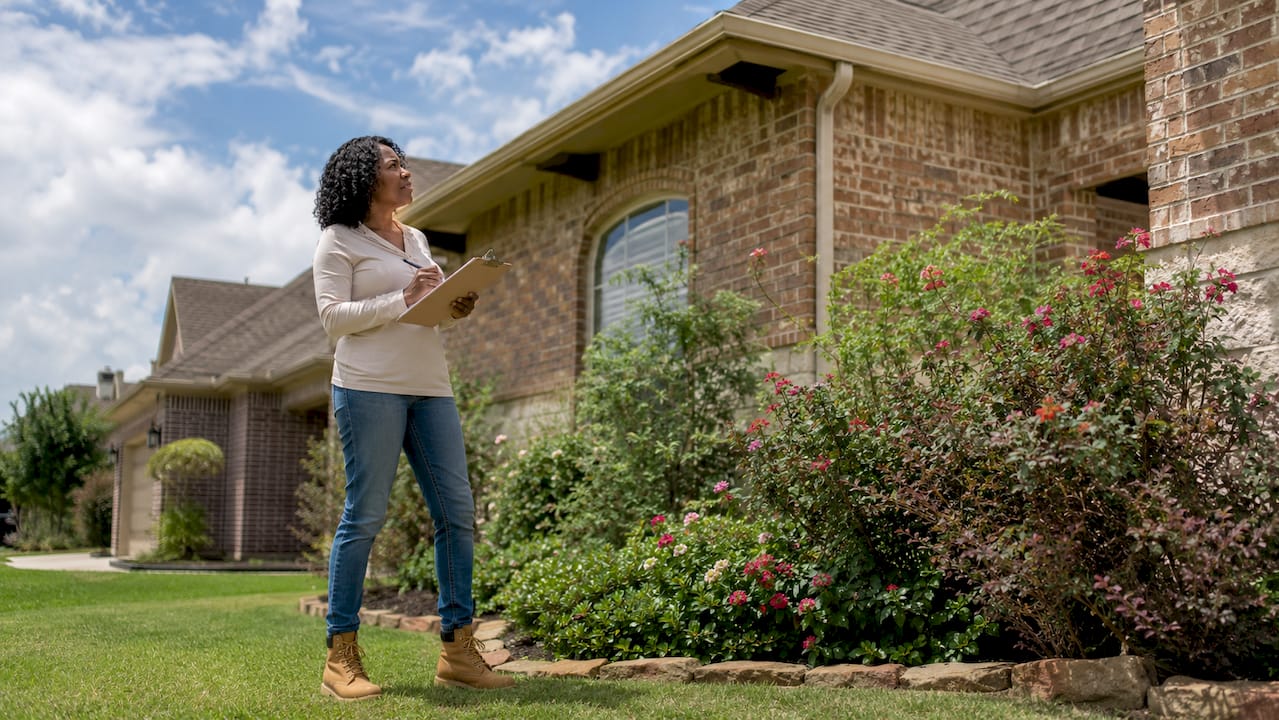
The most expensive roofing mistakes are not made during storms. They are made during the selection and installation process, months or years before the first hail hits.
Watch for these pitfalls:
- Relying on shingle ratings alone. A Class 4 shingle on a poorly ventilated deck with standard felt underlayment will not perform like a Class 4 system. The rating only applies when the full system is installed correctly.
- Skipping multiple bids. Consumer Reports confirms that labor and materials drive bid differences, not just shingle cost. Getting three bids reveals whether a contractor is cutting corners on underlayment or fastener count.
- Ignoring fastening schedules. Ignoring enhanced fastening in high-wind zones voids wind ratings and leaves the roof vulnerable to catastrophic failure. This is the single most common installation shortcut in residential roofing.
- Choosing materials for aesthetics over climate fit. Clay tile looks excellent on a Texas home but requires reinforced framing to handle the weight. Selecting materials without accounting for structural load, wind zone, and maintenance requirements leads to premature failure.
- Neglecting hurricane straps. Structural uplift connectors are not optional in coastal Texas. Skipping them to save on installation cost is a false economy when a Category 2 storm removes your roof entirely.
- Hiring a contractor unfamiliar with local codes. Qualified contractors familiar with manufacturer specs and local codes prevent system mismatch and protect your warranty. In Texas, this means understanding ASCE 7 wind zone requirements and local permit processes.
Key takeaways
Storm-resistant roofing requires a complete system where materials, installation quality, ventilation, and structural fastening all work together to resist wind, hail, and water intrusion.
| Point | Details |
|---|---|
| System over shingles | Storm resistance depends on underlayment, ventilation, flashing, and fastening, not shingles alone. |
| Material matches climate | Choose metal for high-wind coastal zones and Class 4 shingles for hail-prone inland areas. |
| Installation is the variable | Correct fastening schedules and self-adhering underlayment determine real-world storm performance. |
| Inspect after every storm | Check flashing, ridge caps, and gutters after each weather event to catch damage before it compounds. |
| Avoid the common shortcuts | Multiple bids, zone-aware fastening, and hurricane straps are non-negotiable for lasting protection. |
What I have learned after years of watching roofs fail
Most homeowners I talk to believe they bought a storm-resistant roof because they paid for Class 4 shingles. That belief is the most dangerous misconception in residential roofing. The shingle is the last line of defense, not the first. What actually keeps your home dry during a Texas hurricane is the self-adhering underlayment, the sealed deck edges, the hurricane straps, and the ventilation balance underneath those shingles.
I have seen $30,000 roofing jobs fail in the first major storm because the contractor used standard felt paper and skipped zone-aware fastening at the corners. I have also seen modest asphalt shingle roofs survive Category 3 conditions because every component was installed to spec. The material grade matters. The installation discipline matters more.
The other thing homeowners consistently underestimate is maintenance. A roof that was installed perfectly in 2019 but never inspected will have compromised flashing, lifted starter strips, and clogged gutters by 2026. Those are not storm damage. They are maintenance failures that become storm damage the moment wind and rain arrive. Build a twice-yearly inspection into your calendar the same way you schedule HVAC service. The cost of that habit is trivial compared to a water-damaged ceiling or a full deck replacement.
Work with contractors who can name the specific fastening schedule they use, the underlayment product they specify, and the ventilation calculation they apply. If a contractor cannot answer those three questions clearly, they are not the right person to install a storm-resistant roofing system on your property.
— Misterreroof
How Mister ReRoof protects Texas homes from severe weather
Texas weather does not give homeowners much margin for error, and Mister ReRoof is built around that reality.
Mister ReRoof serves Houston and El Campo with professional roof replacement services that include metal roof options engineered for high-wind performance and impact-rated shingle systems designed for hail-prone regions. Every installation follows manufacturer fastening specifications and local building code requirements, so your warranty stays intact and your roof performs when it counts. If you are planning a replacement or want to know where your current roof stands, the Texas roof replacement guide from Mister ReRoof walks you through the full process. Contact Mister ReRoof today for a free estimate and a professional assessment of your storm exposure.
FAQ
What makes a roof truly storm-resistant?
A storm-resistant roof combines impact-rated shingles, self-adhering underlayment, proper attic ventilation, sealed flashing, and structural fasteners like hurricane straps. No single material creates storm resistance. The full system must be installed correctly to perform under wind and hail.
Which roofing material is best for high-wind areas in Texas?
Standing seam metal roofing with concealed fasteners delivers the highest wind uplift resistance for Texas coastal properties. Class 4 asphalt shingles are the most practical option for inland hail-prone areas where budget and aesthetics are also factors.
How often should I inspect my storm-resistant roof?
Inspect your roof twice a year, in spring and fall, and after every named storm or severe weather event. Focus on flashing, ridge caps, and gutters, since those are the areas where damage and water intrusion most commonly begin.
Does installation quality really matter more than material grade?
Yes. Installation quality and system integrity affect storm performance more than material ratings alone. A premium shingle installed with the wrong fastening schedule or inadequate underlayment will underperform a standard shingle installed to full specification.
How do I verify a contractor will install my roof to storm-resistant standards?
Ask the contractor to specify their underlayment product, fastening schedule, and ventilation calculation before signing a contract. Contractors familiar with manufacturer specs and local codes prevent system mismatch and protect your warranty. If they cannot answer those questions clearly, get another bid.
