TL;DR:
- Flat roof coverings protect buildings from water, UV, and temperature changes using membranes like TPO, EPDM, PVC, modified bitumen, or BUR. Choosing the right system depends on climate, use, budget, and foot traffic, with improper selection leading to costly repairs. Regular maintenance and proper installation techniques ensure longevity, especially in hot climates like Texas, where reflective membranes like TPO and PVC excel.
Flat roof coverings are waterproof membrane systems designed to protect low-slope buildings from standing water, UV exposure, and temperature swings. The industry term for these systems is “low-slope roofing membranes,” though most property owners know them simply as flat roof coverings. The five main types are TPO, EPDM, PVC, modified bitumen, and built-up roofing (BUR). Each material carries a different cost range, lifespan, and maintenance profile. Your choice depends on climate, building use, budget, and how much foot traffic the roof sees. Getting this decision right protects your property for decades. Getting it wrong costs far more than the savings on a cheaper membrane.
1. Flat roof coverings explained: the five main types
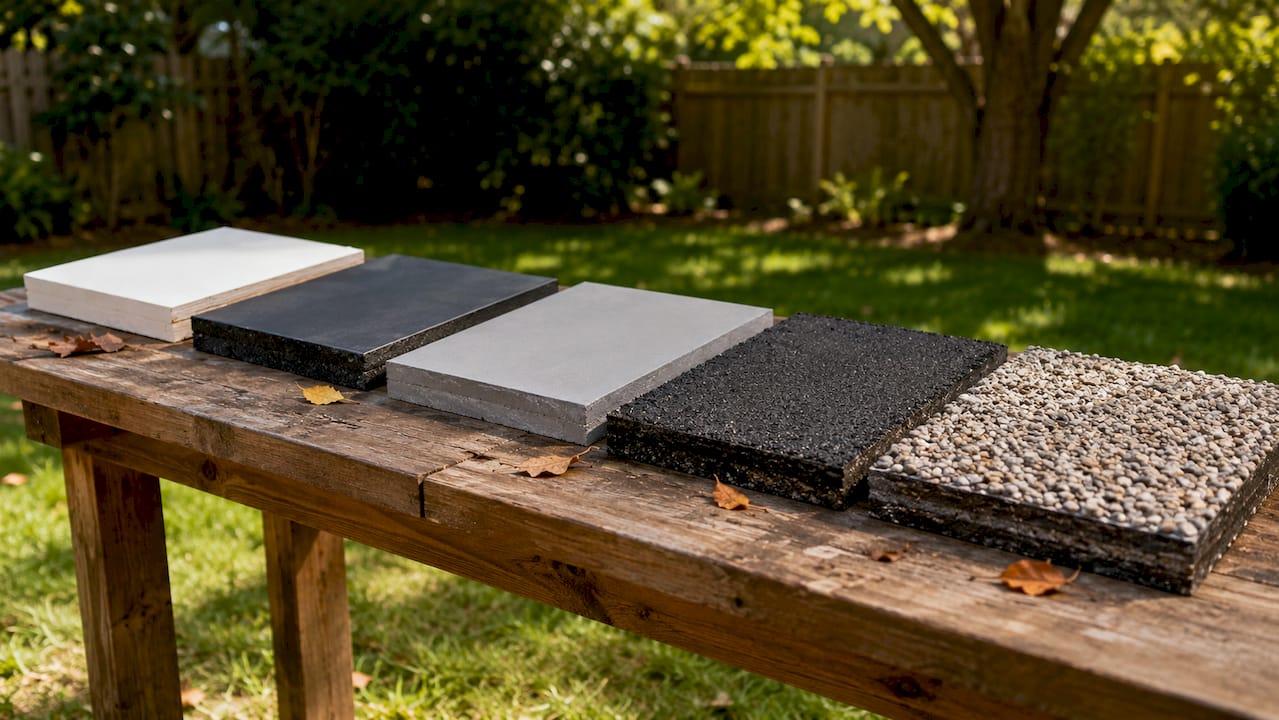
The types of flat roof materials break into five distinct systems, each with a different composition and performance profile.
TPO (thermoplastic polyolefin)
TPO is a white thermoplastic membrane heat-welded at the seams. It reflects sunlight, which cuts cooling costs in hot climates like Texas. TPO costs $4–$10 per square foot installed and carries a typical lifespan of 20–30 years. The heat-welded seams are stronger than adhesive bonds, making TPO one of the most leak-resistant options available.
Pros: Energy efficient, strong seams, widely available, mid-range cost.
Cons: Thinner membranes can puncture under heavy foot traffic; quality varies by manufacturer.
EPDM (ethylene propylene diene monomer)
EPDM is a black synthetic rubber membrane. It bonds with adhesive or mechanical fasteners rather than heat welding. EPDM runs $3–$9 per square foot and lasts 20–35 years. Its flexibility in cold temperatures makes it the preferred choice for northern climates, though it performs well in Texas winters too.
Pros: Long lifespan, cost-effective, flexible in cold weather, proven track record.
Cons: Dark color absorbs heat; adhesive seams are more vulnerable than welded seams.
PVC (polyvinyl chloride)
PVC is a thermoplastic membrane similar to TPO but with higher chemical resistance. It suits restaurants, food processing facilities, and any building with rooftop grease exposure. PVC also carries a 20–35 year lifespan and shares TPO’s reflective white surface. The material costs slightly more than TPO but holds up better in chemically aggressive environments.
Pros: Chemical resistance, highly reflective, durable welded seams.
Cons: Higher upfront cost; can become brittle in extreme cold over time.
Modified bitumen
Modified bitumen is an asphalt-based system reinforced with polymers, either APP (atactic polypropylene) or SBS (styrene-butadiene-styrene). Modified bitumen costs $4–$8 per square foot with a lifespan of 15–30 years. It installs in layers, which adds redundancy. SBS-modified bitumen stays flexible in cold weather; APP handles heat better.
Pros: Multi-layer redundancy, familiar installation process, handles moderate foot traffic.
Cons: Shorter lifespan than TPO or EPDM; requires periodic recoating.
Built-up roofing (BUR)
BUR is the oldest flat roofing system still in active use. It consists of alternating layers of bitumen and reinforcing felts, topped with gravel or a cap sheet. The multiple layers create genuine redundancy. BUR suits commercial buildings with minimal roof traffic and owners who want a proven, long-standing system.
Pros: Multi-layer waterproofing, long track record, gravel surface resists UV.
Cons: Heavy, labor-intensive to install, difficult to locate leaks under gravel.
2. Cost, lifespan, and energy efficiency compared
Choosing the right membrane means looking past the sticker price. A cheaper material that fails in 15 years costs more over time than a pricier one that lasts 35.
| Material | Cost per sq ft | Typical lifespan | Energy efficiency |
|---|---|---|---|
| TPO | $4–$10 | 20–30 years | High (reflective white) |
| EPDM | $3–$9 | 20–35 years | Low (absorbs heat) |
| PVC | $5–$12 | 20–35 years | High (reflective white) |
| Modified bitumen | $4–$8 | 15–30 years | Moderate |
| Built-up roofing | $4–$10 | 20–30 years | Low to moderate |
TPO and PVC reduce cooling loads through their reflective white surfaces. In Houston and El Campo, where summer temperatures regularly exceed 95°F, that reflectivity translates directly into lower energy bills. EPDM’s black surface absorbs heat, making it a better fit for cooler climates.
Climate also affects material durability. UV intensity, temperature cycling, and humidity all accelerate membrane aging. Texas property owners get the most value from TPO or PVC for hot-climate performance, while EPDM remains a cost-effective option for buildings with lower cooling demands.
Pro Tip: Never choose a flat roof membrane based on the lowest upfront cost alone. Calculate the cost per year of service life. A $9-per-square-foot TPO membrane lasting 30 years costs less annually than a $4-per-square-foot modified bitumen roof replaced in 15 years.
3. How flat roof installation works
A flat roof installation follows a defined sequence. Skipping or rushing any step shortens the roof’s life.
- Remove the old membrane. Stripping the existing covering exposes the deck below.
- Inspect the deck. Full deck inspection after membrane removal identifies moisture damage, rot, or structural weakness before it gets sealed under a new roof.
- Replace damaged decking. Any compromised sections must be replaced before insulation goes down.
- Install insulation. Rigid foam insulation boards improve thermal performance and create a smooth substrate for the membrane.
- Verify slope. Flat roofs require a minimum slope of 1/4 inch per foot to direct water toward drains. Without adequate slope, water ponds and degrades the membrane from below.
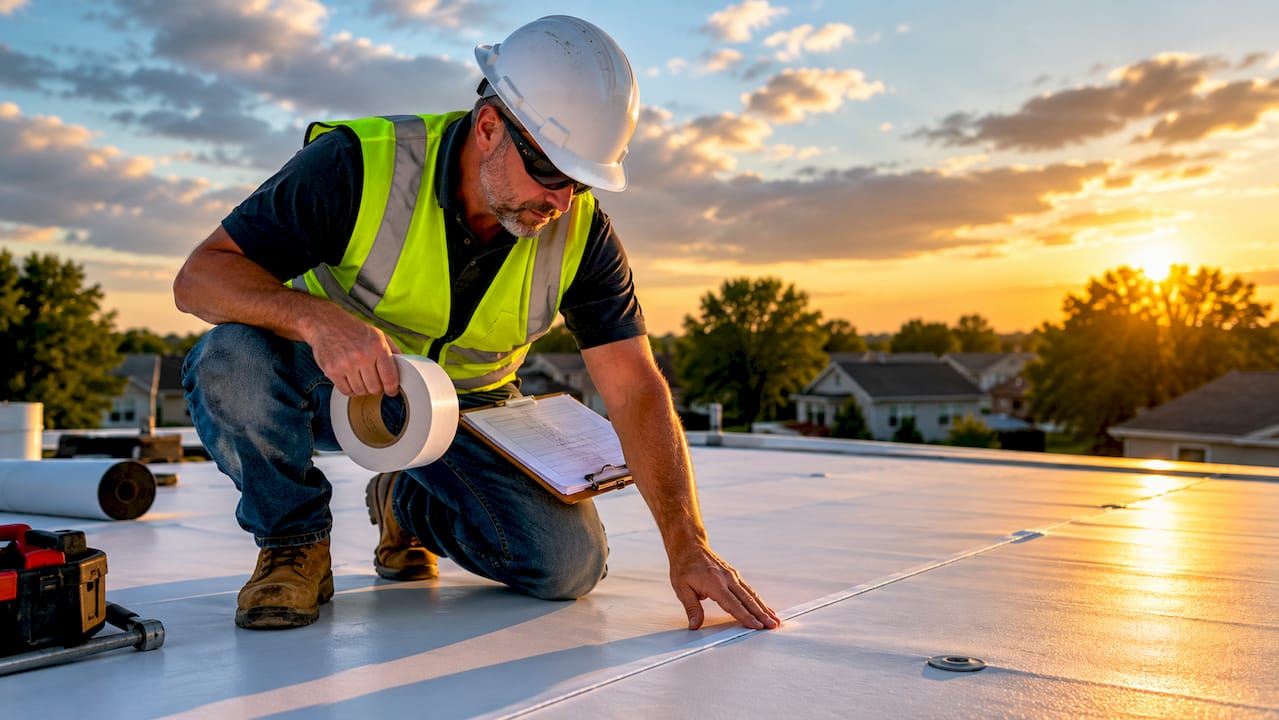
- Relax the membrane. New membrane material needs approximately 30 minutes to relax before fastening. Skipping this step causes shrinkage, wrinkles, and early-life seam failures.
- Apply and fasten the membrane. Depending on the system, this means heat welding (TPO, PVC), adhesive bonding (EPDM), or torch application (modified bitumen).
- Detail seams, edges, and penetrations. Flashings around HVAC units, pipes, and parapet walls are where most leaks originate.
Seam quality and penetration detailing predict flat roof longevity more than the membrane brand. A premium TPO membrane with poor seam work will fail faster than a standard EPDM roof installed by a skilled crew. The concept of a “monolithic envelope,” where the membrane wraps walls, penetrations, and edges without gaps, is the standard every installation should meet.
Pro Tip: Ask your contractor to show you the seam welds or adhesive bonds before they install flashings. This is the one moment you can verify quality before it gets covered up.
4. How to maintain a flat roof and extend its life
Routine maintenance is the single most cost-effective investment a property owner can make in a flat roof. Biannual inspections focusing on seams, flashing, and gutters prevent premature membrane failure and can extend roof life by 5–10 years. Schedule inspections in spring and fall, after the most demanding weather seasons.
Key maintenance tasks every property owner should perform:
- Clear debris from drains and gutters after every major storm. Blocked drains cause ponding water, which is the leading cause of membrane degradation.
- Inspect seams and flashings for lifting, cracking, or separation at least twice per year.
- Check penetrations around HVAC units, vents, and pipes after high winds.
- Recoat bitumen roofs on schedule. Modified bitumen and BUR systems require recoating every 5–15 years to maintain waterproofing integrity.
- Address small repairs immediately. A two-inch seam separation costs far less to fix today than the water damage it causes over six months.
Proactive maintenance programs consistently outperform reactive repair strategies. A reactive vs. proactive maintenance comparison shows that property owners who schedule regular inspections spend significantly less on emergency repairs over a roof’s lifetime.
Full roof replacement at end of life is almost always more cost-effective than repeated patch repairs. Patches address symptoms, not the underlying membrane degradation. When a roof requires more than two patches in a single year, replacement delivers better long-term value.
5. How to choose the best flat roof covering for your property
The best flat roof option depends on four factors: climate, building use, budget, and energy efficiency priorities. No single membrane wins every category.
| Membrane | Best climate | Best use | Budget level | Energy efficiency |
|---|---|---|---|---|
| TPO | Hot and sunny | Commercial, residential | Mid-range | High |
| EPDM | Cold to moderate | Low-traffic commercial | Budget-friendly | Low |
| PVC | Hot, chemical exposure | Restaurants, industrial | Higher | High |
| Modified bitumen | Mixed climates | Residential, low-slope | Mid-range | Moderate |
| BUR | Any | Heavy-use commercial | Mid to high | Low to moderate |
For Texas property owners, TPO is the default recommendation for most applications. It handles heat, reflects UV, and costs less than PVC while outperforming EPDM in hot climates. PVC makes sense when rooftop grease or chemical exposure is a factor. EPDM remains a solid budget choice for properties where cooling costs are not a primary concern.
Installer competency matters as much as material choice. A skilled crew installing mid-grade TPO will outperform an inexperienced crew installing premium PVC. Always verify that your contractor has documented experience with the specific membrane system you select. Ask for references from completed flat roof projects in your climate zone.
For residential properties, TPO or modified bitumen typically fits the budget and performance requirements. For large commercial buildings, PVC or BUR may justify the higher cost through longer service life and lower maintenance frequency. A professional assessment from a qualified roofing contractor gives you the most accurate recommendation for your specific building.
Pro Tip: Before signing any contract, ask the contractor to walk you through their seam detailing process for penetrations and edges. Contractors who can explain this clearly are the ones who execute it correctly.
You can also review flat roof options for Texas properties to compare material performance in the local climate before making a final call.
Key takeaways
The most durable flat roof system combines the right membrane for your climate with expert installation and consistent biannual maintenance.
| Point | Details |
|---|---|
| TPO leads in hot climates | TPO’s reflective surface cuts cooling costs and suits Texas heat better than EPDM. |
| Seam quality determines longevity | Poor detailing at seams and penetrations causes more failures than any material deficiency. |
| Slope prevents ponding | A minimum 1/4-inch-per-foot slope is required to protect any membrane from standing water damage. |
| Maintenance extends roof life | Biannual inspections and prompt repairs can add 5–10 years to a flat roof’s service life. |
| Replace, don’t patch repeatedly | When a roof needs multiple patches per year, full replacement delivers better long-term value. |
What I’ve learned after years of flat roof decisions
The most common mistake property owners make is treating flat roof selection as a purchasing decision rather than a systems decision. They compare material prices, pick the lowest number, and hand the job to whoever bids cheapest. Then they call for repairs two years later.
The membrane is only one part of the equation. The deck condition, insulation quality, slope accuracy, seam execution, and flashing detail all determine whether that membrane performs for 20 years or 8. I’ve seen premium PVC installations fail within five years because the contractor rushed the penetration flashings. I’ve also seen 15-year-old EPDM roofs in near-perfect condition because the owner ran a disciplined inspection program.
The trend worth watching in 2026 is the growing adoption of TPO across residential flat roofs in the South. Contractors who previously reserved TPO for commercial work are now installing it on residential additions and garage roofs. The energy savings in hot climates are real, and the heat-welded seams give homeowners a more durable product than the modified bitumen that dominated residential flat roofing for decades.
My honest advice: spend your budget on the installation crew before you spend it on the membrane upgrade. A skilled installer with standard TPO beats an average installer with premium PVC every time. And schedule those biannual roof inspections. The cost of an inspection is trivial compared to the cost of a leak that goes undetected for six months.
— Misterreroof
Ready for a flat roof replacement in Texas?
Misterreroof specializes in flat roof replacement across El Campo, Houston, and surrounding Texas communities. The team installs TPO, EPDM, PVC, and modified bitumen systems with the seam quality and flashing detail that determines long-term performance.
Whether you need a full flat roof replacement in Houston or a professional assessment of your current membrane, Mister Reroof delivers workmanship built for Texas weather. Every project starts with a free estimate and a thorough deck inspection. Contact Misterreroof today to schedule your consultation and get a clear picture of what your property needs.
FAQ
What is the longest-lasting flat roof material?
EPDM and PVC both carry lifespans of 20–35 years, making them the longest-lasting flat roof membranes when properly installed and maintained. TPO follows closely at 20–30 years.
How often should a flat roof be inspected?
Flat roofs need professional inspection twice per year, typically in spring and fall. Inspections should focus on seams, flashings, and drain clearance to catch problems before they cause water damage.
What causes most flat roof leaks?
Poor seam detailing and inadequate flashing around penetrations cause the majority of flat roof failures. The membrane material itself is rarely the primary cause of leaks.
Is TPO or EPDM better for Texas properties?
TPO is the better choice for Texas. Its reflective white surface reduces cooling loads in hot climates, while EPDM’s black surface absorbs heat and increases energy costs in high-temperature regions.
When should I replace instead of repair a flat roof?
Replace a flat roof when it requires more than two patches in a single year or when the membrane has reached the end of its rated lifespan. Repeated patching costs more over time than a full replacement with a modern membrane system.
