TL;DR:
- PVC roofing, a durable and cost-effective single-ply membrane, offers a service life exceeding 25 years and exceptional chemical resistance, making it suitable for various property types. Proper installation and quality seam welding are crucial for optimal performance and warranty validity, especially in demanding environments like Texas. Despite higher initial costs, PVC’s long-term benefits, including energy savings and longevity, provide substantial value over other roofing options.
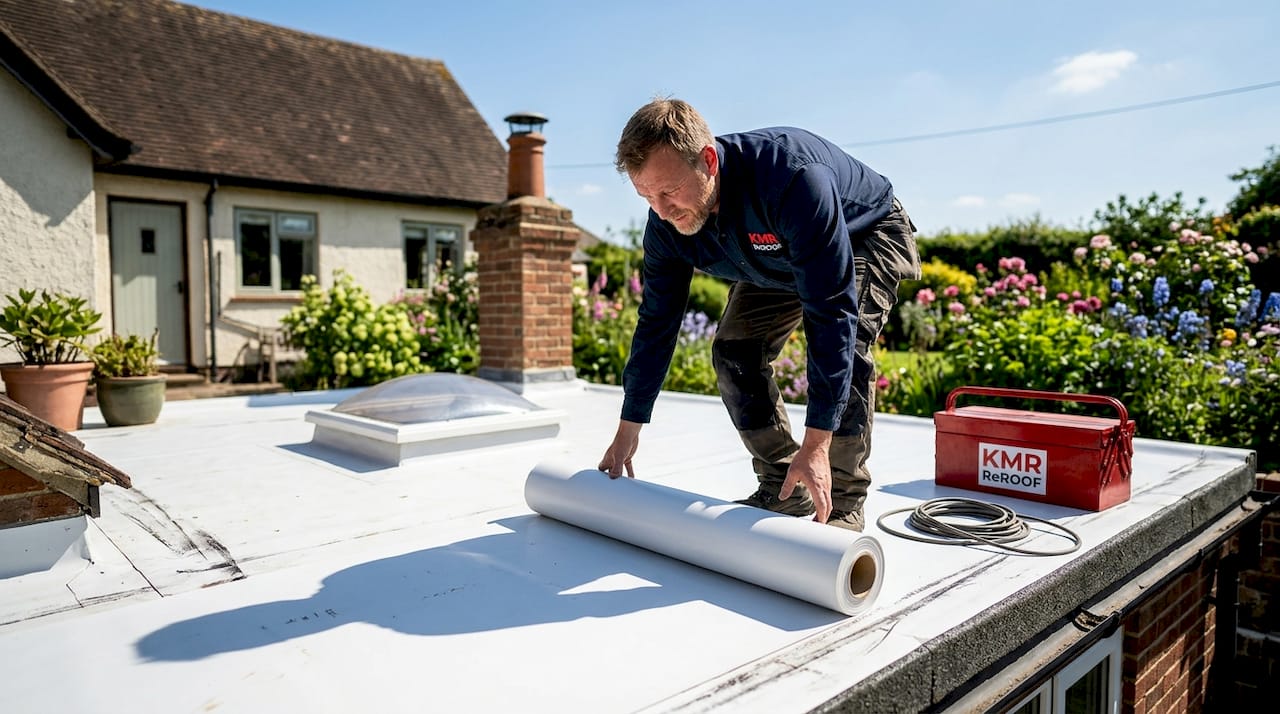
Most property owners assume PVC roofing is strictly a commercial material, reserved for warehouses and big box stores. That assumption costs people money. Understanding what is PVC roofing, properly called a polyvinyl chloride single-ply membrane, opens the door to one of the most durable and cost-effective flat roofing systems available today. PVC roofing offers a service life that stretches beyond 25 years, genuine energy savings through reflective surfaces, and resistance to chemicals that no other common membrane can match. This guide breaks down exactly what it is, why it performs so well, and whether it fits your property.
Key Takeaways
| Point | Details |
|---|---|
| PVC is a single-ply membrane | Polyvinyl chloride roofing uses heat-welded seams to create a continuous watertight surface on flat roofs. |
| Service life exceeds 25 years | With minimal maintenance, a properly installed PVC roof can last 25 to 35 years, outlasting many alternatives. |
| Chemical resistance is unmatched | PVC resists oils, grease, and chemicals, making it the top choice near exhaust vents and industrial equipment. |
| Installation method affects warranty | Fully adhered, mechanically attached, and induction-welded systems carry different warranty terms and performance profiles. |
| Cost runs $6 to $12 per square foot | PVC costs more upfront than TPO but delivers better long-term value through durability and lower energy bills. |
What is PVC roofing, exactly?
PVC roofing is a thermoplastic single-ply membrane made from polyvinyl chloride, a synthetic plastic polymer. The raw material gets combined with plasticizers that keep the membrane flexible in cold weather and UV stabilizers that slow surface degradation from sunlight. Without those additives, the membrane would become brittle within a few seasons of Texas sun exposure.
The physical structure of a PVC membrane is not just a flat sheet of plastic. Reinforcement with polyester or fiberglass scrim sits at the core, sandwiched between two layers of PVC compound. That scrim layer is what provides puncture resistance and dimensional stability under foot traffic and wind load.
Here is what defines PVC roofing at the material level:
- Thickness: Ranges from 45 mil to 90 mil, with 60 mil being the standard in most commercial installations
- Reinforcement types: ASTM D4434 standards require polyester scrim in Type III and Type IV membranes for superior tear resistance; Type II uses fiberglass
- Color: Typically white or light gray, which contributes directly to energy performance
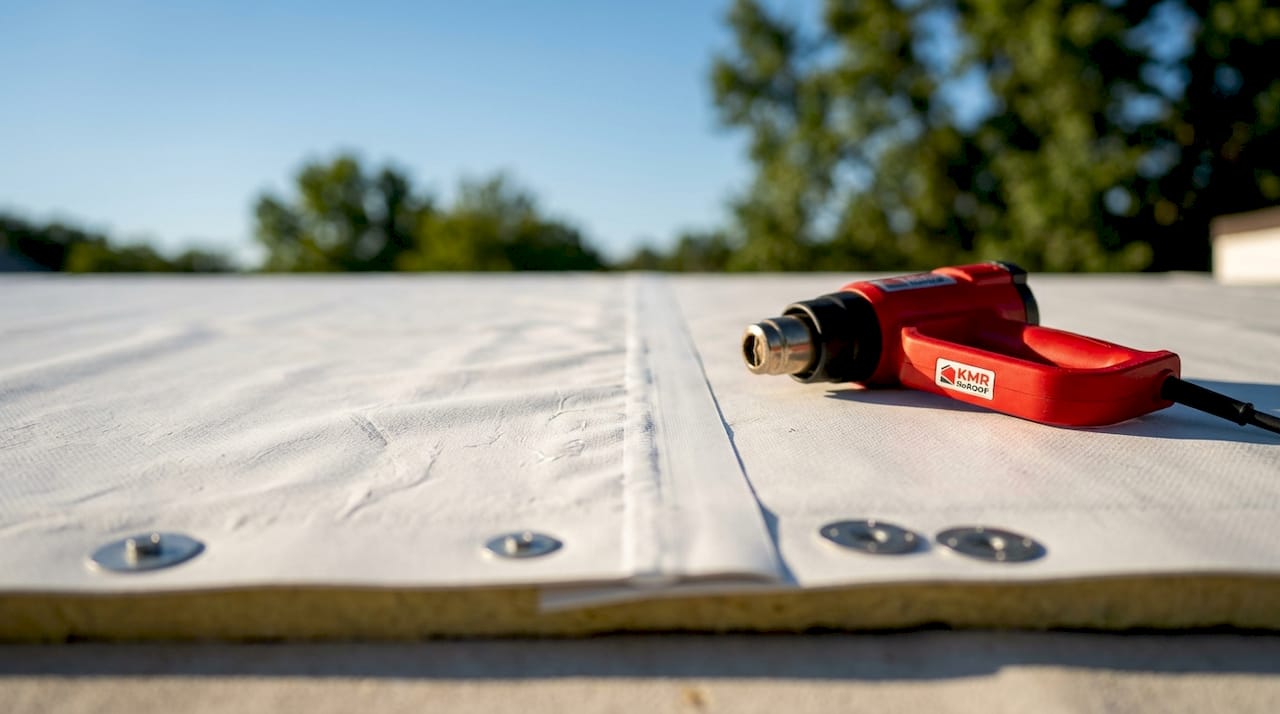
- Seam technology: Sheets are fused together with hot air welding, not adhesive tape or caulk
That last point separates PVC from most other membranes. Heat-welded seams create a continuous watertight barrier that bonds the sheets into one unified surface. You are not relying on glue that ages or tape that lifts. The weld is as strong as the membrane itself. That is the detail that earns PVC its reputation on demanding commercial and industrial roofs.
PVC roofing advantages for property owners
The performance profile of a PVC membrane reads like a checklist for property owners who want to stop thinking about their roof for a decade or two.
Long service life. PVC membranes last approximately 25 to 35 years with minimal upkeep. That is not a manufacturer’s marketing claim. It reflects documented field performance across thousands of commercial and industrial installations. Compare that to a standard EPDM rubber roof, which typically requires replacement closer to the 20-year mark under similar conditions.
Energy savings you can measure. The white reflective surface of a PVC membrane qualifies for Energy Star ratings due to high solar reflectivity, which directly reduces cooling loads in warm climates. For Texas property owners managing summer utility bills, that distinction matters. You can read more about how reflective surfaces affect operating costs in this Texas cool roofing guide.
Chemical and grease resistance. This is where PVC genuinely stands apart from TPO and EPDM. PVC is recommended by building codes for areas within 10 feet of grease exhaust fans because it resists oils, animal fats, and industrial chemicals without breaking down. A restaurant, food processing facility, or any property with rooftop exhaust equipment needs this specification, not as a preference but as a practical necessity.
Fire and wind resistance. PVC carries strong fire ratings and performs well in wind uplift tests, which matters in coastal Texas where building code wind requirements are not optional.
Ease of handling. PVC is lightweight and flexible, which reduces labor time during installation and makes future repairs faster than working with heavier membrane systems.
Pro Tip: If your building has any rooftop kitchen exhaust, always specify PVC over TPO or EPDM. Grease will degrade those other membranes within a few years. PVC handles it without issue, and building inspectors in many jurisdictions will require it anyway.
How to install PVC roofing
Installation method has a direct impact on both long-term performance and what warranty you can claim. There are three primary approaches, and each one involves tradeoffs worth understanding before you sign a contract.
- Fully adhered system. The membrane gets bonded directly to the insulation board below using bonding adhesive. This method produces the most wind-resistant result because there are no fasteners to pull through under uplift forces. It also produces a cleaner, flatter appearance. The tradeoff is higher material and labor cost.
- Mechanically attached system. Fasteners and plates secure the membrane at seams, which are then heat-welded over the fastener row. This is faster and less expensive to install. However, you may see membrane flutter between fastener rows under high wind, which creates noise and long-term stress on the material.
- Induction-welded system. Specially coated plates get fastened through the insulation. A handheld induction tool then welds the membrane directly to those plates from the top without penetrating the membrane surface. This method combines the speed of mechanical attachment with wind resistance close to a fully adhered system.
Each installation type affects warranty terms and system durability differently, so ask your contractor specifically which method they are proposing and why. Beyond method selection, PVC’s flexibility allows it to conform to rooftop penetrations and parapets, which is where most flat roofs eventually leak. A skilled installer uses that flexibility to create tight, lasting details at every transition point.
Maintenance after installation is straightforward. Twice-yearly inspections to clear debris and check seams are generally enough. When repairs are needed, maintenance requirements are minimal and repairs are easy to handle because you can weld a patch directly to the existing membrane with the same hot-air tool.
Pro Tip: Ask your contractor to perform test welds at the start of installation and document the temperature and pressure settings. Seam quality is the most common failure point in PVC roofing, and verifying parameters up front protects your warranty and your building.
Cost comparison: PVC vs. other flat roofing options
PVC carries a cost premium that surprises some property owners at first glance. But the math over a full roof lifecycle looks very different from the initial bid.
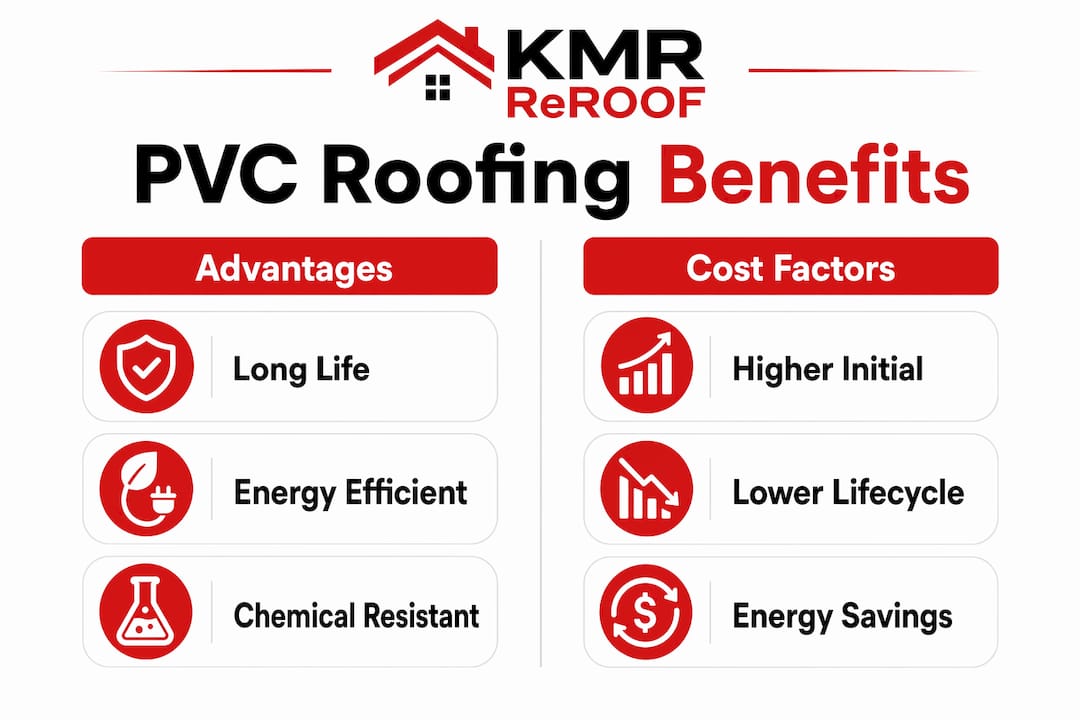
Installed cost typically ranges from $6 to $12 per square foot, depending on membrane thickness, installation method, insulation requirements, and regional labor rates. A 10,000-square-foot flat roof lands somewhere between $60,000 and $120,000 fully installed. That is meaningfully higher than TPO, which runs closer to $5 to $10 per square foot, and EPDM, which often falls in the $4 to $8 range.
Here is how the three major single-ply options compare across the factors that matter most to property owners:
| Feature | PVC | TPO | EPDM |
|---|---|---|---|
| Installed cost per sq ft | $6–$12 | $5–$10 | $4–$8 |
| Expected lifespan | 25–35 years | 15–25 years | 15–25 years |
| Chemical resistance | Excellent | Moderate | Poor |
| Energy efficiency | High (reflective) | High (reflective) | Low (black membrane) |
| Seam method | Heat welded | Heat welded | Adhesive/tape |
| Maintenance demands | Low | Low | Moderate |
The cost gap between PVC and TPO narrows considerably once you factor in replacement cycles and energy savings. A TPO roof that needs replacement at year 20 costs you another full installation. A PVC roof still has years of service life left at that point. For properties near grease sources, the comparison is not even close. TPO and EPDM will degrade, and you will be replacing them far ahead of schedule.
If you want a broader look at flat roofing material comparisons, this breakdown of flat roofing options in Houston covers the durability tradeoffs across the most common systems.
Who should use PVC roofing?
PVC is not the right membrane for every building, but it is the right one for more properties than most owners realize.
The clearest candidates include:
- Commercial and industrial buildings with low-slope or flat roofs, especially those with rooftop mechanical equipment
- Restaurants, food processing facilities, and retail properties with grease-generating exhaust systems
- Properties in warm climates where the reflective surface delivers measurable energy savings year-round
- Buildings requiring strong fire ratings or high wind uplift specifications per local code
- Property owners prioritizing long-term value over the lowest possible upfront cost
PVC is less ideal in applications where extreme cold cycling is a primary concern, since plasticizers can migrate over decades and cause brittleness in very harsh northern climates. In Texas, that is rarely an issue. Also, if your project has an extremely tight budget and chemical exposure is not a factor, TPO offers a similar membrane technology at a lower price point.
My honest take on PVC roofing after years in this industry
I’ve seen property owners get burned by two opposite mistakes when evaluating PVC roofing. The first is dismissing it as too expensive without running the lifecycle numbers. The second is assuming all PVC membranes are the same and choosing purely on price.
Membrane thickness and reinforcement type are not fine print. They determine whether your roof performs for 20 years or 35 years, and whether your warranty is worth the paper it is printed on. Extended warranties depend directly on membrane thickness and seam quality, so when a contractor quotes you a 60-mil membrane and a 30-year warranty, ask what that warranty actually covers and under what conditions it voids.
Seam welding quality is where most PVC roofs fail prematurely. Installers must perform test welds and verify temperature and pressure parameters before starting a project. If your contractor cannot tell you what temperature they are welding at or has no documented quality control process for seams, that is a red flag worth acting on.
My broader observation is that PVC fits well into a long-term property management strategy. When you own or manage a building for decades, the roof is not an expense you want to revisit every 15 years. Getting the system right the first time, with verified seams and the correct membrane spec for your use case, is almost always cheaper than replacing a budget membrane on a faster cycle. Learn more about durable flat roofing for Texas properties to see how PVC stacks up in real-world conditions.
— Misterreroof
Get professional PVC roofing installation in Texas
If you are ready to move from research to action, Mister ReRoof has the experience your project needs. Misterreroof specializes in flat and low-slope roofing systems across El Campo and Houston, TX, including PVC membrane installation, TPO roofing, and full flat roof replacement for both commercial and residential properties.
Whether you need a complete roof replacement, a detailed inspection, or a second opinion on a contractor’s proposal, Mister Reroof delivers workmanship built to handle Texas weather. The team works with property owners to identify the right membrane system for your building type, budget, and exposure conditions. If chemical resistance, energy efficiency, or long-term durability are priorities, Misterreroof can walk you through the options side by side, including TPO roof replacement if that fits your project better. Contact Mister ReRoof today for a free estimate and find out exactly what your flat roof needs.
FAQ
What is PVC roofing made of?
PVC roofing is made from polyvinyl chloride combined with plasticizers for flexibility and UV stabilizers for weather resistance. A reinforcing scrim of polyester or fiberglass sits at the core of the membrane to add puncture resistance and dimensional stability.
How long does a PVC roof last?
A properly installed PVC roof lasts approximately 25 to 35 years with minimal maintenance. Lifespan depends on membrane thickness, installation quality, and seam welding standards.
Is PVC roofing durable enough for commercial buildings?
Yes. PVC is one of the most durable single-ply membranes available for commercial applications. Its heat-welded seams, chemical resistance, and fire ratings make it a top specification for demanding commercial environments.
How does PVC roofing compare to asphalt?
PVC roofing vs asphalt comes down to roof type. Asphalt shingles are designed for sloped roofs, while PVC is a membrane system for flat or low-slope applications. PVC outperforms asphalt in water resistance, lifespan, and chemical exposure on flat surfaces.
What does PVC roofing cost to install?
Installed PVC roofing typically costs between $6 and $12 per square foot, depending on membrane thickness, installation method, and regional labor rates. The higher upfront cost compared to TPO or EPDM is generally offset by a longer service life and lower maintenance requirements.
