TL;DR:
- Flat roofs depend on proper drainage with at least ¼-inch slope to prevent ponding and structural damage. Regular maintenance, including drain cleaning and inspection, is vital to avoid leaks, membrane deterioration, and costly repairs. Proper design and coordination of drainage systems, especially secondary overflows, ensure safety and longevity in Texas weather conditions.
Flat roofs can fail silently. A small puddle left standing after a rainstorm might look harmless, but the role of drainage in flat roofs goes far deeper than surface appearances. Poor water management leads to membrane deterioration, structural loading, and leaks that can cost tens of thousands of dollars in repairs. This article breaks down how flat roof drainage actually works, what causes it to fail, and what property managers, builders, and homeowners can do to protect their buildings before a small drainage problem becomes a very expensive structural one.
Table of Contents
- Key takeaways
- The role of drainage in flat roofs
- Common causes of flat roof drainage failure
- Best practices for flat roof drainage design
- Diagnosing drainage problems on existing roofs
- How drainage affects flat roofs long-term
- My perspective on what actually makes drainage reliable
- Get professional flat roof drainage help in Texas
- FAQ
Key takeaways
| Point | Details |
|---|---|
| Slope is non-negotiable | Flat roofs need at least ¼-inch per foot of slope to move water toward drains and prevent ponding. |
| Ponding adds dangerous weight | Every inch of standing water adds roughly 5.2 lbs per square foot, threatening structural integrity. |
| Maintenance prevents most failures | Clearing drains twice yearly resolves about 30% of ponding issues before structural repairs are needed. |
| Secondary drains are life-savers | Emergency overflow scuppers prevent catastrophic loading when primary drains clog during heavy rain. |
| Coordination matters as much as materials | Failures happen when roofing, structural, and plumbing design work in isolation from each other. |
The role of drainage in flat roofs
Flat roofs do not shed water the way pitched roofs do. A steep residential roof lets gravity do the heavy lifting, sending rain straight down into gutters in seconds. A flat roof relies on deliberate engineering: precise slope, strategically placed drains, and overflow systems working together. Without that design, water sits.
The industry standard is clear. Positive drainage requires a minimum slope of ¼-inch per foot, combined with primary interior drains or exterior scuppers and a secondary overflow system. That secondary system is not optional. Emergency overflow drains are positioned 2 inches above primary drains specifically so that if a clog occurs during a heavy storm, water has somewhere to go before it overloads the structure.
A key detail many property owners miss: interior roof drains must connect to storm drainage systems, never to sanitary sewer lines. Connecting to the wrong system allows sewer gas to enter the building. It is also a code violation under IRC R903.4.
“Failures occur when roofing, structural, and plumbing disciplines work in isolation, leading to roofs that drain poorly under real storm conditions.” — IIBEC
The importance of drainage on flat roofs becomes obvious once you understand the weight math. Standing water adds approximately 5.2 lbs per square foot for every inch of depth. A modest 1,000-square-foot roof with two inches of ponding carries over 10,000 pounds of unplanned load. Most structures are not designed for that.
Common causes of flat roof drainage failure
Understanding how drainage fails helps you catch problems early. The issues typically come from one of three places: debris, design shortcomings, or structural movement.
- Blocked drains and scuppers. Leaves, debris, and dislodged roofing materials are the most common cause of ponding water on flat roofs. Drains clog gradually, often unnoticed until after a heavy rainfall.
- Insufficient slope or flat spots. If a roof was installed without adequate slope, or if the slope directs water away from drains rather than toward them, ponding is inevitable. Some roofs are nearly level by design error, which no amount of drain cleaning will fix.
- Structural deflection. Over time, roof decks flex and sag, creating new low points that were never part of the original drainage design. This progressive deflection-ponding feedback loop is one of the most dangerous patterns: the water makes the sag worse, the worsened sag holds more water, and the cycle accelerates.
- Undersized or misplaced drainage components. A drain that is correctly installed but too small for the roof’s catchment area cannot handle a serious rainstorm. The same applies to scuppers that were sized for light rainfall rather than design storm intensity.
- Poor coordination between trades. When the roofing contractor and the plumbing contractor do not communicate during installation, drain connections get made incorrectly, or drain locations end up misaligned with the actual low points on the finished roof.
Pro Tip: After any storm that drops more than an inch of rain, walk the roof 48 to 72 hours later. If water is still pooling, you have a drainage problem. Ponding water is officially defined as water remaining on a roof surface 48 hours after rainfall stops.
Best practices for flat roof drainage design
Getting drainage right on a flat roof means thinking through several layers of the system at the same time. Here is how effective drainage design actually works in practice.
Designing slope into the roof
The single most effective drainage solution for flat roofs is building positive slope into the system from the start. When a roof already exists and lacks adequate pitch, tapered polyiso insulation boards are the standard fix. They add slope gradually across the roof surface and cost roughly $3 to $5 per square foot. That upfront investment extends roof life and cuts down on repair costs significantly over time.
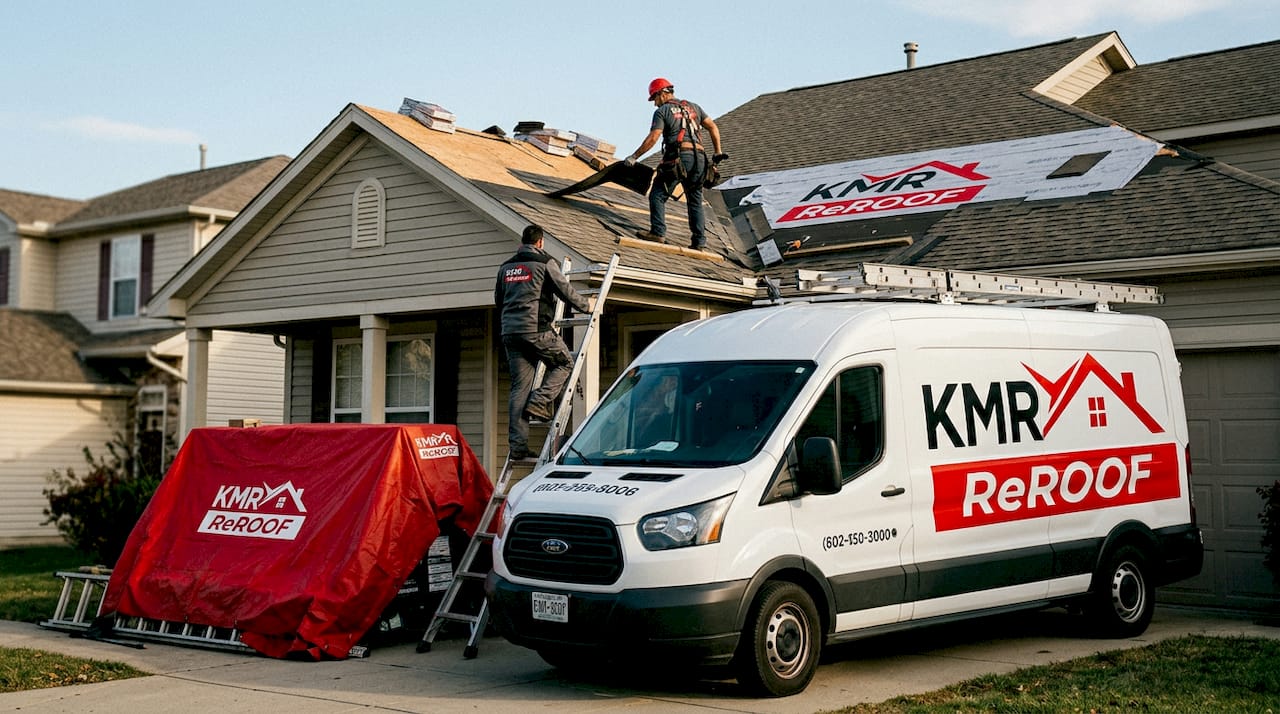
For new construction, the structural deck itself can be sloped, or tapered insulation can be specified in the design phase at minimal added cost compared to retrofitting later.
Drain placement and type
Primary drains belong at the lowest points of the roof, which sounds obvious but gets overlooked when drainage design is treated as an afterthought. Sumped or recessed drains outperform flush-mounted drains because the recessed bowl creates a localized low point that accelerates water off the membrane and reduces sediment buildup around the drain opening.
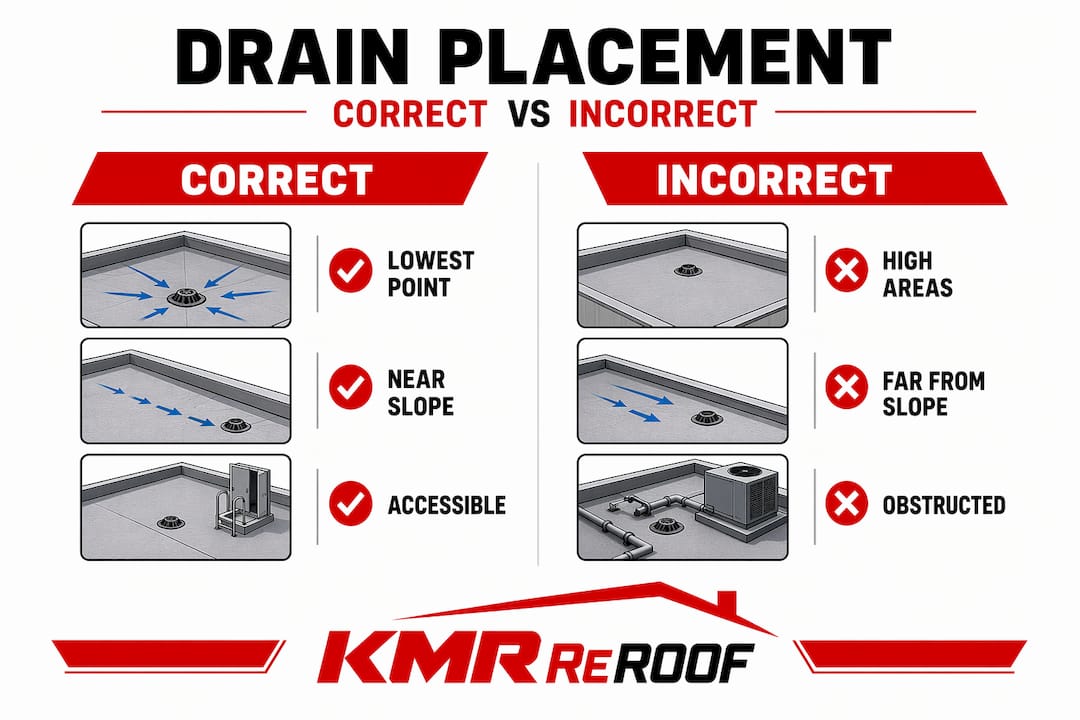
Secondary overflow drains or scuppers must be sized based on the design rainfall intensity for the specific region, not just a generic rule of thumb. In Houston and coastal Texas, where intense rainfall events are increasing, many existing drainage systems are undersized for current storm conditions.
Maintenance as a design priority
| Maintenance Task | Frequency | Why It Matters |
|---|---|---|
| Clear primary drains and strainers | Twice yearly minimum | Debris buildup is the leading cause of ponding |
| Inspect scuppers and overflow drains | Twice yearly | Clogs here create structural loading risk fast |
| Check for ponding after major storms | After every 1-inch-plus rain event | Catches early-stage drainage failure |
| Inspect roof membrane around drain bases | Annually | Water infiltrates at drain connections first |
| Assess slope and surface for new low points | Every 2 to 3 years | Structural deflection creates new drainage problems |
Routine maintenance resolves about 30% of ponding issues without any structural work. Quarterly inspections timed to seasonal debris fall give you the best results.
Pro Tip: Install cricket ridges (small peaked saddles) behind HVAC curbs, skylights, and other roof penetrations. These divert water around obstacles that would otherwise create ponding zones behind them.
You can find a detailed breakdown of flat roofing system options that includes drainage design considerations for different roof types.
Diagnosing drainage problems on existing roofs
If you suspect drainage issues on an existing flat roof, a systematic assessment will tell you whether you need a simple cleaning or a significant repair.
Start with observation. Note where water pools, how deep it gets, and how long it takes to clear after rain. Depth matters more than area. Two inches of water across 200 square feet is a heavier structural concern than a shallow quarter-inch film covering a larger area.
- Shallow ponding under half an inch that clears within 48 hours often means a partially blocked drain. Start by cleaning the drain and checking the strainer.
- Persistent ponding over half an inch that remains beyond 48 hours points to slope problems, structural deflection, or a fully blocked drainage path.
- New ponding in areas that drained well before suggests structural deck movement. This warrants an engineer’s review before any roofing repair is scoped.
- Ponding near roof edges or parapet walls is often a scupper sizing or placement issue.
Pro Tip: Use a tape measure and a simple grid sketch of the roof to document ponding zones after rain. Photos with timestamps give contractors and engineers the context they need to diagnose the root cause accurately.
Repair approaches vary by root cause. A flat roof repair workflow for Houston properties walks through the diagnostic and remediation steps in detail. Tapered insulation retrofits address slope deficiencies. Additional drain installation addresses capacity shortfalls. Membrane replacement is needed when prolonged ponding has deteriorated the waterproofing layer.
Code compliance also comes into play. Downspouts must discharge at least 4 to 6 feet from the foundation with proper extensions. Discharging near the foundation causes erosion, moisture infiltration into the building envelope, and potential violations under local codes.
How drainage affects flat roofs long-term
The long-term consequences of poor drainage show up gradually, then all at once. Here is what accumulates when drainage problems go unaddressed:
- Accelerated membrane degradation. UV exposure, thermal cycling, and constant moisture stress break down roofing membranes faster when water sits on them. Ponding shortens a membrane’s effective lifespan by years.
- Progressive structural damage. The deflection-ponding feedback loop described earlier compounds over time. What starts as a slow deck sag eventually requires structural repair, not just a new roof.
- Interior leaks and mold risk. Once ponding breaches the membrane, water infiltrates insulation, decking, and interior spaces. Mold can develop within 24 to 48 hours of moisture intrusion in warm climates like Texas.
- Insurance and compliance complications. Many commercial property insurance policies exclude damage caused by maintenance neglect. Documented ponding without corrective action can void coverage for related claims.
- Reduced property value. A flat roof with known drainage problems is a material defect in any real estate transaction. Buyers discount, lenders scrutinize, and inspectors flag it every time.
The benefits of proper drainage on flat roofs extend beyond avoiding repairs. A well-maintained drainage system protects occupant safety, preserves structural integrity, and maximizes the return on your roofing investment over the full life of the system.
My perspective on what actually makes drainage reliable
I have seen flat roofs where every individual component was installed correctly but the system still failed. The reason almost every time comes down to two things: nobody designed for overflow, and nobody was responsible for coordinating between the roofer and the plumber.
The overflow path is not just a code checkbox. It is the safety valve for the entire drainage system. When I see a flat roof without secondary drainage that is accessible and clearly sized, I know the building is one heavy rainstorm away from a structural loading event. Treating overflow drains as afterthoughts is one of the most common and costly contractor mistakes I have encountered.
The other thing I have come to believe strongly: proactive maintenance is dramatically undervalued compared to the cost of reactive repairs. Cleaning a drain strainer takes twenty minutes. Replacing a roof deck damaged by years of ponding takes weeks and costs a substantial amount of money. The math is not complicated, but most building owners do not act until water appears on the ceiling.
Texas weather is not getting gentler. Rainfall intensity is increasing, and drainage systems designed ten or fifteen years ago may not have been sized for today’s storm events. If you manage a flat roof in El Campo, Houston, or anywhere along the Gulf Coast, it is worth having your drainage capacity assessed against current local design rainfall data, not just the original construction specs.
— Misterreroof
Get professional flat roof drainage help in Texas

When drainage problems go beyond a blocked strainer, the right move is bringing in professionals who understand both roofing systems and water management in Texas conditions. Mister Reroof specializes in flat roof replacement in El Campo and Houston-area properties, with full attention to drainage design, proper slope, and code-compliant drain placement. Whether your roof needs tapered insulation retrofitting, a full membrane replacement, or a TPO roof replacement with an upgraded drainage system built in, the Misterreroof team delivers solutions built to handle what Texas weather throws at them. Contact Misterreroof today for a free estimate and an inspection that covers drainage performance, not just surface condition.
FAQ
What is ponding water on a flat roof?
Ponding water is water that remains on a flat roof surface 48 hours after rainfall stops. It adds significant structural load and damages the roofing membrane over time.
How much slope does a flat roof need for proper drainage?
A minimum slope of ¼-inch per foot is required for positive drainage on flat roofs. This slope directs water toward drains rather than allowing it to pool on the membrane.
What causes flat roofs to drain poorly?
The most common causes are blocked drains from debris, insufficient built-in slope, and structural deck deflection that creates unintended low spots. Poor coordination between roofing and plumbing trades during installation also contributes.
What is a secondary or overflow drain, and why does it matter?
An overflow drain or scupper is positioned 2 inches above the primary drain to handle water if the primary drain clogs. Without it, a single blocked drain during a heavy storm can load the roof structure to the point of failure.
How often should flat roof drains be cleaned?
At minimum, flat roof drains and scuppers should be cleared twice per year, with additional checks after major storms. Routine cleaning resolves a significant share of ponding problems before structural damage develops.
