TL;DR:
- A roofing contractor estimate is a detailed document outlining costs, materials, labor, permits, warranties, and scope items for your roof repair or replacement. Comparing bids requires analyzing scope over price, ensuring thorough inspections, and reviewing material and warranty details to prevent unexpected costs. Homeowners should request clear, itemized estimates, understand cost breakdowns, and verify permit inclusion before signing to ensure a smooth project.
A roofing contractor estimate is a comprehensive written document that details every cost, material, labor charge, and project scope item for your roof repair or replacement. Unlike a verbal quote, a proper written estimate gives you a clear picture of exactly what you are paying for before a single shingle is removed. For Texas homeowners and property managers weighing repairs or full replacements, understanding this document is the difference between a smooth project and a billing dispute. This article breaks down what a thorough estimate contains, how the inspection process works, and how to compare bids without getting burned.
What is a roofing contractor estimate and what should it include?
A roofing contractor estimate is a detailed written breakdown covering materials, labor, permits, warranty terms, and payment schedule for your specific roof. Think of it as a contract preview. Every line item tells you something about how seriously a contractor takes their work.
A thorough estimate spans 4 to 8 pages. A single-page estimate with only a bottom-line price is a strong red flag. Here is what every legitimate roofing estimate should contain:
- Itemized materials list. Brand name, product line, color, and quantity for shingles, underlayment, ice and water shield, ridge cap, and flashing. “Shingles” with no brand or style is not acceptable.
- Labor costs. Labor typically represents 35 to 45% of the total project cost. This should be broken out separately from materials.
- Tear-off and disposal. Removing your old roof costs money. If this line is missing, ask whether it is included or excluded.
- Flashing and ventilation. New flashing around chimneys, skylights, and valleys should be standard. Ventilation upgrades, if needed, must be listed separately.
- Permit fees. Permit fees vary by municipality from $100 to $500. A professional contractor lists this as a separate line item. If it is absent, ask directly whether permits will be pulled.
- Warranty terms. The estimate should specify both the manufacturer’s materials warranty and the contractor’s workmanship guarantee, with clear durations for each.
- Payment schedule. Deposits should fall between 10 and 25% of the total. Any contractor requesting more than 30% upfront deserves scrutiny.
One measurement concept that trips up many homeowners: contractors measure roofs in “squares,” where one roofing square equals 100 square feet of actual roof surface, not floor area. A 2,200 square foot home typically has a roof surface of 25 to 35 squares depending on pitch and complexity. Knowing this prevents confusion when you read material quantities on your estimate.
Pro Tip: Ask every contractor to list the specific underlayment product they plan to use. Synthetic underlayment outperforms felt in Texas heat and humidity, and the difference in cost is often minor. A contractor who cannot name their underlayment brand is cutting corners somewhere.
How is a roofing estimate prepared?
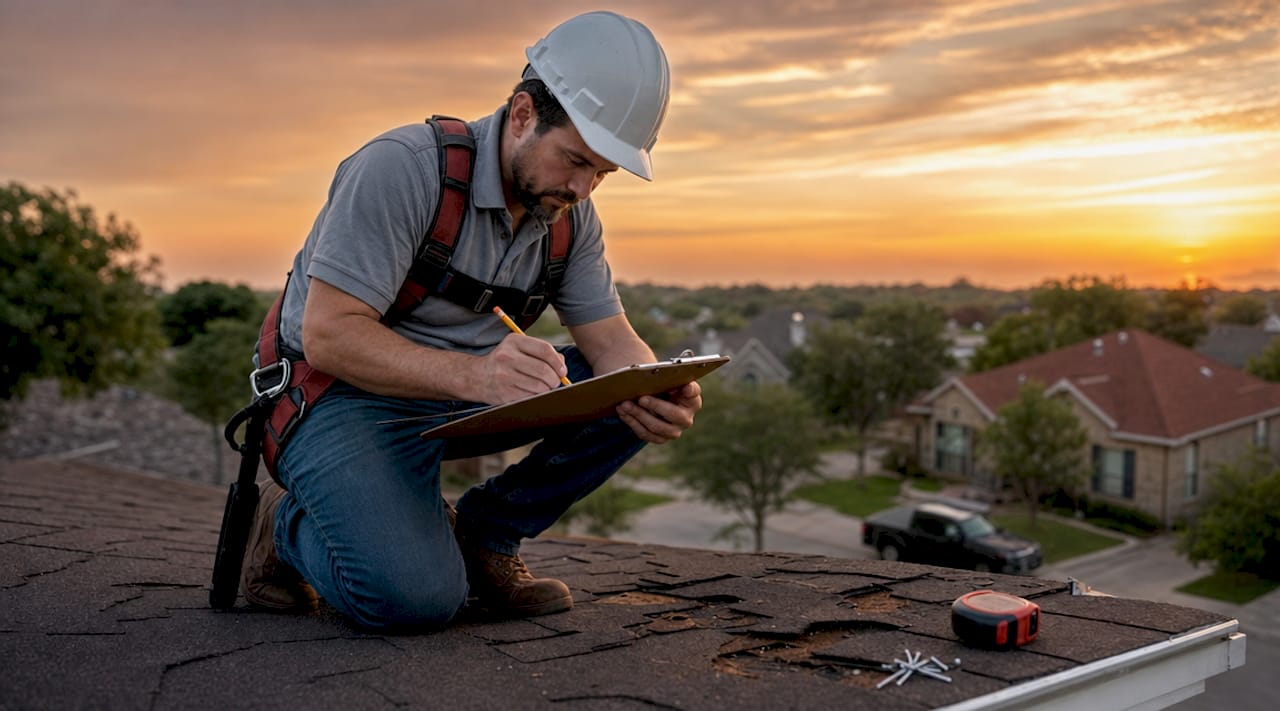
A professional on-site estimate visit should last 30 to 60 minutes and follow four distinct phases. Knowing these phases helps you identify which contractors are thorough and which are guessing.
- Exterior perimeter walkaround. The contractor checks gutters, fascia, soffit, and visible flashing from the ground before climbing. This step catches drainage issues and rot that affect the full scope.
- On-roof inspection. The contractor physically walks the roof to assess shingle condition, granule loss, nail pops, ridge line integrity, and flashing seals. Any contractor who skips this step and estimates from the ground alone is not giving you an accurate bid.
- Attic assessment. This is the step most homeowners do not expect, and it is the most revealing. The attic inspection reveals daylight gaps, moisture staining, ventilation deficiencies, and decking condition. Poor ventilation voids many shingle manufacturer warranties. A contractor who skips the attic is leaving critical information on the table.
- Post-inspection homeowner review. The contractor walks you through their findings before leaving. This is your opportunity to ask questions, flag concerns, and understand what the estimate will cover.
Rushed inspections that skip any of these phases tend to produce estimates that miss hidden damage. The result shows up as roof leaks and costly repairs within a few years of installation.
Pro Tip: Request the written estimate within 24 to 48 hours of the contractor visit. This keeps the inspection details fresh and gives you a clear record for comparison. Contractors who take more than a week to deliver an estimate often have the same communication habits during the project itself.
How to compare roofing estimates effectively
Price differences of 50% to 100% for the same roofing job are common because contractors vary widely in material quality, labor scope, and what they include or exclude. Comparing bids on price alone is like comparing cars by sticker price without knowing what trim level you are buying.
The most reliable method is building a personal comparison table. List every contractor across the top and every scope item down the side. Here is a simplified version of what that looks like:
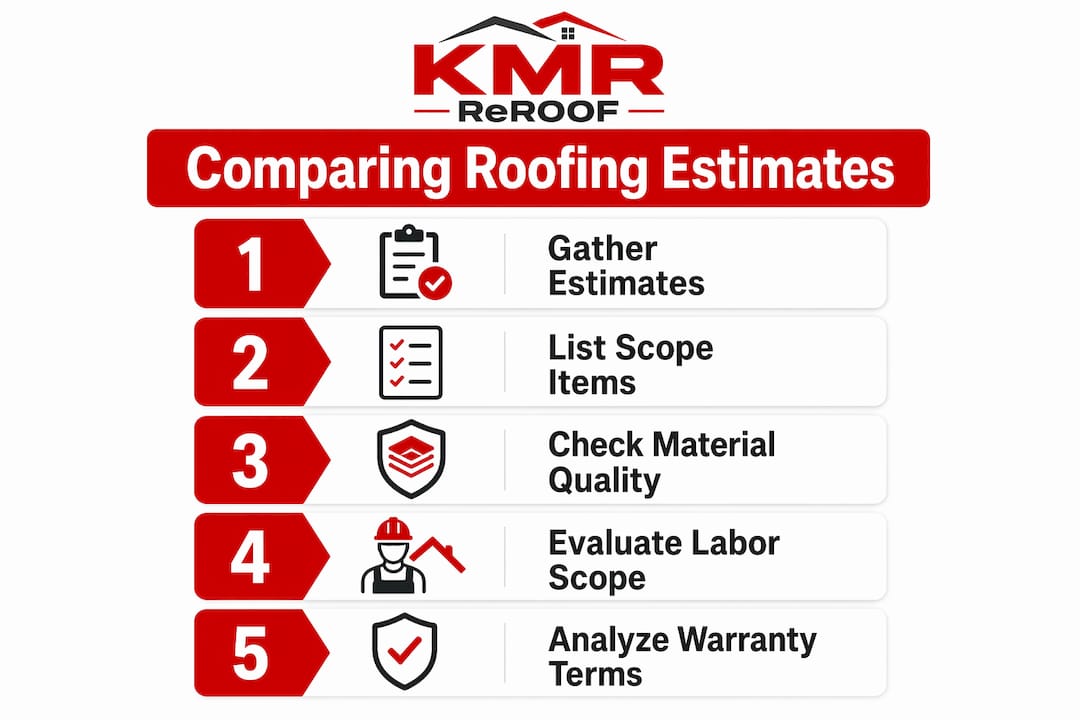
| Scope item | Contractor A | Contractor B | Contractor C |
|---|---|---|---|
| Shingle brand and grade | GAF Timberline HDZ | Generic 3-tab | Owens Corning Duration |
| Underlayment type | Synthetic | Felt 15# | Synthetic |
| Tear-off included | Yes | Yes | No |
| Flashing replacement | Full | Partial | Full |
| Workmanship warranty | 10 years | 2 years | 5 years |
| Permit fees | $250 listed | Not listed | $200 listed |
| Total price | $14,800 | $9,200 | $13,500 |
When you lay bids out this way, the $9,200 quote stops looking like a deal. It uses lower-grade materials, offers a fraction of the warranty coverage, and does not list permits, which means you may be responsible for pulling them yourself or the work goes unpermitted entirely.
Watch for these red flags when reviewing bids:
- No brand names for materials
- Missing tear-off line item
- No permit fee listed
- Workmanship warranty under two years
- Deposit requirement above 30%
- No mention of decking replacement pricing if damage is found
Detailed estimates protect homeowners by specifying exact materials, fastening patterns, and warranty conditions. Vague quotes benefit the contractor, not you.
What are typical cost ranges for Texas roofing projects?
For an average 2,200 square foot home, architectural shingle replacement costs range from $8,000 to $22,000 in 2026. That wide range reflects real differences in material grade, roof complexity, and regional labor rates. It is not a sign that the industry is inconsistent. It means scope matters enormously.
Here is how a typical Texas roofing project budget breaks down:
| Cost category | Percentage of total |
|---|---|
| Materials (shingles, underlayment, flashing) | 40 to 50% |
| Labor | 35 to 45% |
| Overhead and contractor profit | 10 to 20% |
| Permits and disposal | 3 to 7% |
Texas conditions add specific cost pressures worth knowing. The state’s intense UV exposure, hailstorms, and high humidity accelerate shingle wear faster than in northern climates. Many Texas homeowners opt for impact-resistant shingles rated Class 3 or Class 4, which carry a premium of 10 to 20% over standard architectural shingles but can reduce homeowner’s insurance premiums. Flat or low-slope roofs common on commercial properties and some Houston-area homes require TPO or modified bitumen systems, which carry different labor and material costs than steep-slope shingle work.
Decking replacement is the most common source of unexpected costs. Most unforeseen charges arise from rotted decking found after tear-off. A trustworthy estimate includes a pre-agreed per-sheet price for decking replacement, typically $70 to $120 per sheet, so there are no surprises when the old shingles come off.
You can get a detailed picture of Houston-specific pricing ranges through Misterreroof’s Houston roof replacement costs guide, which covers the $8,500 to $28,000 range with breakdowns by material type.
How to use your estimate to plan the full project
A roofing estimate is the foundation of your project plan, not just a price tag. Treating it as a planning document from the start saves money and prevents disputes.
- Clarify the payment schedule before signing. Standard practice is 10 to 25% at contract signing, a second payment at material delivery, and the final balance at project completion. Never pay in full before work begins.
- Review both warranty types. Manufacturer warranties cover materials defects. Workmanship warranties cover installation errors. Both should appear in writing with specific durations and claim procedures.
- Confirm the start window. Texas roofing contractors book quickly after hail events. Ask for a written start date or a realistic scheduling window so you can plan around it.
- Use the estimate as your change order baseline. Any work added after signing should be documented as a written change order that references the original estimate. Verbal agreements about added scope are the most common source of billing disputes.
- Verify permits are included. Professional contractors include permit fees as a separate line item. If yours does not, ask directly whether they will pull the permit or whether you are expected to.
Pro Tip: Before signing, ask the contractor to walk you through their estimate line by line. Any hesitation or inability to explain a line item is a signal worth taking seriously. Contractors who know their work can explain every charge without prompting.
For a full walkthrough of the replacement process from estimate to final inspection, Misterreroof’s Texas roof replacement guide covers every phase in detail.
Key takeaways
A roofing contractor estimate is only as useful as the detail it contains. Homeowners who read every line item, compare bids on scope rather than price, and demand attic inspections consistently get better outcomes and fewer surprise costs.
| Point | Details |
|---|---|
| Estimate scope over price | Compare bids line by line; a 50 to 100% price gap often reflects missing scope, not contractor generosity. |
| Four-phase inspection standard | Insist on a walkaround, on-roof check, attic assessment, and homeowner review before accepting any estimate. |
| Labor and overhead breakdown | Labor runs 35 to 45% of total cost; overhead and profit add another 10 to 20%. |
| Deposit red flag threshold | Deposits above 30% of the total are a warning sign regardless of how the contractor explains it. |
| Decking cost pre-agreement | Ask for a per-sheet decking replacement price upfront to avoid disputes after tear-off begins. |
What I have learned from watching homeowners navigate estimates
After years of working alongside Texas homeowners through the roofing estimate process, the pattern I see most often is this: homeowners spend more energy comparing final prices than comparing what those prices actually cover. A $9,500 bid and a $14,000 bid for the same house are not competing offers. They are two completely different projects that happen to involve the same roof.
The contractors who consistently deliver the best outcomes are not always the cheapest or the most expensive. They are the ones who show up with a clipboard, spend time in the attic, and hand you a document that reads like a contract rather than a receipt. Investing time understanding estimates upfront saves substantial money and stress later. That is not a platitude. It is the single most consistent observation from projects that go smoothly versus those that end in disputes.
One thing I would add that most guides leave out: the estimate conversation is also a personality test for the contractor. How they respond to your questions about materials, permits, and warranties tells you exactly how they will respond when something unexpected comes up mid-project. A contractor who gets defensive about line items during the estimate phase will not suddenly become transparent when rotted decking is discovered on day two.
Demand the detail. Read every page. Ask the uncomfortable questions before you sign.
— Misterreroof
Get a clear, detailed estimate from Misterreroof
Texas homeowners deserve roofing estimates that leave nothing to interpretation. Misterreroof provides transparent, itemized estimates for shingle, metal, flat, and TPO roof replacements across El Campo and Houston, TX.
Every Mister Reroof estimate includes a full on-site inspection, material specifications by brand and grade, permit fees, warranty terms, and a clear payment schedule. No single-page surprises. No vague scope language. If you are ready to plan your roof replacement with confidence, start with Misterreroof’s Texas homeowner roofing guide for a complete overview of costs, materials, and what to expect from a professional contractor in your area. Contact Misterreroof today to schedule your free estimate.
FAQ
What is included in a roofing contractor estimate?
A roofing contractor estimate includes itemized costs for materials, labor, tear-off, disposal, flashing, permits, and warranty terms. Proper estimates span 4 to 8 pages and specify brand names and product grades for all materials.
How long does a roofing estimate visit take?
A thorough on-site estimate visit takes 30 to 60 minutes and covers four phases: exterior walkaround, on-roof inspection, attic assessment, and a homeowner review. Any visit shorter than 20 minutes likely skips critical inspection steps.
What is a fair deposit for a roofing project?
Standard roofing deposits run between 10 and 25% of the total project cost. A deposit request above 30% is a warning sign and warrants further scrutiny before signing.
Why do roofing estimates vary so much in price?
Price differences of 50 to 100% for the same job are common because contractors differ in material quality, labor scope, warranty coverage, and what they include or exclude. Comparing bids on a line-by-line basis rather than total price reveals the real differences.
Do roofing estimates cost money in Texas?
Most reputable roofing contractors in Texas provide written estimates at no charge. If a contractor charges for an estimate without a clear reason, that practice falls outside standard industry norms for residential roofing projects.
