
TL;DR:
- A commercial roof replacement bid is a fixed-price proposal from a licensed contractor detailing scope, materials, labor, and warranty terms. It must include at least 12 specific elements to be complete and comparable, avoiding future costly change orders. Prices vary by material, scope, contractor qualifications, and building complexity, with bids providing legal protection over estimates during project approval.
A commercial roof replacement bid is a firm, fixed-price proposal from a licensed contractor that specifies the exact scope, materials, labor, timeline, and warranty terms for replacing a flat or industrial roof. Unlike a rough estimate, a bid is a legally binding commitment that holds the contractor to a defined price for a set period, typically 30–90 days. Property owners and facility managers who understand what a complete bid contains are far better positioned to compare contractors accurately, avoid costly surprises, and protect their buildings for decades.
What is a commercial roof replacement bid required to include?
A professional commercial roofing bid must specify at least 12 elements to be considered complete and comparable. Incomplete bids contribute to 34% of project disputes in commercial roofing. That number alone explains why reviewing every line of a proposal matters before signing anything.
The 12 elements every complete bid should contain:
- Membrane type, thickness, and color (TPO, EPDM, BUR, or modified bitumen with mil thickness stated)
- Insulation type, R-value, and thickness (polyiso, EPS, or mineral wool with thermal performance specs)
- Attachment method (mechanically fastened, fully adhered, or ballasted, plus fastener pattern)
- Project scope (full tear-off versus recover, with deck inspection protocol noted)
- Flashings, drainage, and edge metal (all penetrations, drains, scuppers, and termination bars itemized)
- Walkway pads (quantity, placement, and material specified)
- Warranty terms (material warranty from the manufacturer and workmanship warranty from the contractor listed separately)
- Project timeline (start date, completion date, and phasing plan for occupied buildings)
- Exclusions and allowances (what is not covered and what triggers a change order)
- Line-item price breakdown (labor, materials, disposal, and permits listed individually)
- Unit pricing for additional work (cost per square foot for unforeseen deck repairs)
- Insurance certificates (general liability and workers’ compensation current and verified)
Pro Tip: Ask every contractor to include unit pricing for deck repairs in the bid. Facility managers who require this upfront prevent change-order disputes that derail budgets on nearly one in three projects.
A bid missing any of these elements is not a complete proposal. It is an opening position that will cost you money later.
Why do commercial roof replacement bids vary so widely?
Prices for the same roof can differ by 20–30% across contractors bidding identical scope. That spread is not random. It reflects real differences in material quality, labor rates, warranty coverage, and how thoroughly each contractor read your building.
The four biggest cost drivers
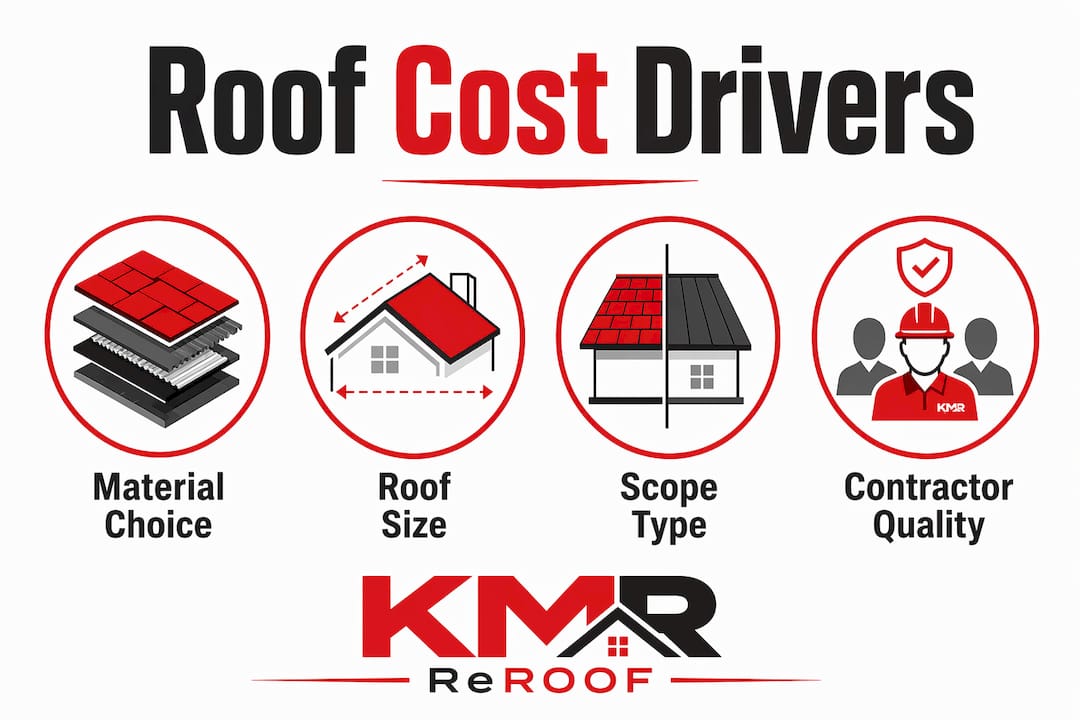
Material system choice is the single largest variable. A 60-mil TPO system costs significantly less per square foot than a multi-ply BUR system with gravel ballast. Both can be the right answer depending on your climate, building use, and drainage design.

Roof size and complexity move the needle fast. Small buildings around 5,000 square feet typically run $20,000–$50,000 for a full replacement. Larger buildings at 50,000 square feet can exceed $300,000–$800,000 depending on system and site conditions. Rooftop equipment, multiple penetrations, and limited crane access all add labor hours.
Tear-off versus recover is a scope decision that changes the math entirely. Full tear-off costs $2.00–$4.00 per square foot more than a recover but allows deck inspection and qualifies the building for longer manufacturer warranties. On a 20,000 square foot roof, that difference equals $40,000–$80,000. Recovering over a failing substrate is a false economy.
Contractor qualifications affect price and risk simultaneously. Manufacturers like GAF, Carlisle, and Firestone certify contractors at different tiers. Certified contractors can offer manufacturer-backed warranties up to 30 years. Non-certified contractors cannot, which means the owner absorbs that risk.
Bid vs. estimate vs. quote: why the label matters legally
| Document type | Price commitment | Validity period | Legal weight |
|---|---|---|---|
| Estimate | Variable, not binding | No fixed period | Low |
| Quote | Fixed for stated scope | Usually 30 days | Moderate |
| Bid | Firm fixed price | 30–90 days typical | High |
Bids provide firm fixed-price commitments that protect owners during long approval cycles. An estimate can change before you sign. A bid cannot, within its validity window. Always confirm which document type you are receiving before comparing numbers across contractors.
Pro Tip: When comparing proposals, build a side-by-side spreadsheet with each of the 12 bid elements as rows. Any cell left blank by a contractor tells you exactly where a change order will appear later.
How to prepare and solicit effective commercial roof replacement bids
The quality of bids you receive depends directly on the quality of the request you send out. A vague scope request produces vague proposals. A detailed Request for Proposal forces every contractor to price the same job, which makes comparison straightforward and fair.
Follow these steps to run a competitive, well-controlled bid process:
- Commission a roof assessment first. Hire an independent roof consultant or use your existing maintenance records to document current conditions, deck type, drain locations, and any known failures. This becomes the foundation of your RFP.
- Write a detailed RFP. A clear RFP simplifies bid comparison and reduces costly change orders. Specify the membrane system you want priced, the attachment method, insulation R-value, and whether you require tear-off or will consider recover. Include site access constraints and occupancy requirements.
- Standardize your specifications before sending. Standardized roof specs transform vague proposals into clear comparisons and improve budget predictability. Reference ASTM standards or manufacturer spec sheets where applicable.
- Solicit 3–5 bids from licensed contractors. Three bids is the minimum for a meaningful price range. Five gives you a clearer picture of the market and flags outliers on both ends.
- Verify credentials before the bid walk. Confirm state licensing, current general liability insurance, workers’ compensation coverage, and any manufacturer certifications relevant to your chosen system. A contractor missing these documents should not receive your RFP.
- Conduct a joint bid walk. Walk the roof with all bidding contractors at the same time. Every contractor sees the same conditions, hears the same questions, and has no information advantage. This reduces scope interpretation gaps.
- Set a firm bid deadline and format requirement. Require line-item pricing, unit costs for additional work, and separate warranty documentation. Bids that arrive without these items are incomplete by definition.
What does a commercial roof replacement cost in 2026?
Fully installed commercial roof replacement costs in 2026 range from $4.50 to $18.00 per square foot depending on system type and complexity. That wide range reflects real market variation, not contractor inconsistency.
| Roofing system | Installed cost per sq ft | Typical warranty (material) | Best use case |
|---|---|---|---|
| TPO (60 mil) | $5.50–$9.00 | 15–20 years | Low-slope commercial, energy efficiency |
| EPDM (90 mil) | $5.00–$8.50 | 20–25 years | Large flat roofs, low maintenance |
| Modified bitumen | $4.50–$8.00 | 10–20 years | High-traffic roofs, recover applications |
| BUR (4-ply gravel) | $6.00–$12.00 | 20–30 years | Heavy-duty industrial, long service life |
| Metal standing seam | $10.00–$18.00 | 40–50 years | Long-term ownership, steep or low slope |
A 10,000 square foot TPO roof installation runs roughly $75,000–$95,000 including materials, labor, tear-off, and flashing. Budget an additional 10–20% contingency for complex setups or unknown deck conditions discovered during tear-off.
The NRCA recommends lifecycle cost evaluation over upfront price alone. A roof costing $2.00 per square foot more upfront but lasting 10 years longer can save $50,000–$100,000 over the lifetime of a 25,000 square foot building. That math changes the decision entirely when you run it out over 25 years.
Roofing warranties in Texas follow the same logic. Material warranties from manufacturers like Carlisle SynTec and GAF range from 10 to 30 years. Workmanship warranties from contractors typically run 2–10 years. Both must appear in the bid documentation. A bid without warranty terms is a bid without accountability.
For Texas property owners planning a full project, the commercial roof replacement guide covers budgeting and project management in detail specific to the Texas market.
Key takeaways
A complete commercial roof replacement bid is the single most important document in any re-roofing project, and its quality determines whether your project finishes on budget or generates expensive disputes.
| Point | Details |
|---|---|
| Bid completeness matters | All 12 elements must appear in writing; missing items become future change orders. |
| Bids are legally binding | A bid holds the contractor to a fixed price for 30–90 days; estimates do not. |
| Scope drives cost more than price | Tear-off versus recover can shift total cost by $40,000–$80,000 on a 20,000 sq ft roof. |
| Solicit 3–5 bids minimum | Prices vary 20–30% for identical scope; multiple bids reveal the real market rate. |
| Lifecycle cost beats upfront price | A higher-cost system with a longer warranty often saves $50,000–$100,000 over a building’s life. |
What I have learned from watching owners get burned by bad bids
The most expensive mistake I see property owners make is treating the lowest bid as the best bid. A low number on a proposal almost always means something is missing. It might be the tear-off. It might be the insulation layer. It might be the warranty. Whatever it is, you will pay for it later at change-order rates, which are always higher than bid rates.
The second mistake is skipping the RFP and just calling three contractors for numbers. Without a standardized scope document, you end up with three proposals that describe three different projects. Comparing them is like comparing a sedan to a pickup truck because both have four wheels.
What actually works is this: write the spec first, then send it out. Require line-item pricing. Require unit costs for deck repairs. Require insurance certificates before the bid walk. Verify manufacturer certifications for the system you want. Then compare the bids on a spreadsheet, line by line, not total to total.
The roofing mistakes Texas property owners make most often come down to incomplete documentation and skipping credential verification. Both are preventable. A 30-minute checklist review before you award a contract is worth far more than the time you will spend managing disputes after construction starts.
One more thing: do not let a contractor pressure you into signing before the bid validity window closes. A legitimate contractor will extend a bid for a reasonable period. One who will not is telling you something about how they handle the rest of the project.
— Misterreroof
Get a detailed commercial roofing bid from Misterreroof
Misterreroof serves commercial property owners across El Campo and Houston, TX with transparent, line-item roofing proposals that cover every element required for a complete and comparable bid.
Whether your building needs a flat roof replacement or a full TPO system installation, Mister reroof prepares bids that specify membrane type, insulation specs, attachment methods, warranty terms, and project timelines in writing. No vague totals. No surprise change orders. Every proposal includes current insurance certificates and manufacturer certification documentation so you can verify credentials before you commit. Contact Misterreroof today to schedule a roof assessment and receive a free, detailed estimate for your commercial property.
FAQ
What is a commercial roofing bid?
A commercial roofing bid is a firm, fixed-price proposal from a licensed contractor that specifies the exact scope, materials, labor costs, timeline, and warranty terms for a roof replacement project. Unlike an estimate, a bid is legally binding within its stated validity period, typically 30–90 days.
How many bids should I get for a commercial roof replacement?
Property owners should solicit 3–5 bids from licensed contractors, since prices for identical scope can vary by 20–30%. Fewer than three bids makes it difficult to identify outliers or confirm a fair market rate.
What is the average cost of a commercial roof replacement in 2026?
Installed costs range from $4.50 to $18.00 per square foot depending on the roofing system and building complexity. A 10,000 square foot TPO installation typically runs $75,000–$95,000 including tear-off, materials, labor, and flashing.
What is the difference between a bid and an estimate for roofing?
A bid is a firm fixed-price commitment valid for a defined period, while an estimate is a variable, non-binding projection. Bids protect owners legally during long approval cycles because the price cannot change before signing within the validity window.
What happens if a roofing bid is missing warranty documentation?
A bid without warranty and insurance documentation signals potential operational risk and possible owner liability. Valid material warranties range from 10 to 30 years, and workmanship warranties from 2 to 10 years. Both must appear in writing before you award any contract.
