TL;DR:
- Hiring licensed commercial roofers in Texas ensures legal compliance, quality workmanship, and warranty protection. Unlicensed contractors pose risks of voided warranties, safety violations, and costly liabilities. Verifying credentials and choosing licensed, certified professionals safeguard your property investment and long-term peace of mind.
Licensed commercial roofers in Texas are state-approved professionals who have passed required exams, carry liability insurance, and meet local building codes to perform roofing work legally and safely. Knowing why hire licensed commercial roofers Texas matters comes down to three things: legal protection, workmanship quality, and long-term cost savings. Unlicensed contractors may quote lower prices, but they expose you to voided warranties, failed inspections, and personal liability if a worker gets hurt on your property. This article breaks down the regulations, financial protections, and practical steps you need to make a confident hiring decision.
Why hire licensed commercial roofers in Texas: the legal and safety case
Texas commercial roofing is governed by a layered set of rules that unlicensed contractors routinely ignore. Understanding those rules protects you before a single shingle is lifted.
OSHA fall protection requirements
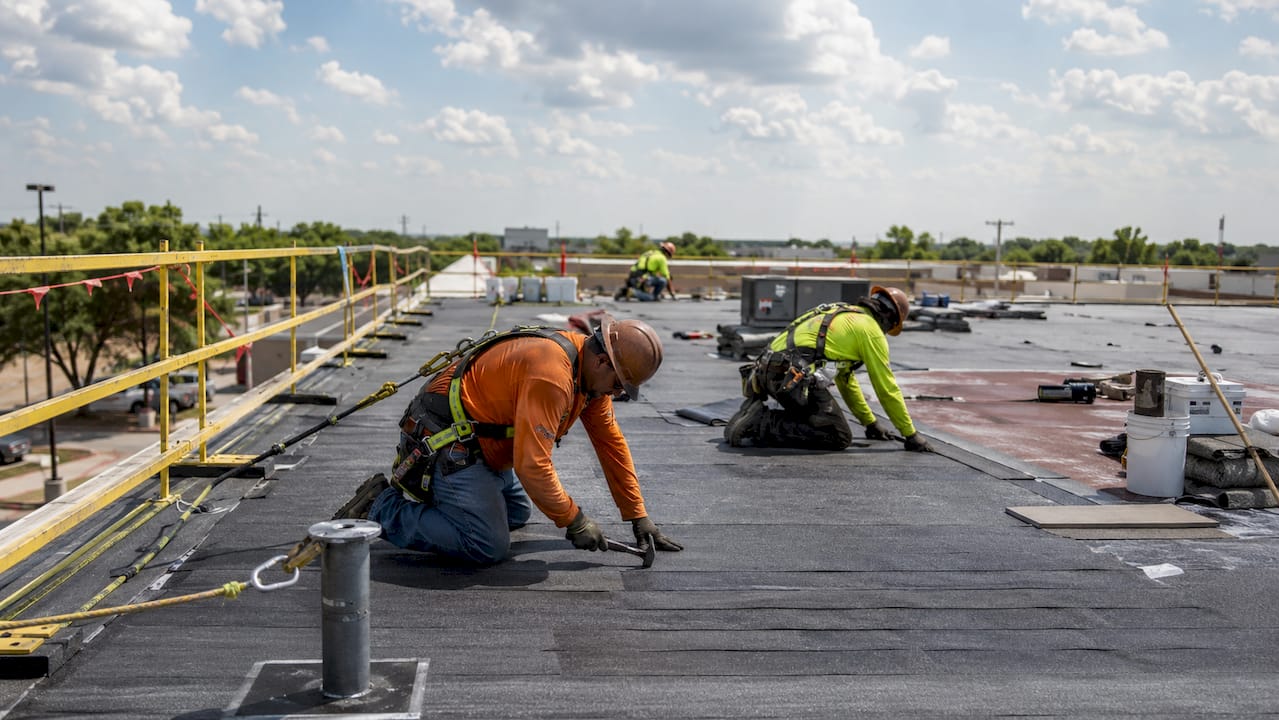
OSHA mandates fall protection on any roofing work performed above 6 feet, limiting arresting force to 1,800 pounds and maximum fall distance to 3.5 feet. That standard, codified under 29 CFR 1926.501, applies to every commercial roof job in Texas. Licensed contractors build these requirements into their safety plans and crew training. Unlicensed crews frequently skip personal fall arrest systems entirely, putting workers and your property at risk.
Pro Tip: Ask any roofer you interview to show you their written fall protection plan before signing a contract. A licensed contractor will have one ready.
Insurance and workers’ compensation
Licensed contractors carry insurance that protects property owners from lawsuits if a worker is injured on site. Without that coverage, you as the property owner can be held financially responsible for medical costs and legal fees. Workers’ compensation is not optional on a compliant commercial job in Texas. Verify both general liability and workers’ comp certificates before any crew sets foot on your roof.
Local and state building codes
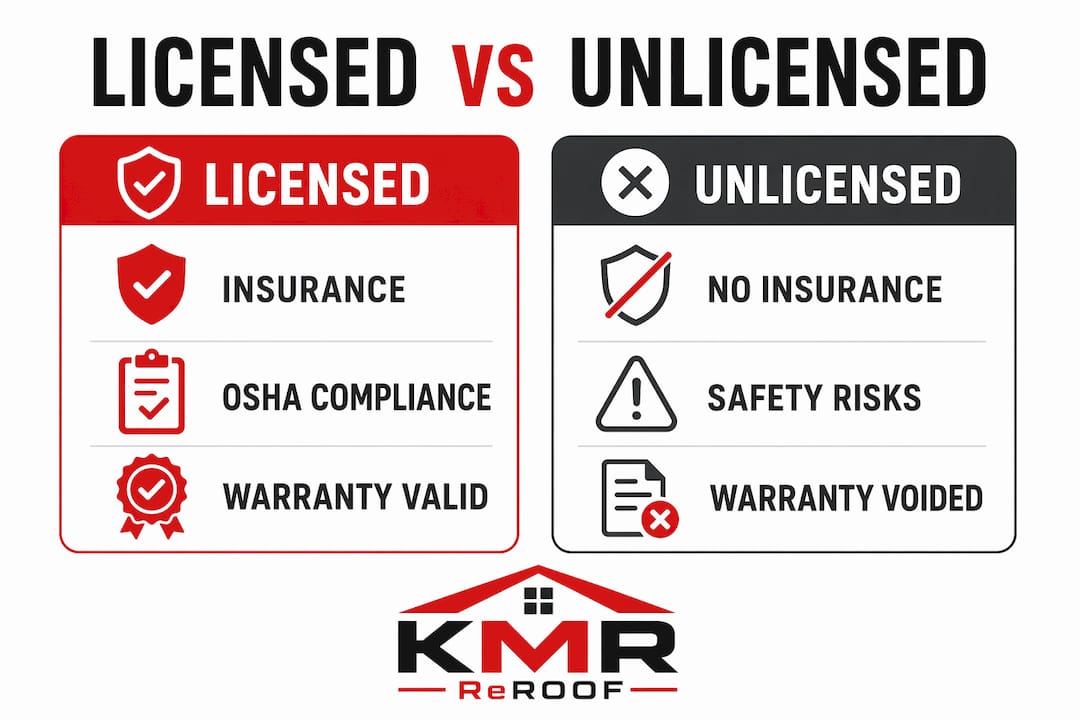
Texas municipalities, including Houston and El Campo, enforce specific roofing codes tied to wind load ratings, drainage requirements, and fire classifications. Licensed commercial roofers pull the required permits, schedule inspections, and document compliance. Skipping permits may save a few hundred dollars upfront but can trigger stop-work orders, fines, and mandatory tear-offs that cost far more. For a deeper look at how roofing safety regulations affect your property, Misterreroof has a dedicated resource worth reading.
Consequences of non-compliance
Unlicensed contractors often cut corners on permits, safety equipment, and materials, creating hazards that only surface after a major storm or failed inspection. When that happens, the repair bill lands on you, not the contractor who has already moved on. Over 70% of roofing disputes involve unlicensed or uninsured workers, according to 2026 NRCA data. That figure shows non-compliance is not a rare edge case. It is the most common source of commercial roofing conflict in the country.
How does hiring a licensed commercial roofer protect your property investment?
Licensing is not just a legal formality. It directly affects the quality of work, the validity of your warranties, and your financial exposure over the life of the roof.
“Licensed roofers treat licensing as a mark of long-term accountability, financial stability, and professional reputation.” — Deegan Roofing
Here is how that accountability translates into concrete property protection:
- Fewer callbacks and repairs. Licensed contractors produce 32% fewer callbacks than unlicensed ones. Fewer callbacks mean less disruption to your tenants and lower maintenance costs over time.
- Faster property sales. Homes and commercial properties with documented licensed roofing work sell 5–7% faster than comparable properties without that documentation. Buyers and lenders treat licensed work as a quality signal.
- Valid manufacturer warranties. Many roofing manufacturers only honor warranties when a licensed contractor performs the installation correctly. If an unlicensed crew installs your TPO or metal roof, the manufacturer can void the warranty on day one. That leaves you paying full price for a replacement that should have been covered.
- Bonding and financial accountability. Licensed contractors are bonded, meaning if they fail to complete the job or cause damage, the bond provides a financial remedy. Unlicensed contractors carry no such obligation.
- Legal standing in disputes. If a project goes wrong, a licensed contractor’s credentials give you legal standing to file complaints with the Texas Department of Licensing and Regulation. With an unlicensed contractor, your options are far more limited and expensive.
The risks of hiring unlicensed contractors often only surface after major weather events or failed inspections, causing costly disruptions at the worst possible time. Texas hail seasons and hurricane-force winds make that timing especially damaging for Houston and Gulf Coast property owners.
What are the key differences between licensed, certified, and unlicensed roofers in Texas?
These three categories are not interchangeable, and confusing them is one of the most expensive mistakes a property manager can make.
Licensing is a state or local government requirement. It proves a contractor has met minimum legal standards to operate. Manufacturer certification is a separate credential issued by companies like GAF, Owens Corning, or Carlisle SynTec. It proves the contractor has completed product-specific training and meets installation standards for that brand. Manufacturer certifications allow access to multi-decade warranties not available to uncertified roofers. The two credentials serve different purposes and the best commercial roofers hold both.
| Credential | Issued by | What it proves | Warranty impact |
|---|---|---|---|
| State license | Texas TDLR or municipality | Legal right to operate; meets code and insurance minimums | Required for permit-based work |
| Manufacturer certification | GAF, Owens Corning, Carlisle, etc. | Product training and installation standards | Unlocks extended material warranties |
| No credential | N/A | No verified standard | Warranties typically voided |
Manufacturer certifications involve rigorous training and installation standards entirely separate from state licensing. A contractor can be licensed but not certified, or certified but operating without a current license. For commercial roofing in Texas, you want both. The cost difference between a licensed-and-certified contractor and an unlicensed one is typically modest upfront. The difference in warranty coverage and legal protection over a 20-year roof lifespan is substantial.
Licensing requires ongoing training, code updates, and compliance beyond a one-time certification. That ongoing requirement means a licensed contractor’s knowledge stays current with Texas building code revisions, new materials, and updated OSHA standards. An unlicensed contractor has no such obligation and no accountability structure to enforce it.
How to verify a roofer’s license and choose the right contractor
Verifying credentials takes less than 15 minutes and can save you years of headaches. Here is exactly what to do.
Where to check licensing status:
- Search the Texas Department of Licensing and Regulation (TDLR) database at tdlr.texas.gov using the contractor’s name or license number.
- For Houston specifically, check the City of Houston’s contractor licensing portal for any additional municipal requirements.
- Request a copy of the contractor’s certificate of insurance directly from their insurer, not from the contractor themselves.
Questions to ask every candidate:
- What is your current license number, and can I verify it with TDLR?
- Do you carry general liability and workers’ compensation insurance?
- Will you pull the required permits for this job?
- Are you manufacturer-certified for the roofing system you are recommending?
- What warranty do you offer on labor, and what does the manufacturer warranty cover?
For a complete list of vetting questions, Misterreroof has compiled a guide on questions to ask roofing contractors that covers everything from payment schedules to subcontractor policies.
Red flags to avoid:
- A contractor who asks for full payment upfront before work begins.
- No physical business address or only a cell phone number for contact.
- Pressure to skip permits to “save time and money.”
- Inability to produce insurance certificates within 24 hours.
- No written contract or scope of work before starting.
Pro Tip: Always get at least three written bids for any commercial roofing project. A bid that is significantly lower than the others almost always signals missing insurance, unlicensed labor, or substandard materials.
Checking references from other Texas commercial property owners is also worth the time. A licensed contractor with a strong local track record will have no hesitation connecting you with past clients. For guidance on choosing a reliable contractor in Texas, Misterreroof’s resource covers the full vetting process in detail.
Key takeaways
Licensed commercial roofers in Texas deliver legal compliance, warranty protection, and measurably fewer repairs compared to unlicensed alternatives.
| Point | Details |
|---|---|
| Licensing means legal accountability | Licensed roofers meet OSHA, insurance, and building code requirements that protect you from liability. |
| Unlicensed work voids warranties | Manufacturers like GAF and Owens Corning require licensed installation to honor extended material warranties. |
| Fewer callbacks save money | Licensed contractors produce 32% fewer callbacks, reducing long-term maintenance costs significantly. |
| Verify credentials before signing | Check TDLR’s database and request insurance certificates directly from the insurer, not the contractor. |
| Both license and certification matter | State licensing and manufacturer certification serve different purposes; the best contractors hold both. |
What I have learned from watching Texas property owners get burned
The pattern I see most often is not dramatic. A property manager hires a low-bid contractor who seems professional enough. The roof looks fine for 18 months. Then a hailstorm hits, or a flat roof seam fails, and the property manager calls the manufacturer for warranty service. The manufacturer checks the installation records, finds no licensed contractor on file, and denies the claim. The property manager is now looking at a full replacement with no coverage.
That scenario is not bad luck. It is a predictable outcome of skipping the licensing check. What surprises me is how rarely property managers ask for the license number upfront. They ask about price, timeline, and materials. They forget the one credential that determines whether everything else holds up legally.
The other thing I have noticed is that licensed contractors behave differently on the job. They show up with written safety plans, they pull permits without being asked, and they document their work because they know their license depends on their reputation. That accountability does not disappear after the final invoice. It follows them to every future job. An unlicensed contractor has nothing on the line beyond the current check.
My honest advice: treat the license verification step the same way you treat reviewing a lease. Do it every time, without exception, before any other conversation about price or timeline.
— Misterreroof
Ready to work with licensed commercial roofers in Texas?
Misterreroof serves property owners and businesses across El Campo, Houston, and surrounding Texas communities with fully licensed and insured roofing services. Whether you need a flat roof replacement, a TPO system, or a complete metal roof installation, every project is handled by professionals who meet Texas licensing requirements and carry the insurance coverage your property deserves.
Start with Mister Reroof’s Texas roof replacement guide to understand your options, compare materials, and know what questions to ask before signing anything. If you are in the Houston area, the Houston roof replacement tips page covers local considerations specific to Gulf Coast weather and building codes. Contact Misterreroof today for a free estimate and a licensed crew that stands behind its work.
FAQ
What does a licensed commercial roofer in Texas need to have?
A licensed commercial roofer in Texas must hold a valid state or municipal contractor’s license, carry general liability insurance, and maintain workers’ compensation coverage. Many municipalities also require specific permits for each commercial roofing project.
Does hiring an unlicensed roofer void my roof warranty?
Yes. Many roofing manufacturers, including GAF and Owens Corning, only honor warranties when a licensed contractor performs the installation. An unlicensed installation can void your warranty from day one.
How do I verify a roofer’s license in Texas?
Search the Texas Department of Licensing and Regulation database at tdlr.texas.gov using the contractor’s name or license number. Always request insurance certificates directly from the insurer to confirm active coverage.
Are licensed roofers more expensive than unlicensed ones?
Licensed roofers may quote slightly higher upfront costs, but they produce 32% fewer callbacks and protect you from warranty voids, failed inspections, and legal liability that unlicensed contractors routinely create.
What is the difference between a licensed roofer and a certified roofer?
A licensed roofer meets state or local legal requirements to operate. A certified roofer has completed product-specific training from a manufacturer like GAF or Carlisle. The best commercial contractors in Texas hold both credentials.
