TL;DR:
- A roof tarp service involves installing waterproof tarps over damaged roofs to prevent water intrusion temporarily. It is a crucial step recognized by insurance policies and must meet specific standards with proper materials and fastening techniques. Proper documentation, including photos and invoices, ensures insurance reimbursement and timely permanent repairs.
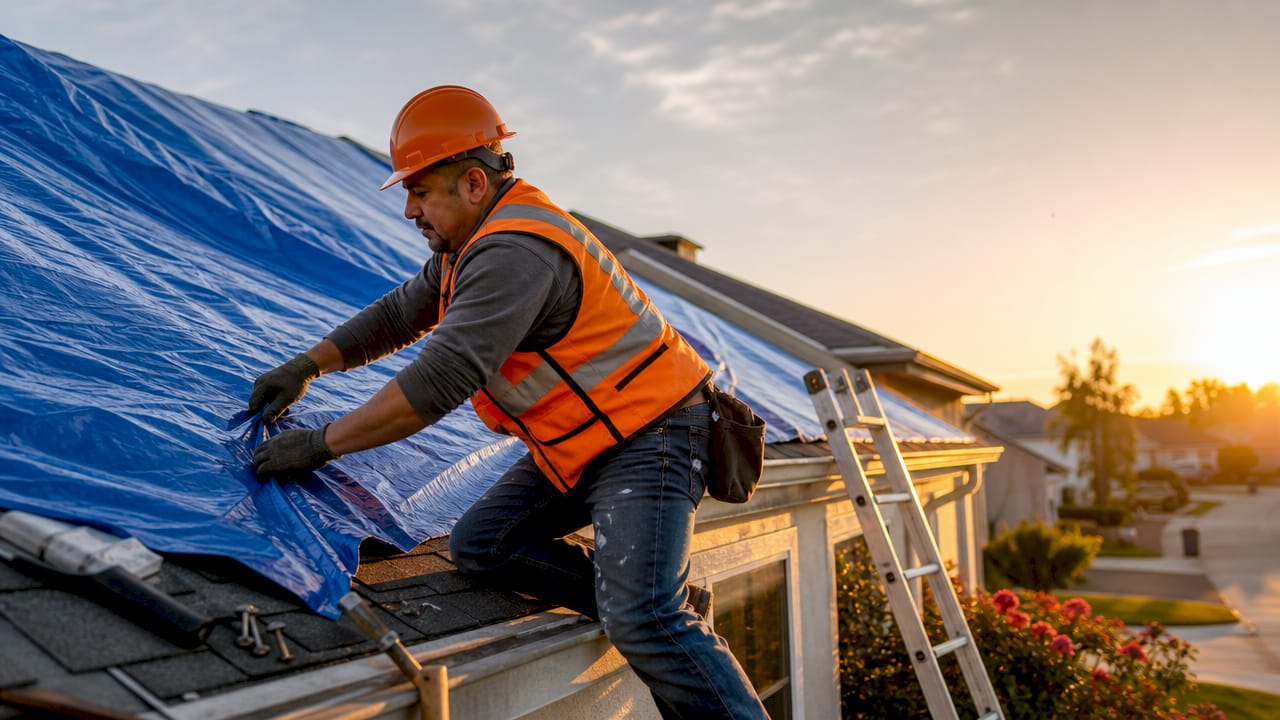
A roof tarp service is the professional installation of durable waterproof tarps over damaged roof areas to stop water intrusion before permanent repairs can be made. This temporary roof solution is the first line of defense after storm damage, fallen trees, or sudden leaks. Most standard homeowners insurance policies recognize emergency tarping as a required mitigation step, meaning skipping it can put your entire claim at risk. Misterreroof crews deploy this service across the Houston and El Campo areas, arriving fast and documenting everything your adjuster needs.
What does a professional roof tarp installation involve?
Professional roof tarp installation follows specific technical standards that separate a proper job from a dangerous one. The industry standard calls for 6-mil polyethylene tarps with UV inhibitors, which resist breakdown from sun exposure and hold up through multiple rain events. Lighter tarps tear faster and offer less protection, especially in Texas weather.
Coverage matters as much as tarp quality. Tarps must extend at least 3–4 feet beyond the perimeter of the damaged area and run from the peak of the roof downward to the eave. This peak-to-downslope orientation channels water off the roof rather than pooling it under the tarp.
Fastening is where most DIY attempts fail. The IBHS recommends securing tarps with wood battens screwed directly into the roof decking, spaced 12 inches apart along all edges. Tarps held down only with sandbags or bricks are inadequate. Wind uplift during a storm can rip a weighted-only tarp off in minutes, leaving your home fully exposed.
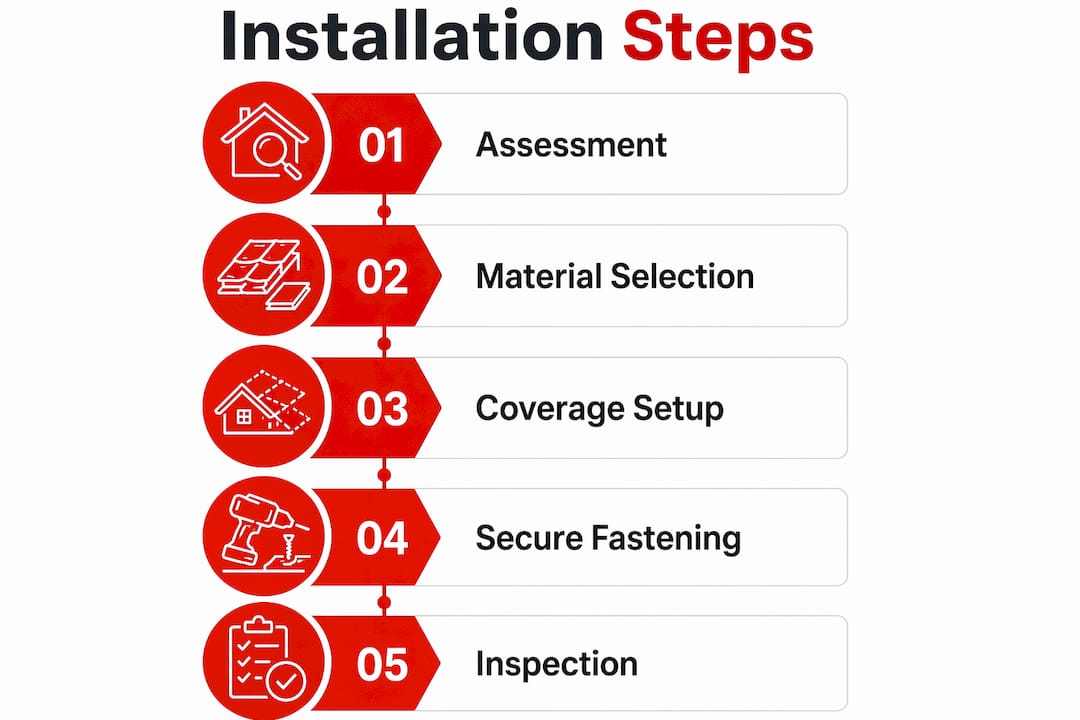
What the installation process looks like step by step
- Damage assessment: The crew photographs all damaged areas before touching the roof.
- Tarp sizing: The tarp is cut or selected to cover the damage zone plus the required 3–4 foot margin on all sides.
- Peak placement: The tarp runs over the ridge or hip so water cannot get behind it.
- Batten fastening: Wood battens are screwed through the tarp into the decking at 12-inch intervals along every edge.
- Documentation: Final photos capture the completed installation for the insurance file.
Pro Tip: Ask your contractor to confirm the tarp extends over the ridge. A tarp that stops short of the peak creates a water trap right at the most vulnerable seam of your roof.
Tarps are not permanent. Tarps have a service life of 30–90 days and require inspection after any severe weather event. Plan your permanent repair timeline around that window.
| Installation element | Standard requirement |
|---|---|
| Tarp material | 6-mil polyethylene with UV inhibitors |
| Coverage margin | 3–4 feet beyond damaged area |
| Fastening method | Wood battens screwed into decking |
| Batten spacing | 12 inches along all edges |
| Service life | 30–90 days before replacement needed |
How does roof tarp service fit into the insurance claim process?
Roof tarping is not just a practical step. It is a legal obligation under most homeowners policies. Standard policies cover emergency tarping under “Reasonable Repairs” or “Duty to Mitigate” provisions. If you fail to act within 24–72 hours of discovering damage, your insurer can deny the water damage portion of your claim on the grounds that you allowed preventable losses.
The financial side is more favorable than most homeowners realize. Professional emergency tarping costs between $400 and $1,500, and insurance typically reimburses between $800 and $1,600 for documented mitigation work. That means a well-documented tarp job can be fully covered, or even net you a small buffer toward other claim costs.
Documentation is the deciding factor in reimbursement. Insurance adjusters rarely approve tarping reimbursements without before-and-after photos, a written scope of work, and invoices from a licensed contractor. A major pitfall is neglecting to photograph damage before the tarp goes on. Once the tarp covers the roof, proving the original cause and extent of damage becomes much harder.
“Tarping costs are aligned with fulfilling the policyholder’s duty to mitigate. Many insurers reimburse tarping costs separately from the permanent repair claim, and tarping expenses typically do not impact the deductible.”
Emergency Tarping, Insurance & Xactimate Glossary
Steps to protect your insurance claim with proper tarping
- Call a licensed roofing contractor within 24 hours of discovering damage.
- Request a written scope of work before any tarp is installed.
- Confirm the contractor photographs all damage before installation begins.
- Keep all invoices and receipts from the tarping job.
- Submit the documentation package to your adjuster as part of your initial claim filing.
One serious risk in storm season is unsolicited contractors, sometimes called storm chasers, who pressure homeowners into signing over insurance assignments on the spot. Avoid bundling permanent repairs with emergency tarp jobs and always verify a contractor’s license and insurance before signing anything. Get at least two quotes when time allows.
What are the limitations of a roof tarp service?
A tarp service provides temporary drainage control, not a repair. Roof tarping is a short-term solution while you arrange permanent fixes. Treating it as anything more creates real risk, both to your home and your insurance claim.
The most common problems with tarp jobs come from improper installation. Poorly fastened tarps can funnel water directly into the attic if they shift or tear. Wind uplift on an improperly secured tarp can cause more structural damage than the original storm event. These are not hypothetical risks. They show up in insurance disputes regularly.
Here are the limitations every homeowner should understand before relying on a tarp:
- 30–90 day lifespan: Extended tarp use beyond 90 days requires active coordination with your insurance carrier to manage expectations and keep the claim on track.
- Not a structural fix: A tarp does not address damaged decking, broken rafters, or compromised flashing.
- Weather dependent: Tarps need re-inspection after every significant storm. Fasteners loosen and tarp material degrades faster under repeated wind and UV exposure.
- Safety risk for DIY: Steep or structurally compromised roofs are dangerous to walk on. Falls from roofs are a leading cause of serious injury in home repair attempts.
- Claim risk if neglected: Homeowners risk secondary damage and claim denial if tarping is skipped or performed incorrectly.
Pro Tip: Schedule a professional assessment immediately after any storm, even if you see no obvious damage from the ground. Hidden damage to flashing, ridge caps, or decking can allow water intrusion for weeks before it becomes visible inside your home.
Understanding these limits helps you use a tarp service correctly. It buys you time. Use that time to get your emergency roof repair steps in order and move toward a permanent solution.
How to select a trustworthy roof tarp service provider
The contractor you choose for emergency tarping directly affects both your home’s protection and your insurance outcome. Not all providers follow the same standards, and storm season brings out contractors who cut corners.
Use these criteria to evaluate any provider before you hire:
- Verify licensing and insurance: Confirm the contractor holds a valid state license and carries general liability plus workers’ compensation insurance. Ask for certificates, not just verbal confirmation.
- Demand a written scope: Any legitimate contractor provides a written description of the work, materials, and cost before starting. No written scope means no contract.
- Check references: Ask for recent local references, especially from homeowners who filed insurance claims. A contractor experienced with adjuster documentation is worth more in a claim situation.
- Insist on before-and-after photos: Proper photo documentation protects you in any future dispute about damage cause or extent.
- Confirm material standards: Ask specifically whether the contractor uses 6-mil polyethylene tarps and wood battens screwed into decking. If they plan to use weights or lighter tarps, find someone else.
- Keep tarping and repairs separate: A contractor who insists on bundling the permanent repair contract with the emergency tarp job is a red flag. Tarping and full replacement are separate scopes of work.
- Get multiple quotes when possible: Storm conditions create pricing pressure, but two quotes still give you a baseline. Unusually low bids often mean substandard materials or no documentation.
Misterreroof operates with licensed crews, carries full insurance, and provides complete documentation packages for every tarp job. For Texas homeowners managing emergency roofing in Houston, that combination of speed and documentation is what protects both your property and your claim.
Key Takeaways
A roof tarp service is a professional, time-sensitive mitigation step that protects your home, preserves your insurance claim, and buys you the window needed to arrange permanent repairs.
| Point | Details |
|---|---|
| Act within 24–72 hours | Delaying tarping risks claim denial for all resulting water damage under most policies. |
| Use 6-mil tarps with battens | Lightweight tarps or weighted-only methods fail in wind and do not meet industry standards. |
| Document before and after | Photos, written scope, and invoices are required for insurance reimbursement approval. |
| Tarps last 30–90 days | Inspect after every storm and coordinate with your carrier if permanent repairs are delayed. |
| Separate tarping from full repair | Never sign a combined tarp-and-replacement contract under storm pressure. |
What I’ve learned watching homeowners navigate storm season
The biggest mistake I see is homeowners waiting too long because they assume the damage “isn’t that bad.” A missing shingle or a small puncture from a fallen branch looks minor from the ground. Inside, that opening can soak insulation, rot decking, and grow mold within days. By the time the ceiling stain appears, the secondary damage often exceeds the original loss.
The second mistake is trusting an unsolicited contractor who shows up the morning after a storm. I understand the appeal. You’re stressed, the roof is open, and someone is standing in your driveway offering to fix it right now. But storm chasers often use substandard materials, skip documentation, and disappear before the adjuster arrives. That leaves you holding a tarp that won’t survive the next rain and a claim with no supporting paperwork.
The third thing I’d tell any homeowner: tarping is not the end of the process. It is the beginning. Use the time it buys you to research permanent solutions, get proper bids, and understand what your policy actually covers. A well-installed tarp from a licensed contractor, backed by solid documentation, sets up every step that follows.
— Misterreroof
Misterreroof is ready when your roof needs it most
When a storm hits your home in the Houston or El Campo area, Misterreroof deploys licensed crews fast with the materials and documentation process your insurance adjuster expects.

Every tarp job includes before-and-after photos, a written scope of work, and a full invoice package ready for your claim. Mister Reroof uses 6-mil polyethylene tarps fastened with wood battens, meeting the standards insurers recognize. When you’re ready to move from temporary protection to a permanent fix, the Texas roof replacement guide walks you through every option available to Houston and El Campo homeowners. For step-by-step planning, the 2026 replacement guide covers materials, timelines, and what to expect from start to finish.
FAQ
What is a roof tarp service?
A roof tarp service is the professional installation of heavy-duty waterproof tarps over damaged roof sections to prevent water intrusion while permanent repairs are arranged. It is classified as an emergency mitigation measure under most homeowners insurance policies.
How long does a roof tarp last?
Roof tarps typically last 30–90 days before they require inspection or replacement. Severe weather, UV exposure, and wind can shorten that window, so inspection after every storm is necessary.
Does homeowners insurance cover roof tarping?
Most standard homeowners policies cover emergency tarping under “Reasonable Repairs” or “Duty to Mitigate” provisions. Reimbursement requires documentation including before-and-after photos, a written scope, and invoices from a licensed contractor.
Can I install a roof tarp myself?
DIY tarping on steep or structurally damaged roofs carries serious fall risk and often results in improper fastening. Improperly installed tarps can funnel water into the attic or fail entirely in wind, creating more damage than the original event.
How much does professional roof tarping cost?
Professional emergency roof tarping typically costs between $400 and $1,500, with insurance reimbursement ranging from $800 to $1,600 for fully documented mitigation work. Tarping costs are generally processed separately from the permanent repair claim and do not affect your deductible.
