TL;DR:
- A roofing square equals 100 square feet of roof surface area, used universally for material and labor estimates. Calculating precise roof squares involves measuring each plane, applying the pitch multiplier, summing areas, and adding waste factors to prevent budget surprises. Accurate measurement and understanding of roofing terminology ensure homeowners receive reliable quotes and avoid costly mistakes.
A roofing square is a standardized unit equal to 100 square feet of roof surface area, used universally by contractors, suppliers, and manufacturers to simplify material ordering and cost estimation. Every roofing project you encounter, from a simple shingle replacement to a full metal roof installation, is priced, planned, and quoted in roofing squares. Brands like GAF and Owens Corning package their shingles by the square, and every contractor invoice you receive will list labor and materials the same way. Understanding what a roofing square measurement means before you talk to a contractor puts you in control of your budget and your project.
What is a roofing square measurement and how is it calculated?
A roofing square is not a shape. It is a fixed quantity: 100 square feet of roof area, regardless of the roof’s geometry or material. A 2,000 square foot roof equals 20 squares before any adjustments for pitch or waste. That simple conversion is the foundation of every roofing estimate you will ever receive.
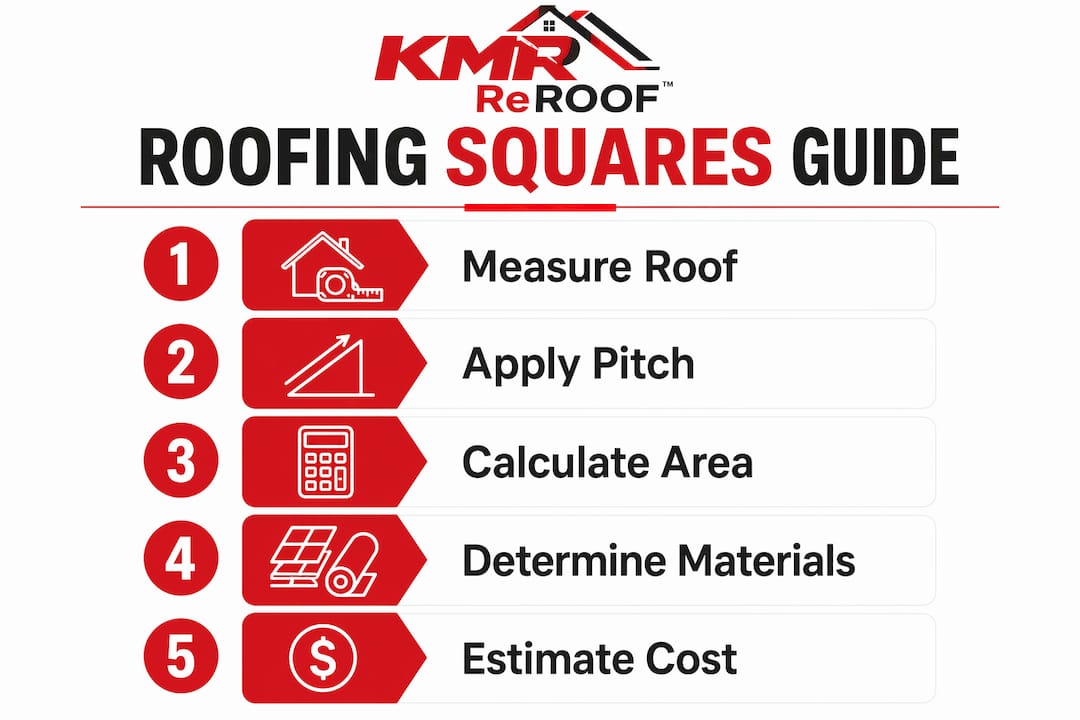
Calculating your own roofing squares takes a few deliberate steps, and getting them right prevents costly surprises.
- Measure each roof plane. Climb into your attic or use a ladder to access each flat section of your roof. Measure the length and width of each plane and multiply them together to get the area in square feet.
- Add all plane areas together. Sum every plane to get your total flat footprint area.
- Apply the pitch multiplier. Your roof is not flat, so the actual surface area is larger than the footprint. Pitch multipliers account for this: a 6/12 pitch uses a multiplier of approximately 1.118, while a steep 12/12 pitch uses 1.414. Multiply your total footprint area by the correct multiplier.
- Divide by 100. This converts your adjusted square footage into roofing squares.
- Add the waste factor. Simple gable roofs need about 10% added for waste. Hip roofs require around 15%, and complex roofs with multiple valleys and dormers need up to 20%.
- Round up to the nearest whole square. Suppliers do not sell partial squares, so always round up.
Pro Tip: Measure your roof slope before ordering any materials. A homeowner who estimates a 4/12 pitch but actually has a 7/12 pitch will be short by hundreds of square feet of material, causing project delays and extra delivery costs.
The pitch multiplier step is where most homeowners go wrong. A roof that looks modest from the street can have significantly more surface area than the floor plan suggests, especially in Texas homes with steep or complex designs.
Roofing squares vs. house square footage: what’s the difference?
Many homeowners assume their roof square footage matches their home’s floor area. That assumption leads to underestimation of material needs and budget shortfalls every time.
Here is why the numbers diverge:
- Roof pitch adds surface area. A steeper slope means more shingle surface to cover, even over the same footprint. A 2,000 square foot house can require anywhere from 22 to 28 roofing squares depending on pitch and design.
- Overhangs extend the roof beyond the walls. Your roof does not stop at the exterior walls. Eaves and overhangs add measurable square footage that your floor plan does not capture.
- Multiple roof planes multiply complexity. A simple ranch home with one ridge has far less roof area than a two-story home with dormers, valleys, and a hip design over the same footprint.
- Attached structures count too. Garages, covered porches, and breezeway roofs all add squares that need materials and labor.
Relying on your home’s listed square footage when budgeting a roof replacement is one of the most common roofing mistakes Texas homeowners make. A contractor who quotes based on floor area alone is either cutting corners or setting you up for a change order mid-project. Always ask for a measurement that accounts for pitch and all roof planes.
The practical impact on your budget is real. If you expect to pay for 20 squares but your roof actually measures 26 squares, you are looking at a significant gap in both materials and labor costs. Getting the measurement right before you accept any quote protects you from that surprise.
How roofing squares connect to material needs and costs
All roofing materials and labor are priced per square, making it the universal unit across the entire industry. Once you know your square count, you can translate that number directly into a materials list and a realistic budget.
| Material | Bundles per square | Notes |
|---|---|---|
| Standard asphalt shingles | 3 bundles | Most common residential product |
| Heavy architectural shingles | 4 bundles | Higher weight per bundle |
| Metal roofing panels | Sold by square or linear foot | Varies by panel width |
| TPO and flat roofing membrane | Sold by square | Typically includes overlap waste |
Standard asphalt shingles require 3 bundles per square, while heavier architectural products require 4. That difference matters when you are pricing a 25-square roof. Three bundles per square means 75 bundles total. Four bundles per square means 100 bundles. The cost difference between those two numbers can run into the hundreds of dollars before labor is even factored in.
Labor is also quoted per square. A contractor in the Houston area might charge between $150 and $400 per square for installation depending on roof complexity, material type, and access difficulty. Knowing your square count lets you cross-check any quote you receive against those per-square rates.
Pro Tip: Always order materials from a single production batch when possible. Shingles from different batches can vary slightly in color, and that variation becomes visible once installed. Rounding up by one extra square gives you a buffer without breaking the budget.
Roofing suppliers never sell partial squares, so rounding up is not optional. Running short mid-project means a second delivery, a potential wait for restocking, and the risk of color mismatch between batches.
What tools and methods measure roofing squares accurately?
Professional estimators today use a combination of satellite imagery, drone technology, and manual measurement to count roofing squares with precision. Each method has a place depending on the project and the stakes involved.
- Satellite measurement platforms like EagleView and Hover generate detailed roof reports from aerial imagery. These tools calculate total square footage, pitch, and individual plane areas without anyone setting foot on the roof. They are widely used by insurance adjusters and roofing contractors for initial estimates.
- Drone surveys provide high-resolution imagery and 3D modeling for complex roofs. Drones capture dormers, valleys, and crickets that satellite images sometimes miss, making them valuable for accurate insurance claims.
- Manual measurement remains the most accurate method for final material orders. A trained estimator on the roof can measure every plane, verify pitch with a slope gauge, and account for small features that technology might undercount.
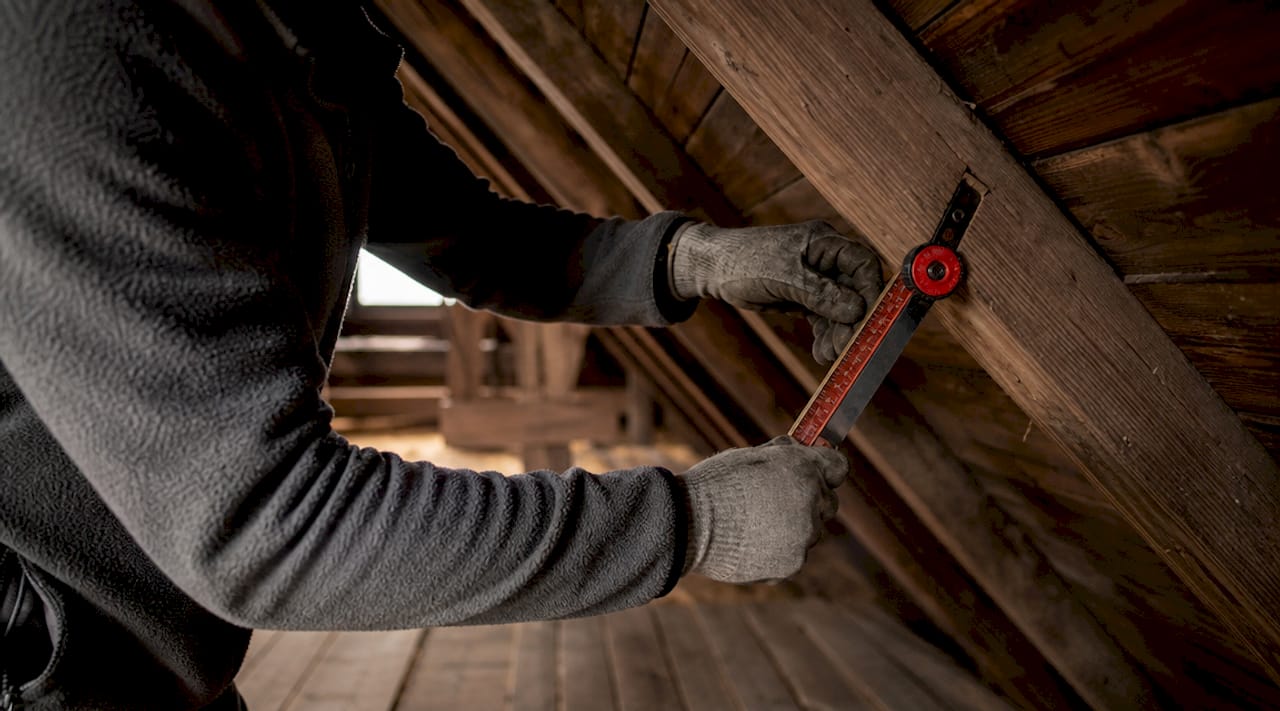
- Homeowner verification is possible using a tape measure, a level, and a pitch gauge available at any hardware store. Measuring your attic rafters from inside can also give you plane dimensions without climbing on the roof.
Accurate square counts are foundational for insurance claims and fair contractor pricing. Understating your square count in an insurance claim leads to underpayment. Overstating it can trigger a fraud review. The number needs to be right, and the method you use to get there matters.
Small roof features like dormers, skylights, and chimney crickets are often missed in quick estimates. Each one adds or subtracts square footage from the total. A professional estimator includes all of them. When you review a contractor’s quote, ask specifically whether dormers and overhangs are included in the square count.
Key takeaways
A roofing square equals exactly 100 square feet of roof surface area, and every material, labor, and insurance figure in your roofing project traces back to that single unit.
| Point | Details |
|---|---|
| Roofing square definition | One roofing square equals 100 square feet of actual roof surface area. |
| Pitch changes the math | Apply a pitch multiplier before dividing by 100 to get accurate square counts. |
| Waste factor is not optional | Add 10 to 20 percent for waste depending on roof complexity before ordering. |
| House square footage misleads | A 2,000 sq ft home can require 22 to 28 roofing squares based on pitch and design. |
| Materials and labor follow squares | Shingles, membranes, and contractor labor are all priced and ordered per square. |
Why getting roofing squares right matters more than most homeowners realize
I have reviewed hundreds of roofing estimates over the years, and the single most consistent source of budget overruns is not material prices or labor rates. It is a wrong square count at the start of the project. A homeowner who walks into a contractor conversation armed with only their home’s listed square footage is working with incomplete information, and contractors know it.
The pitch multiplier is the piece most people skip. A 6/12 roof adds about 12 percent more surface area over the flat footprint. A 9/12 roof adds closer to 25 percent. On a 2,500 square foot home, that difference is 6 full squares of material. At $300 per square installed, that is $1,800 that was never in the original budget.
Waste factor is the second blind spot. Clients often push back on it because it sounds like padding. It is not. Complex roofs with multiple hips, valleys, and dormers genuinely require 15 to 20 percent more material than the net square count suggests. Every cut edge wastes material. Every valley requires overlap. That waste is real, and it has to be ordered upfront.
My advice to any homeowner planning a roof project: ask your contractor to walk you through the square count line by line. Ask which pitch multiplier they used. Ask what waste factor they applied and why. A contractor who can answer those questions clearly is one who measured your roof properly. One who cannot is one worth questioning. Understanding roofing terminology before that conversation gives you the standing to ask.
— Misterreroof
Get an accurate roofing estimate from Mister ReRoof

Knowing your roofing squares is the first step. Getting a precise measurement from a professional is what turns that knowledge into a reliable budget. Mister ReRoof serves homeowners and property managers across El Campo and Houston, TX, with expert roof replacement services that start with accurate square counts. Whether you need a shingle, metal, flat, or TPO roof, every estimate begins with a thorough measurement of your actual roof surface. Read the Texas roof replacement guide to understand what comes next, or contact Mister ReRoof today for a free estimate based on real numbers.
FAQ
What is one roofing square equal to?
One roofing square equals exactly 100 square feet of roof surface area. This unit is used universally by contractors, suppliers, and manufacturers to price materials and labor.
How many roofing squares does a 2,000 sq ft house need?
A 2,000 square foot house typically requires between 22 and 28 roofing squares, depending on roof pitch and design complexity. The floor area alone does not account for slope or overhangs.
How do I calculate roofing squares for my home?
Measure the length and width of each roof plane, multiply them together, apply the correct pitch multiplier, sum all planes, divide by 100, and add a 10 to 20 percent waste factor before rounding up.
Why do contractors add a waste factor to roofing squares?
The waste factor covers material lost to cuts, overlaps, and complex roof geometry. Simple roofs need about 10 percent added, while complex roofs with dormers and valleys require up to 20 percent.
How many bundles of shingles equal one roofing square?
Standard asphalt shingles require 3 bundles per square. Heavier architectural shingles require 4 bundles per square, which affects both material cost and the total number of bundles to order.
