TL;DR:
- Texas humidity causes accelerated roof deterioration through condensation, biological growth, corrosion, and blistering. Proper design, material choice, and regular inspections are essential to prevent moisture damage in humid, heat-rich Texas climates. Implementing effective ventilation and maintaining clean gutters can significantly extend a roof’s lifespan in this environment.
Texas humidity is the leading cause of premature roof failure for homeowners across Houston, El Campo, and the Gulf Coast region. The moisture-laden air that defines the Texas climate does not just make summers uncomfortable. It actively breaks down roofing materials, feeds biological growth, and traps heat in ways that compound damage year after year. Understanding why Texas humidity affects roofing is the first step toward protecting one of the most expensive components of your home.
How does texas humidity physically damage roofing materials?
Humidity damages roofs through four distinct mechanisms: condensation, biological growth, corrosion, and blistering. Each one operates quietly, often for months before you notice any visible sign.
Condensation and dew point damage are the most misunderstood. Indoor air at 75°F and 60% relative humidity produces a dew point near 60°F, where moisture condenses on cooler attic surfaces. That condensation soaks into wood decking, weakens structural sheathing, and sets the stage for rot. Most homeowners assume leaks come from outside. In reality, moisture failures often stem from interior condensation rather than external water intrusion.
Biological growth follows wherever moisture lingers. Algae, mold, and mildew colonize shingles and wood decking within weeks of sustained humidity exposure. Mold is not just cosmetic. It breaks down organic roofing materials at the fiber level, reducing structural integrity and creating pathways for deeper water penetration.
Corrosion targets metal components. Nails, flashing, and fasteners oxidize faster in high-humidity environments. Once a fastener corrodes, shingles lift, gaps open, and water finds its way in.
Blistering affects asphalt shingles and membrane roofing. Trapped moisture beneath a membrane expands when heated, forming bubbles that crack under UV exposure. Wet insulation loses R-value rapidly, compounding energy loss and keeping the roof assembly perpetually damp.
- Condensation forms on attic surfaces below the dew point, causing rot and mold
- Algae and mold colonize shingles within weeks of sustained moisture exposure
- Corroded fasteners allow shingles to lift and water to enter
- Blistered membranes crack under UV exposure, accelerating failure
- Wet insulation collapses in thermal performance, worsening moisture retention
Pro Tip: Check your attic for dark staining on the underside of roof decking after any period of heavy rain or high humidity. That staining is the earliest visible sign of condensation damage, and catching it early saves thousands in repairs.
Does texas heat make humidity worse for roofs?
Texas does not just have humidity. It has humidity combined with intense solar radiation, and that combination is uniquely destructive. Houston averages about 50 inches of rain annually and experiences high dew points alongside extreme solar heat. No other major U.S. climate zone stacks those stressors together at the same intensity.
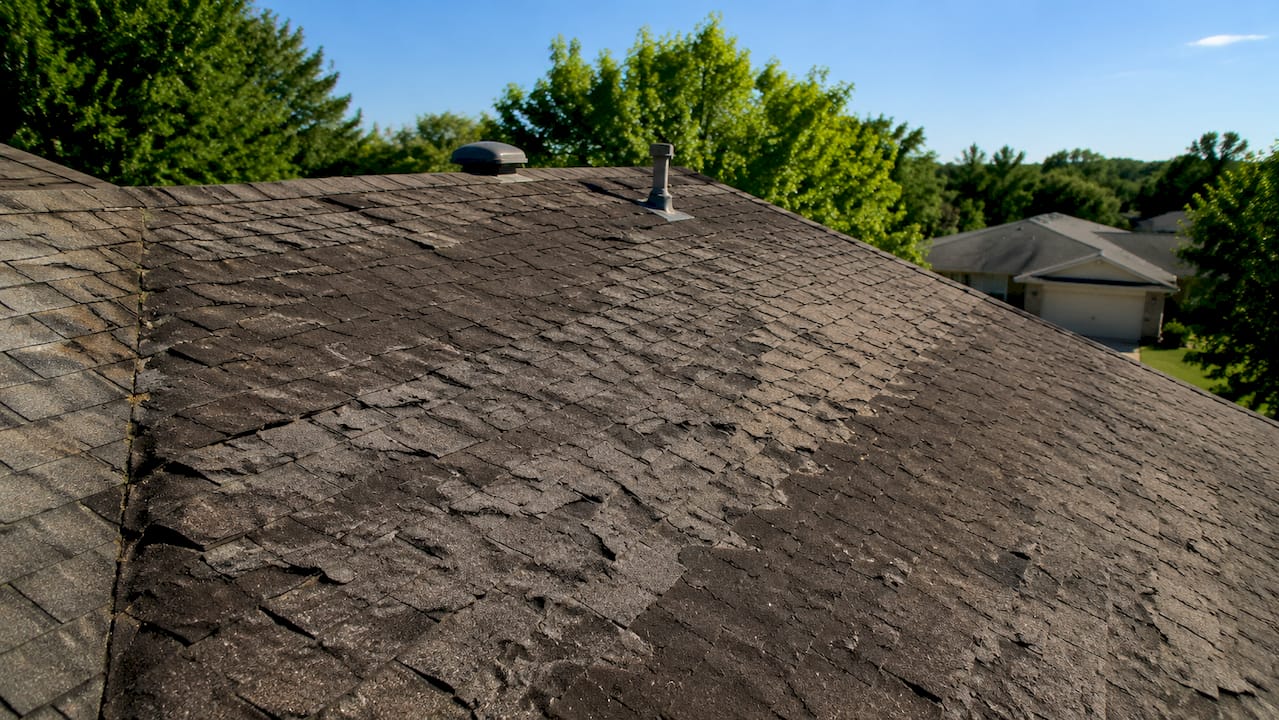
Heat accelerates every humidity-driven failure mode. When a roof surface heats up under the Texas sun, moisture trapped inside roofing materials expands. When temperatures drop at night, that moisture contracts. This daily thermal cycling cracks sealants, loosens fasteners, and opens micro-gaps in shingles. High humidity prevents roofs from fully drying between these cycles, keeping organic materials in a constant state of decay.
The table below shows how Texas climate conditions compare to other humid U.S. regions and why the combination is particularly hard on roofing systems.
| Climate Factor | Texas Gulf Coast | Southeast (Atlanta) | Mid-Atlantic (D.C.) |
|---|---|---|---|
| Annual rainfall (inches) | ~50 | ~50 | ~40 |
| Average summer dew point | 70°F+ | 65–68°F | 60–65°F |
| Peak roof surface temp | 150–170°F | 130–150°F | 120–140°F |
| Drying time after rain | Very slow | Slow | Moderate |
The dew point difference matters more than rainfall totals. A 70°F dew point means the air is nearly saturated, and roofing materials absorb that moisture continuously. Roofs in hot-humid climates must be designed as complete systems, prioritizing moisture control and drainage rather than relying on any single material to carry the load.
What design features and maintenance practices prevent humidity damage?
Prevention is far cheaper than remediation. The good news is that the right design choices and a consistent maintenance schedule can dramatically extend your roof’s lifespan in Texas conditions.
1. Install proper attic ventilation. Proper attic ventilation balances moisture and temperature, minimizing condensation buildup under roof decking. Ridge vents combined with soffit vents create continuous airflow that carries humid air out before it condenses. A poorly ventilated attic in Houston can reach 160°F in summer, accelerating every form of moisture damage.
2. Choose materials rated for humid climates. Reflective roofing materials reduce surface temperature by about 50°F compared to dark conventional roofs. Metal roofing, TPO membranes, and Class 4 impact-rated shingles all perform better under sustained humidity than standard three-tab asphalt shingles. For flat or low-slope roofs, TPO and modified bitumen systems resist moisture infiltration more effectively than built-up roofing.
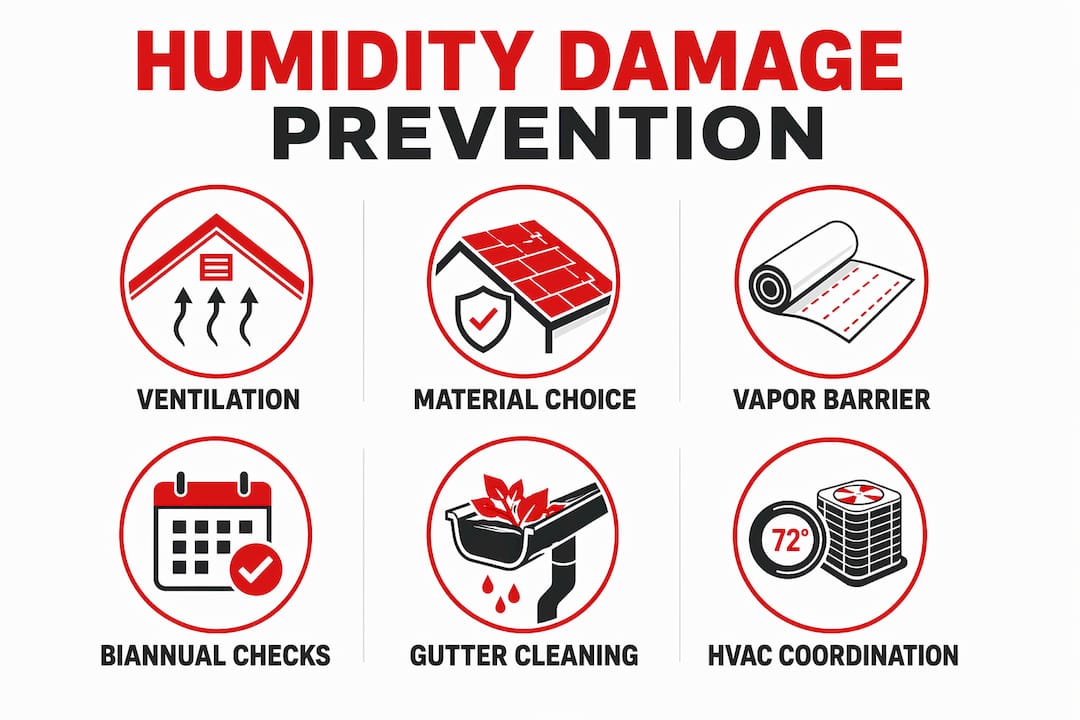
3. Add a vapor barrier or air barrier. Air movement transports orders of magnitude more moisture than vapor diffusion alone. Sealing air leaks at the attic floor stops humid interior air from migrating into the roof assembly. This single step prevents the majority of condensation-related failures.
4. Schedule biannual inspections. Spring and fall inspections catch damage before the most punishing seasons. Focus on flashing integrity, shingle adhesion, and any signs of biological growth.
5. Clear gutters and drainage paths every season. Standing water on a flat roof or backed-up gutters on a pitched roof create localized moisture zones that accelerate decay. In Houston’s rainfall environment, clogged drainage is a direct path to premature roof failure.
6. Coordinate with your HVAC system. Indoor humidity levels above 60% push moisture into the attic. HVAC services that address humidity and ventilation help keep interior conditions in a range that does not stress your roof assembly from the inside out.
Pro Tip: If you are replacing your roof, ask your contractor about the best roofing materials for Texas before committing to a product. The cheapest option at installation is rarely the cheapest option over a 20-year horizon in a humid climate.
How do you find hidden humidity damage on a texas roof?
Hidden damage is the most dangerous category of Texas roofing problems. By the time you see a water stain on your ceiling, the damage above it has usually been developing for months. Knowing what to look for before it becomes visible saves you from a full deck replacement.
- Spongy decking is the clearest sign of advanced rot. Walk your attic after a dry week and press on the decking from below. Any give means moisture has compromised the wood.
- Shingle adhesive failure is nearly invisible from the ground. Shingle adhesive bonds can break invisibly, allowing water entry and wood deck rot over time. A close-up inspection after any storm should include checking whether shingle tabs are still bonded to the course below.
- Moisture meters give you a quantitative reading. A reading above 19% moisture content in wood decking indicates active decay conditions. Rent or borrow a pin-type moisture meter and check multiple points across the attic floor and decking.
- Seasonal condensation layers are particularly tricky. Moisture trapped between insulation and cover boards can flash off quickly in warm weather, making it nearly undetectable unless you inspect during or immediately after a humid stretch.
- Mold discovery requires immediate action. Do not paint over it or treat it with surface sprays. Remove the affected material, identify the moisture source, and correct the ventilation or air sealing issue before re-roofing.
Post-storm inspections are not optional in Texas. A storm that drops two inches of rain in an hour creates enough hydrostatic pressure to expose every micro-gap in your roofing system. Schedule a professional inspection within two weeks of any significant weather event, even if you see no obvious damage from the ground.
Key takeaways
Texas humidity degrades roofs faster than almost any other climate factor, and the damage is preventable with the right materials, ventilation, and inspection schedule.
| Point | Details |
|---|---|
| Condensation is the primary threat | Interior humid air condenses on cool attic surfaces, causing rot and mold from the inside out. |
| Heat compounds humidity damage | Texas’s extreme solar heat prevents roofs from drying, keeping materials under constant moisture stress. |
| Ventilation is the top defense | Proper ridge and soffit ventilation removes humid air before it condenses and damages decking. |
| Material choice matters long-term | Metal, TPO, and reflective shingles outperform standard asphalt in sustained humid conditions. |
| Hidden damage requires active detection | Use moisture meters and post-storm inspections to catch adhesive failure and rot before they escalate. |
What i’ve learned after years of texas roofing
The mistake I see most often is homeowners treating their roof as a passive structure. They wait for a leak before calling anyone. In Texas, that approach is expensive. By the time water shows up on your ceiling, you are likely looking at decking replacement, not just shingle repair.
The second most common mistake is choosing roofing materials based on upfront cost alone. Standard three-tab asphalt shingles are the cheapest option at installation. They are also the least suited to sustained humidity and thermal cycling. A metal roof or a quality TPO system costs more on day one and costs significantly less over 20 years in a Houston climate.
The insight that surprises most property owners is that their HVAC system and their roof are connected. Running your home at 72°F with 65% indoor humidity pushes moisture into your attic continuously. Controlling indoor humidity through your HVAC and air sealing is one of the most cost-effective roof protection strategies available. You can learn more about home maintenance routines that support roof longevity in humid Texas conditions.
Roofing in Texas is not just about what sits on top of your house. It is about managing moisture as a system, from the interior air to the attic to the outer surface. The property owners who understand that spend less on repairs and get more years from every roof they install.
— Misterreroof
Protect your texas roof before humidity does more damage
Texas humidity does not take a season off, and neither should your roof maintenance plan. Misterreroof specializes in roof replacement and installation built specifically for the hot, humid conditions across Houston and El Campo. Every system Misterreroof installs accounts for moisture control, ventilation, and material durability from the first day of installation.

Whether you need a full roof replacement in Texas or want to understand which materials hold up best in your specific climate zone, Misterreroof delivers the expertise and workmanship to get it right. Explore Houston replacement tips or contact Mister Reroof today for a free estimate on a roofing system built to last.
FAQ
What makes texas humidity so damaging to roofs?
Texas combines high dew points above 70°F with intense solar heat, which prevents roofs from drying between rain events and keeps materials under constant moisture stress. This accelerates rot, mold, corrosion, and shingle adhesive failure faster than in most other U.S. climates.
How does humidity cause roof damage without a visible leak?
Humid interior air condenses on cool attic surfaces at or below the dew point, causing rot and mold from the inside out. This interior condensation is responsible for a large share of roof failures that homeowners mistake for external leaks.
What roofing materials hold up best in humid texas conditions?
Metal roofing, TPO membranes, and reflective shingles rated for humid climates outperform standard asphalt shingles in Texas. Reflective roofing surfaces can run up to 50°F cooler than dark conventional roofs, reducing both thermal stress and moisture-related damage.
How often should texas homeowners inspect their roofs?
Biannual inspections in spring and fall are the minimum standard, with additional post-storm inspections after any significant weather event. Shingle adhesive failure and micro-fractures from wind and humidity are nearly invisible from the ground and require a close-up professional check.
Does attic ventilation really prevent humidity damage?
Proper attic ventilation is the single most effective defense against condensation-related roof damage in Texas. Ridge vents paired with soffit vents create continuous airflow that removes humid air before it reaches the dew point and condenses on wood decking.
