TL;DR:
- Prioritizing roof maintenance prevents most failures that can damage property value and safety. Regular upkeep saves money by avoiding costly emergency repairs and secondary damage like mold. A failing roof can lead to significant declines in property worth, loan approvals, and insurance coverage, making preventive care essential.
The roof is the single most critical barrier between your property and the elements, and neglecting it accelerates damage to every system below it. Understanding why prioritize roof over other repairs is not just a maintenance question. It is a financial and structural decision that shapes your property’s long-term value, insurability, and safety. Over 70% of roof failures stem from poor maintenance, not material defects or age. That statistic means most catastrophic roof failures are preventable, which makes the case for prioritizing roof maintenance stronger than almost any other capital decision you will make as a property owner.
Why prioritize roof over other repairs: the financial case
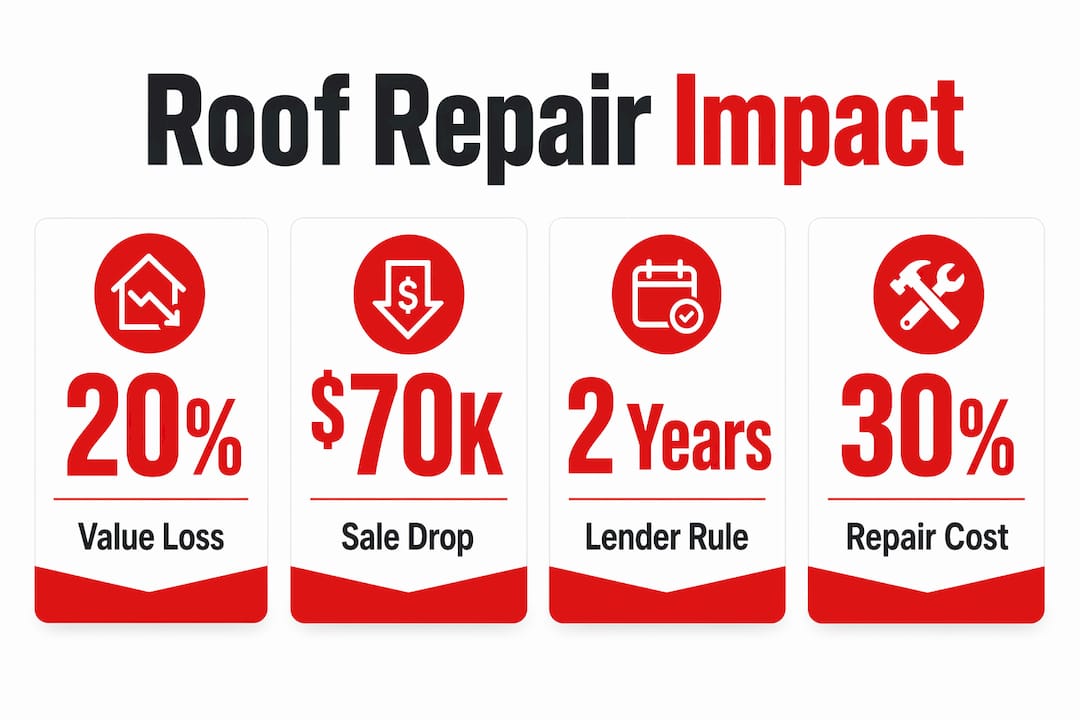
A deteriorating roof does not just look bad. It directly reduces what your property is worth and what lenders will offer against it. Poor roof condition can drop property value by 10–20%, and on a $350,000 home, that translates to offers reduced by $35,000 to $70,000. That is not a cosmetic penalty. It is a structural discount buyers and appraisers apply because they know what comes next.
Lenders apply their own pressure. Most mortgage underwriters require a roof to have at least two years of remaining useful life. Active leaks can trigger a loan denial outright. That means a roof in poor condition does not just hurt your sale price. It can kill the transaction entirely, forcing a cash-only buyer pool that demands even steeper discounts.
Insurance carriers add a third layer of financial risk. Carriers routinely scrutinize roof age and condition at renewal time. A roof past its rated lifespan can trigger non-renewal or a sharp premium increase. Property owners who prioritize cosmetic upgrades over roof replacement often face a financial crisis when the roof fails and insurance refuses to cover the damage. Fresh paint and updated kitchens do not protect you from that outcome. A sound roof does.
Is preventive roof maintenance really cheaper than emergency repairs?
The cost difference between scheduled maintenance and emergency repairs is not marginal. Preventive roof maintenance can cost up to 10 times less than reactive emergency work. That gap exists because emergency repairs carry premiums you cannot avoid when you are in crisis mode.
Emergency callouts run 50–100% more expensive than scheduled work. You pay for urgency, limited contractor availability, and the secondary damage that accumulates while you wait. A slow leak ignored for one season can saturate insulation, rot decking, and stain drywall before anyone calls for help.
Scheduled maintenance gives you three advantages emergency repairs never will:
- Contractor selection. You choose who does the work, not whoever answers the phone at midnight.
- Material availability. Planned jobs use standard pricing. Emergency jobs use whatever is in stock.
- Documentation. Maintenance records support insurance claims and demonstrate due diligence to lenders and buyers.
- Scope control. Small problems get fixed before they become structural failures.
Pro Tip: Keep a dated maintenance log for every roof inspection and repair. That paper trail can be the difference between a paid insurance claim and a denied one.
Misterreroof recommends scheduling roof maintenance annually at minimum, and twice yearly in Texas where heat cycles and storm seasons put roofs under sustained stress.
How does delaying roof repairs threaten your whole building?
A roof leak does not stay in the roof. Water follows the path of least resistance, and that path runs through insulation, framing, drywall, electrical systems, and flooring. Unaddressed roof leaks cause secondary damage that costs three times the original repair within two years. The original problem becomes the smallest line item on the invoice.
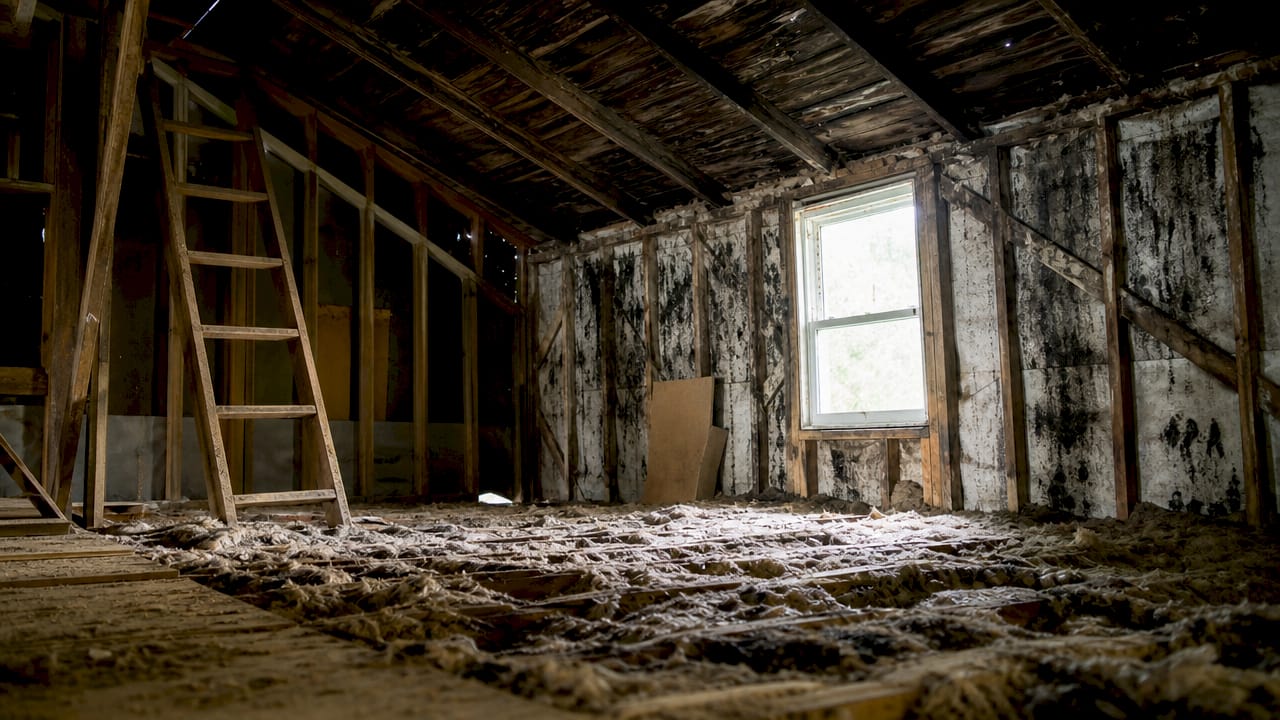
Mold is the most serious secondary consequence. Once mold establishes in wall cavities or attic insulation, remediation costs dwarf the original roofing repair. In rental properties, mold can trigger tenant displacement, habitability complaints, and legal liability. No cosmetic upgrade offsets that exposure.
| Repair delayed | Secondary damage triggered | Typical cost multiplier |
|---|---|---|
| Minor leak left 6 months | Insulation saturation, drywall staining | 2x original repair |
| Leak left 12–24 months | Structural framing rot, mold growth | 3x or more |
| Failed flashing ignored | Interior water intrusion, ceiling collapse risk | 4x or more |
Pro Tip: If you spot a water stain on a ceiling, treat it as a structural alert, not a cosmetic issue. The stain is always downstream from the actual entry point.
Layering new shingles over old compounds the problem. The added weight stresses the decking, traps heat, and causes the roof to fail twice as fast. Building codes in most jurisdictions limit shingle layers to two, and many insurance carriers reject claims on roofs with improper layering. A full tear-off is the only way to inspect the decking for rot or hidden damage. Patching over concealed structural problems does not fix them. It just delays the reckoning.
How do you decide between roof repair and replacement?
The repair-versus-replacement decision follows two clear rules of thumb used across the roofing industry. First, if repair costs approach or exceed 30% of the full replacement cost, the repair is a temporary fix and replacement is the financially sound choice. Second, building codes and insurance carriers often mandate full replacement when more than 25% of the roof surface is damaged or aged beyond rated life.
These thresholds exist because repeated small repairs mask systemic failure. Chasing individual leaks across an aging roof does not extend its life. It delays the replacement while the underlying system deteriorates. The total cost of serial patching frequently exceeds what a timely replacement would have cost.
Here is a practical framework for making the call:
- Get the roof’s age on record. Most asphalt shingle roofs carry a 20–30 year rated lifespan. A 20-year-old roof with recurring leaks is a replacement candidate, not a repair candidate.
- Calculate the repair-to-replacement ratio. Divide the repair estimate by the full replacement quote. If that ratio exceeds 30%, replacement wins on economics.
- Assess damage coverage. If more than 25% of the surface shows damage, partial repair will not satisfy code or insurance requirements.
- Demand a decking inspection. No repair estimate is reliable without checking the decking beneath the surface material. Hidden rot or mold in decking discovered mid-project changes the entire scope and cost.
- Count prior repairs. Three or more repairs in five years on the same roof section signals systemic failure. Budget for replacement, not another patch.
Architects and remodelers consistently advise evaluating the roof first before any interior renovation. Finishing a bathroom or upgrading a kitchen above a failing roof is a guaranteed way to damage new finishes with the next storm. The roof sets the condition for everything inside it.
Key Takeaways
The roof is the one building system whose failure cascades through every other component, making it the correct first priority for any property maintenance budget.
| Point | Details |
|---|---|
| Roof neglect cuts property value | A failing roof reduces sale price by 10–20% and can block mortgage approval entirely. |
| Preventive care beats emergency repairs | Scheduled maintenance costs up to 10x less than reactive emergency work. |
| Leaks multiply damage fast | Unaddressed leaks cause secondary damage costing three times the original repair within two years. |
| The 30% rule guides replacement decisions | When repair costs exceed 30% of replacement cost, replacement is the financially sound choice. |
| Decking inspection is non-negotiable | No repair estimate is reliable without checking the underlying decking for rot or hidden damage. |
The mistake I see property owners make most often
Property managers are drawn to visible improvements. A fresh coat of paint, new lobby flooring, or updated fixtures drive leasing appeal in ways a repaired roof never will. I understand that logic. Tenants and buyers respond to what they can see. The problem is that the roof is the system that protects every visible improvement you make.
I have seen properties where owners spent aggressively on interior renovations, then faced a roof failure that destroyed the new finishes within two seasons. The financial loss was compounded by the opportunity cost of the renovation budget that could have funded the roof instead. Proper roof maintenance converts unpredictable emergency costs into planned capital expenditures. That shift alone changes how you budget and how you sleep at night.
The property owners who manage this well treat the roof as a capital asset with a defined lifespan, not as a reactive maintenance item. They schedule inspections, document repairs, and build replacement reserves before the roof reaches end of life. That approach is not complicated. It is just disciplined. And it consistently outperforms the reactive model on every financial metric that matters.
— Results
Roof replacement resources from Misterreroof
Knowing the importance of roof repairs is the first step. Knowing what to do next is where Misterreroof comes in.
Mister Reroof serves property owners across El Campo and Houston, TX, with professional roof replacement in metal, shingle, flat, and TPO systems. Every project starts with a thorough evaluation so you know exactly what you are working with before any work begins. The Texas roof replacement guide covers material selection, timing, and what to expect through the full process. For a step-by-step breakdown of what a replacement involves, the 2026 replacement guide for Texas gives you the detail you need to plan with confidence. Contact Misterreroof today for a free estimate.
FAQ
Why should roof repairs come before cosmetic upgrades?
The roof protects every interior system and finish in the building. Cosmetic upgrades made above a failing roof are at direct risk of water damage with the next storm or leak.
What are the signs your roof needs priority attention?
Active leaks, water stains on ceilings, missing or curling shingles, and a roof age past 20 years are all signs that roof repair urgency is high and action should not wait.
How does roof condition affect a home sale?
A failing roof can reduce offers by $35,000 to $70,000 on a $350,000 home and trigger loan denial if the roof has less than two years of remaining life.
When does repair make more sense than full replacement?
Repair makes sense when damage covers less than 25% of the surface and repair costs stay below 30% of the full replacement quote. Above either threshold, replacement is the better investment.
How often should property owners schedule roof inspections?
Annual inspections are the minimum standard. In Texas, twice-yearly inspections are advisable given the heat stress and storm exposure that accelerate roof wear.
