TL;DR:
- Commercial roofing systems in the United States primarily cover low-slope or flat structures for industrial and office buildings. Proper maintenance, regular inspections, and complete documentation help protect warranties, prevent costly repairs, and extend roof lifespan effectively.
Commercial roofing, defined by the National Roofing Contractors Association (NRCA) as any roofing system applied to low-slope or flat structures, covers the majority of industrial and office buildings across the United States. These commercial roofing FAQs address the questions property managers and commercial owners ask most often: which system to choose, how often to inspect, when to replace, and what to ask a contractor. Organizations like NRCA and IIBEC set the standards that govern warranty compliance, inspection frequency, and contractor certification. Getting these answers right protects your investment, keeps your insurance valid, and prevents expensive emergency repairs.
1. What are the most common commercial roofing systems?
The five most widely installed commercial roof types are TPO, PVC, EPDM, Modified Bitumen, and Built-Up Roofing (BUR). Each system suits different building uses, climates, and budgets.

| System | Cost per sq ft | Lifespan | Best for |
|---|---|---|---|
| TPO | $5.50–$12 | 20–30 years | Energy efficiency, general use |
| PVC | $7–$15 | 20–30 years | Chemical exposure environments |
| EPDM | $5–$8 | 20–30 years | Cold climates, budget projects |
| Modified Bitumen | $6–$11 | 15–25 years | High-traffic rooftops |
| Built-Up Roofing (BUR) | $5–$12 | 20–30 years | Multi-layer durability |
These cost and lifespan ranges give you a starting point for budgeting, but local labor costs in Texas can shift final numbers significantly. Material selection also depends on your building’s specific conditions.
Chemical exposure favors PVC, while TPO delivers budget-friendly energy efficiency for general commercial use. Metal roofing is a sixth option worth considering for Texas properties, where heat reflection and long service life justify a higher upfront cost. Misterreroof installs TPO roofing systems and flat roof replacements across Houston and El Campo.
Pro Tip: Ask your contractor to run a 20-year lifecycle cost comparison, not just an upfront price comparison. A cheaper membrane that fails in 12 years costs far more than a premium system that lasts 25.
2. How often should commercial roofs be inspected?
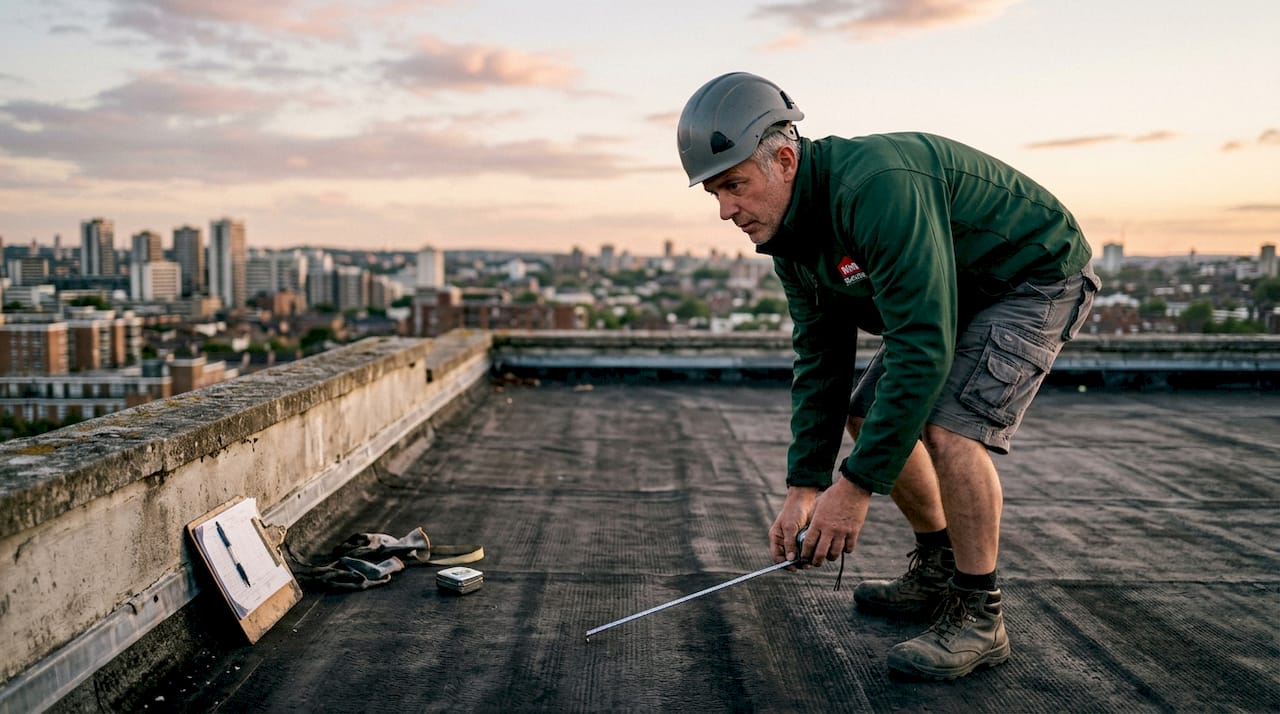
Biannual inspections, typically in spring and fall, are the industry standard for commercial properties. That schedule is the minimum, not the target.
Triggered inspections are required after hail larger than 1 inch, winds exceeding 55–60 mph, heavy snow loads, or any rooftop work by HVAC or other trades. Non-roofing contractors working on rooftops frequently cause unnoticed punctures and membrane damage. A triggered inspection catches those problems before water finds its way inside.
Professional roof inspections cost $200–$800 per visit, with infrared scanning adding $0.05–$0.15 per sq ft. That cost is minor compared to the water damage a missed leak can cause inside a commercial building. A well-run inspection program delivers strong ROI by catching deficiencies before they become structural problems.
Pro Tip: Schedule your fall inspection before october so any repairs can be completed before winter weather arrives. Contractors book up fast in late fall across Texas.
3. What does commercial roof maintenance actually cost?
Full-service maintenance contracts run $0.15–$0.25 per sq ft annually. Inspection-only contracts cost $0.05–$0.10 per sq ft. Premature roof replacement costs $5–$16 per sq ft. The math is straightforward: maintenance is the far cheaper option.
A 50,000 sq ft building paying $0.20 per sq ft for full-service maintenance spends $10,000 per year. The same building facing early replacement at $10 per sq ft pays $500,000. Deferred maintenance does not save money. It shifts a manageable annual cost into a catastrophic capital expense.
Regular professional inspections can extend roof life by up to 50%. That extension alone justifies the maintenance budget several times over. Property managers who track maintenance costs per square foot annually have a clear metric for evaluating when replacement becomes the better financial decision.
4. What are the warning signs of commercial roof problems?
Common roof deficiencies include blocked drains, flashing failures at penetrations, membrane blistering, seam separation, and damaged parapet edges. These are the root causes of most commercial roof leaks.
Ponding water is one of the most damaging conditions a flat roof faces. Water that sits for more than 48 hours after rain accelerates membrane degradation and adds structural load. Flashing failures around HVAC curbs, skylights, and pipe penetrations are the most common entry points for water.
Interior ceiling stains appear late in the leak timeline. By the time you see a stain inside, water has likely been moving through insulation for weeks or months. Thermal imaging detects moisture hidden beneath membranes before visible damage appears, making it a critical tool for early intervention.
Key insight: Waiting for visible interior damage before investigating a roof problem is the most expensive mistake a property manager can make. Infrared moisture surveys find trapped water before it destroys insulation and decking, cutting repair costs dramatically.
5. When should a commercial roof be replaced rather than repaired?
Two clear thresholds signal that repair is no longer the right call. First, replacement is advised when annual maintenance costs exceed $0.30 per sq ft. Second, replacement is warranted when infrared surveys show moisture infiltration in more than 25% of the roof insulation.
Beyond those numbers, age matters. A membrane past its rated lifespan that requires repeated repairs is consuming budget without providing reliable protection. Core sampling, which involves cutting small sections of the roof to examine insulation and substrate condition, confirms what infrared surveys suggest.
Misterreroof’s flat roof replacement guide for Houston walks through the full replacement decision process for commercial properties. Getting a professional assessment before committing to either path saves money and prevents the wrong choice.
6. What documents should property managers keep for roofing?
Proper documentation protects your warranty and your insurance claims. Manufacturers require at least one documented professional inspection annually to keep warranties valid. Missing records are the leading cause of warranty claim denials, even when maintenance actually occurred.
The documents every property manager should maintain include:
- Original installation records and manufacturer warranty certificates
- All inspection reports with date-stamped photos
- Repair invoices with scope of work descriptions
- Infrared survey results and core sample reports
- A log of any rooftop access by non-roofing trades
Insurance companies increasingly require documented maintenance histories to approve storm damage claims. A property with no maintenance records faces a much harder path to claim approval after a hail event. Store all records digitally with a cloud backup, and keep physical copies in a fire-resistant file.
Pro Tip: Create a roofing binder for each property you manage. Include a one-page roof summary sheet at the front: system type, installation date, warranty expiration, contractor contact, and last inspection date. Auditors and insurers will thank you.
7. What questions should you ask when choosing a roofing contractor?
Selecting the wrong contractor is the fastest way to void a manufacturer warranty and inherit someone else’s installation mistakes. Key questions to ask any commercial roofing contractor include:
- How many years have you worked specifically on commercial roofs?
- Are you certified by the membrane manufacturer you plan to install?
- Can you provide references from commercial projects of similar size?
- What liability insurance and workers’ compensation coverage do you carry?
- What warranty do you offer on labor, separate from the manufacturer warranty?
- What is your timeline for project completion and how do you handle weather delays?
- Will you provide a written inspection report and photos at project completion?
Manufacturer certification matters more than general contractor licensing for commercial roofing. A certified installer can offer extended manufacturer warranties, sometimes up to 30 years, that uncertified contractors cannot. Verify regional experience as well. A contractor who works regularly in Texas understands the specific demands of heat, humidity, and Gulf Coast storm patterns.
Roofing contractor selection also involves evaluating communication quality. A contractor who responds slowly before the job rarely improves once work begins.
Key takeaways
Commercial roofing decisions hinge on three factors: choosing the right system for your building’s conditions, maintaining a documented inspection schedule, and keeping complete records that protect your warranty and insurance coverage.
| Point | Details |
|---|---|
| Inspect twice yearly at minimum | Add triggered inspections after storms, hail over 1 inch, or any rooftop trade work. |
| Maintenance costs far less than replacement | Full-service contracts run $0.15–$0.25 per sq ft versus $5–$16 per sq ft for replacement. |
| Documentation protects your warranty | Manufacturers deny claims when inspection records are missing, even if maintenance occurred. |
| Replace at clear financial thresholds | Act when annual maintenance exceeds $0.30 per sq ft or moisture infiltration tops 25%. |
| Verify contractor certification | Certified installers unlock extended manufacturer warranties that uncertified contractors cannot offer. |
What 15 years of roofing decisions taught me about deferred maintenance
Property managers who defer roof maintenance almost always frame it as a budget decision. The logic sounds reasonable: the roof is not leaking today, so the money is better spent elsewhere. That reasoning costs more than the maintenance ever would have.
The pattern repeats itself constantly. A building owner skips two or three inspection cycles. A small flashing failure goes undetected. Water migrates through insulation for a full season before a ceiling tile collapses in a tenant space. The repair bill, including interior damage, lost rent, and emergency contractor rates, dwarfs what a $500 annual inspection would have caught.
The 50% roof life extension that consistent professional inspections deliver is not a marketing claim. It reflects the compounding value of catching small problems before they become large ones. A membrane that should last 20 years and gets maintained properly can reach 28 to 30 years. One that gets ignored may fail at 12.
The other mistake I see regularly is treating documentation as paperwork rather than protection. When a hail storm hits and an insurance adjuster asks for maintenance records, the property manager with a complete binder gets a check. The one with no records gets a denial and an argument. The records cost nothing to keep. The denial costs everything.
My honest recommendation: treat your commercial roof like a mechanical system, not a passive building component. Schedule it, document it, and inspect it on a calendar, not when something goes wrong.
— Results
Misterreroof: professional roofing services for Texas commercial properties
Texas weather tests commercial roofs harder than most climates in the country. Heat, humidity, and Gulf Coast storms demand systems installed correctly the first time.
Mister Reroof serves property managers and commercial owners across Houston and El Campo with flat roof replacement, TPO roof installation, metal roofing, and full replacement services. If your roof is showing signs of wear or you are approaching the end of a membrane’s rated lifespan, the flat roof replacement guide fo5r Houston properties is a practical starting point. Contact Misterreroof for a free estimate and a professional assessment of your property’s roofing needs.
FAQ
What is the lifespan of a commercial roof?
Most commercial roofing systems last 20–30 years, depending on the membrane type and maintenance history. TPO, PVC, EPDM, and BUR all fall within that range under proper maintenance conditions.
How do I know if my commercial roof needs replacement?
Replace when annual maintenance costs exceed $0.30 per sq ft or when infrared surveys show moisture infiltration in more than 25% of the insulation. Either threshold signals that repair is no longer cost-effective.
What is the best commercial roofing system for Texas?
TPO is the most common choice for Texas commercial buildings because it reflects heat and handles UV exposure well at a competitive price point. PVC is preferred where chemical resistance is needed.
How does a commercial roof inspection work?
A professional inspector examines the membrane, flashings, drains, penetrations, and parapet edges, then documents findings with photos. Infrared scanning adds thermal imaging to detect hidden moisture beneath the surface.
Does skipping inspections void my roof warranty?
Yes. Most manufacturers require at least one documented professional inspection per year to keep the warranty valid. Missing that record is the leading reason warranty claims are denied.
